Mind Games: Moscow State University Launches a New Faculty of Artificial Intelligence
The new faculty is designed as an experimental environment to train researchers who can create new technologies – and find unconventional solutions in artificial intelligence and its real-world applications.

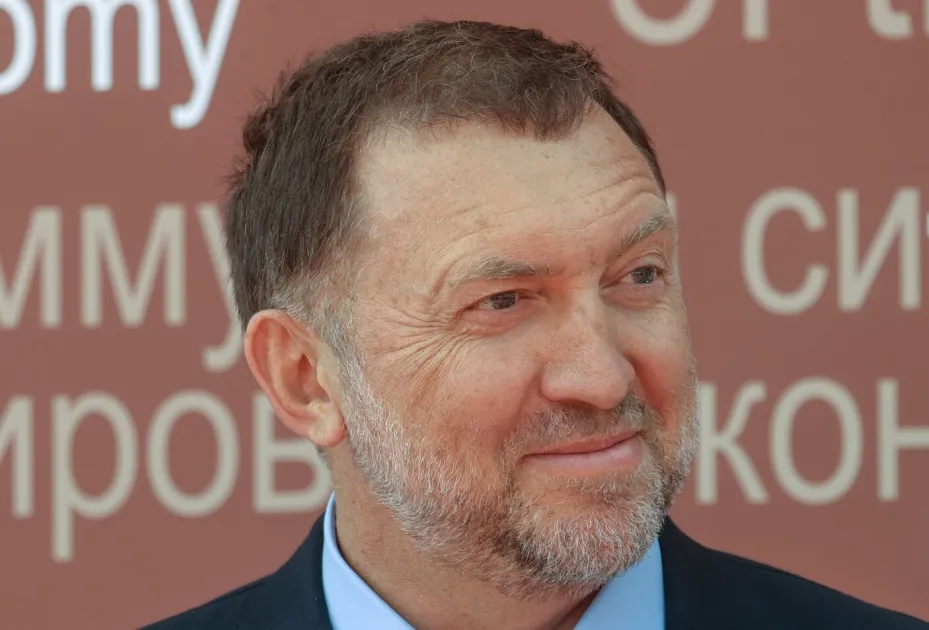
A milestone moment took place on April 21 in the main building of Lomonosov Moscow State University. The new AI faculty has a clear mission: train creators, not just users of neural networks. The goal is to prepare students who go beyond prompting tools like ChatGPT and instead design new model architectures. The faculty opened with support from Russian entrepreneur Oleg Deripaska, founder of Rusal Group.
Soft Power of Computing
The first intake begins this year on June 20. Around 70 spots will be available across undergraduate and graduate programs, keeping the cohort intentionally small. Ivan Oseledets will lead the project, a prominent figure in Russian science. He is a professor at the Russian Academy of Sciences, holds a doctorate in physics and mathematics, and serves as CEO of the AIRI Institute of Artificial Intelligence. Supporting him is Deputy for Research Anton Konushin.
MSU Rector Viktor Sadovnichy emphasized the scale of the initiative: “I am confident that within a year or two, the entire country will be talking about this new faculty.”
Speaking at the launch, lead investor Oleg Deripaska highlighted a key principle: “This is an experiment, and its success depends on freedom of thought. If you constrain people, knowledge will not advance.” He added that deploying AI effectively requires a free economy and open competition without excessive pressure.
Deripaska is betting on a breakthrough. Meanwhile, Dean Ivan Oseledets outlined the ambition: “Artificial intelligence has the potential to solve problems humanity has not yet mastered – from drug discovery to new materials and lowering the cost of energy production. A real breakthrough will come when AI solves one of these challenges and delivers measurable economic impact. I hope our students will be part of that.”

Faculty from the Tech Elite
The teaching staff brings together young researchers with industry experience, including specialists from AIRI, Yandex, and Sber – a cross-section of Russia’s tech elite. Rector Sadovnichy clarified the academic focus: the faculty will prioritize AI applications in medicine, genetics, and computer vision – fields that require deep expertise in mathematics and computer science.
The faculty is built as an experimental learning environment. It aims to train specialists capable of tackling non-standard problems, not just writing code. That includes using neural networks to develop new drugs or model proteins. MSU’s AI Institute already supports this work, with established labs in medical AI and bioinformatics.
Building Bridges
Several developments set the stage for the new faculty. In 2021, the AIRI research center was established, focusing on fundamental AI research and led by Ivan Oseledets. That effort helped form the core team behind the faculty.
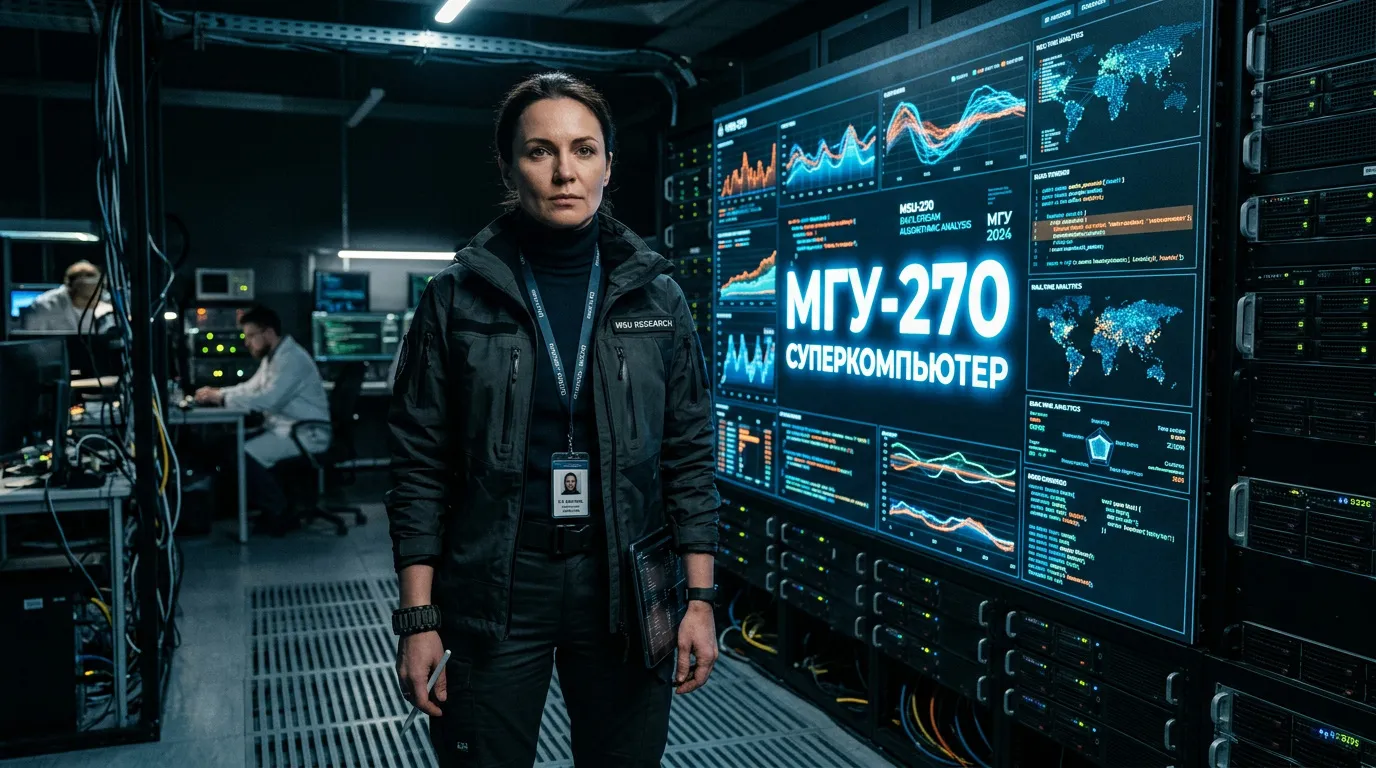
By 2023, the conversation had moved into the public domain. MSU’s AI Institute hosted the forum “Artificial Intelligence in Industry: Barriers and Incentives,” bringing together major players from across the Russian economy, including VTB, Sber, VK, and Gazprom Neft. This was followed by a major technical milestone – the launch of the MSU-270 supercomputer. With a performance of 400 petaflops, it ranks among the most powerful systems not only in Russia but globally.
Another notable milestone came in 2024, when researchers in Shenzhen trained neural networks to control drones at the MSU-PPI University, a joint Russian-Chinese institution. In 2025, the same campus opened a joint bioinformatics lab involving MSU, the Beijing Polytechnic Institute, and MSU-PPI University. Rector Sadovnichy described it as a “research bridge between Russia and China.”
A Silicon Valley on Vorob'ovy Gory
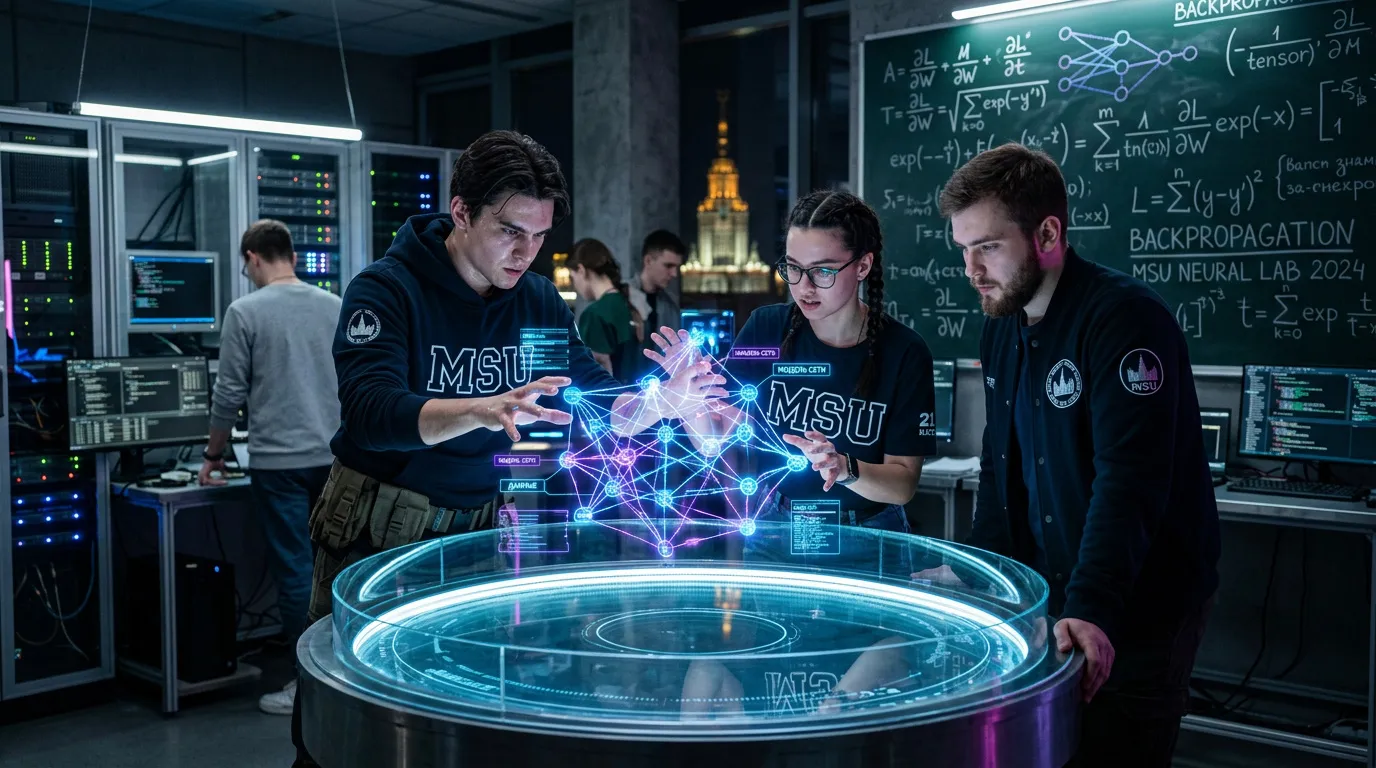
The new faculty could become a major driver of AI development in Russia. Around MSU, an ecosystem is forming that links education, AIRI, high-performance computing, private investment, and major corporations.
Over time, the faculty’s impact will be measured in three ways. First, the quality of its graduates – especially how quickly they are recruited by leading companies. Second, publications in international journals. Third, measurable economic outcomes, as highlighted by Dean Oseledets. Will AI discover a new drug? Will it help create a super-strong material? The answers may come sooner than expected.
Russia’s updated AI strategy through 2030 reflects a broader shift: AI is becoming a tool of national importance. Already, 22 universities are part of a federal program to train AI specialists, alongside hundreds of broader IT programs. Institutions such as HSE University, ITMO University, and MIPT are scaling their efforts. At this pace, a breakthrough in the field could arrive within the next few years.