Russia Develops Digital Model of the Pyrolysis Process
Scientists at Tyumen State University have developed a software model that can predict in advance which products will form, and in what proportions, during the pyrolysis of plant biomass.
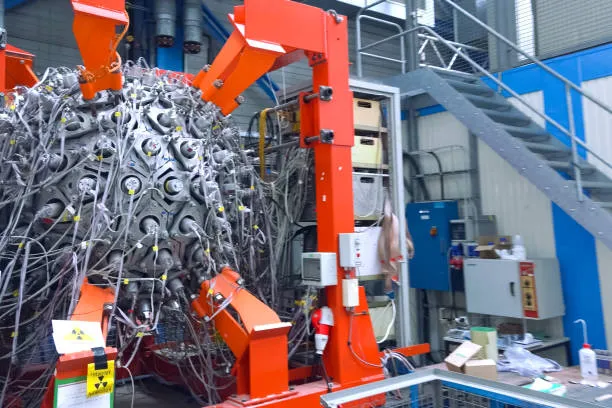
Researchers have created a software model for pyrolysis units — equipment in which waste is processed at high temperatures without access to oxygen. The process produces gas, liquid fractions, and a solid carbon-rich residue, which can then be used as fuel or raw materials. In other words, pyrolysis makes it possible to reuse waste.
The challenge is that pyrolysis is highly sensitive to operating conditions. Even small changes in temperature, heating rate, or feedstock composition can significantly affect the outcome. Managing the process “by eye” is difficult, which is why the researchers focused on creating a precise digital description of how it works. To do this, they applied machine-learning methods. The resulting algorithm identifies stable relationships between process parameters and the final yields of gaseous, liquid, and solid fractions. In essence, the model learns from real experiments and then uses that experience to make predictions.
How the Feedstock Behaves
The system “collects” data from the unit and uses it to describe how the feedstock behaves when heated without oxygen. The software accounts for everything — temperature, pressure, processing time, and the composition of the raw material. Based on these parameters, the model predicts which products will be obtained and in what quantities.
Put simply, the model acts as a digital “draft” of the installation. It allows engineers to test in advance what will happen if operating conditions are changed. Based on the forecast, an operator can select optimal settings before launching the process.
Formulas and Reactions
Dozens of chemical reactions occur simultaneously during pyrolysis. Calculating them manually in real time is virtually impossible. The software takes over this task and clearly shows how the system will behave under different conditions. This is especially important when processing mixed waste, where the composition of the feedstock loaded into the unit is constantly changing.
The digital model helps reduce the number of trial runs, which naturally lowers energy consumption and helps preserve equipment.
A Second Life for Waste
A Second Life for Waste
The development could be in demand at facilities that process waste, biomass, or secondary raw materials. The software can be used both when designing new units and when upgrading existing production lines.
The project is focused on practical applications and can be adapted to different types of pyrolysis units and feedstocks.