Russia Expands Its Drone-Integration Experiment to New Regions
Russia is broadening its nationwide experiment on everyday drone use, extending regulatory testing beyond the Nizhny Novgorod Region to include the Kaluga and Vladimir Regions
Russia has expanded its experimental legal framework for unmanned aerial systems (UAS), extending it from the Nizhny Novgorod Region to the Kaluga and Vladimir Regions. Previously, the regime was active only in Nizhny Novgorod.
Putting Theory Into Practice
The experiment is organized by the Ministry of Economic Development in cooperation with the Federal Air Transport Agency (Rosaviatsiya). Its purpose is to create safe, practical, and field-tested regulations for drone operation.
The project allows companies to carry out flights under a simplified procedure. Approval timelines are shorter, routes are cleared for testing faster, and data from every flight is transmitted to a unified monitoring system.
A Proven Testbed
The experimental regime has been active in the Nizhny Novgorod Region since November 2024, with the Gorky Tech technopark serving as operator. A total of 32 companies are participating, and more than 2,500 flights have been completed.
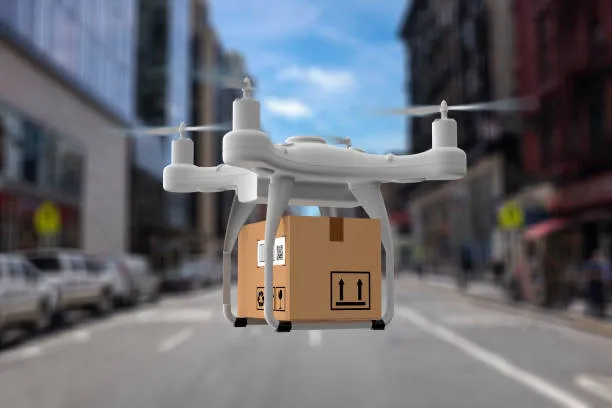
Tested applications include courier drone routes for transporting biomaterials and medications, delivery of lightweight goods, agricultural drones for crop assessment, and technologies for aerial photography and infrastructure monitoring.
Regional authorities report reduced delivery times for medical samples and faster, more informative inspection workflows.
Testing Under New Conditions
Extending the experiment to the Kaluga and Vladimir Regions will make it possible to validate the same assumptions under different environmental and infrastructural conditions — among industrial facilities, forested areas, and dense urban development.
This broader dataset will help refine requirements for drones, flight routes, and monitoring systems.
Data gathered through the project will form the foundation of future federal legislation on unmanned aviation. According to experts and regional officials, unified regulations will support the development of delivery services, territorial monitoring, and drone applications in medicine and agriculture — all within a consistent and stable legal framework.