NSU’s New Software Could Speed Up Nanomaterial Development
The search for promising materials for energy applications may soon become much faster and more efficient. Researchers at Novosibirsk State University have developed software that dramatically accelerates the process of selecting candidate materials.

Researchers at Novosibirsk State University’s TsNFM (Center for New Functional Materials) NTI Center have developed software for processing electrochemical impedance spectra of carbon nanomaterials. The program has already been officially registered with Rospatent.
The software is designed to process and analyze data generated during studies of electrochemical impedance spectra in electrochemically active materials. Its distinguishing feature is that it evaluates not only a material’s electrical resistance when current passes through it, but also the processes occurring at the phase boundary between the electrode and the electrolyte.
According to the developers, similar software platforms already exist abroad. However, the Russian-built system offers two key advantages. First, unlike foreign analogues, it automates data processing. Second, it speeds up analysis by orders of magnitude. While competing software may require 15 to 20 minutes to process each individual spectrum, the Novosibirsk platform makes it possible to collect up to 50 spectra in a single day and process them all within the same 20-minute window.
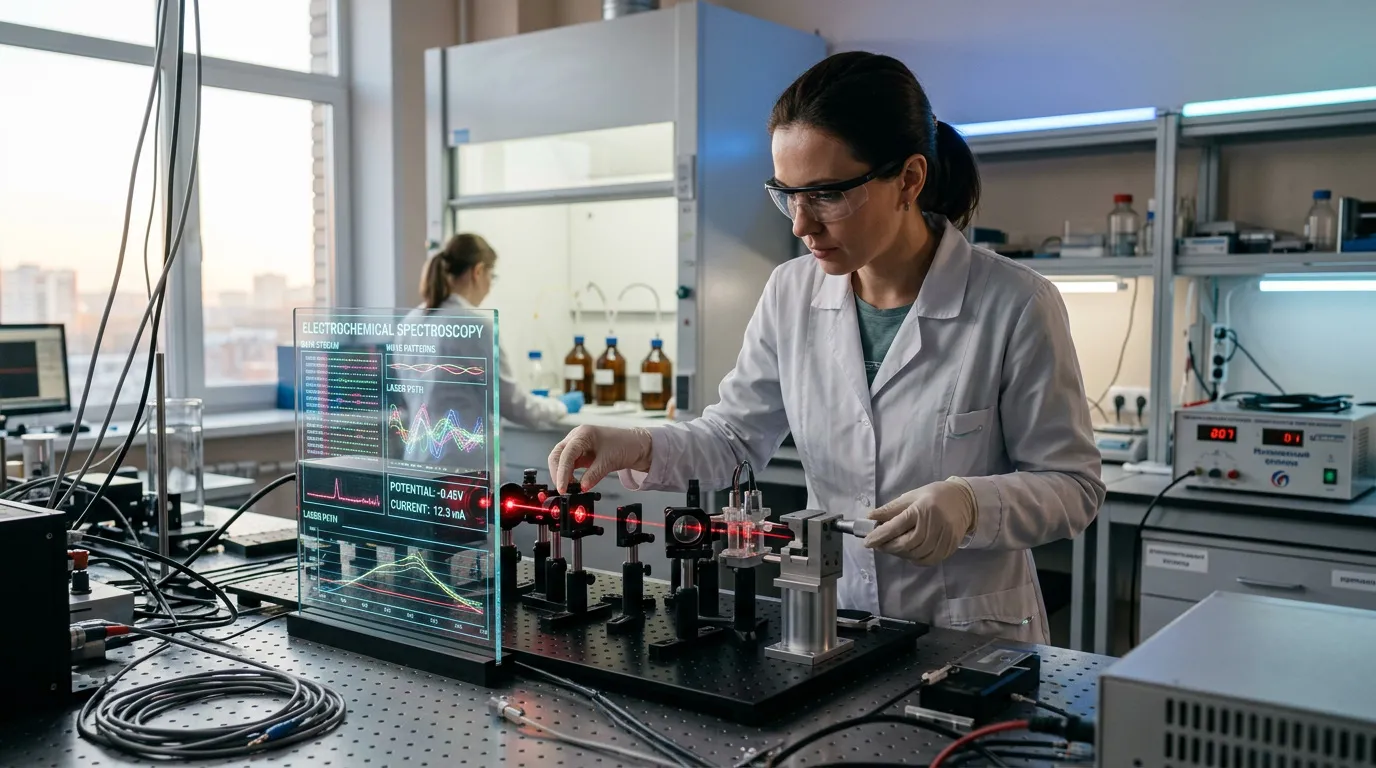
The software is being used to analyze carbon nanomaterials, particularly multiwalled carbon nanotubes. Those materials are widely used in the production of lithium-ion batteries, supercapacitors, industrial sensors and other components later deployed across multiple industries, including the energy sector.
As a result, the TsNFM platform could accelerate the development of new materials capable of improving the performance of industrial components while simultaneously lowering production costs and increasing durability.

From Lab to Industry
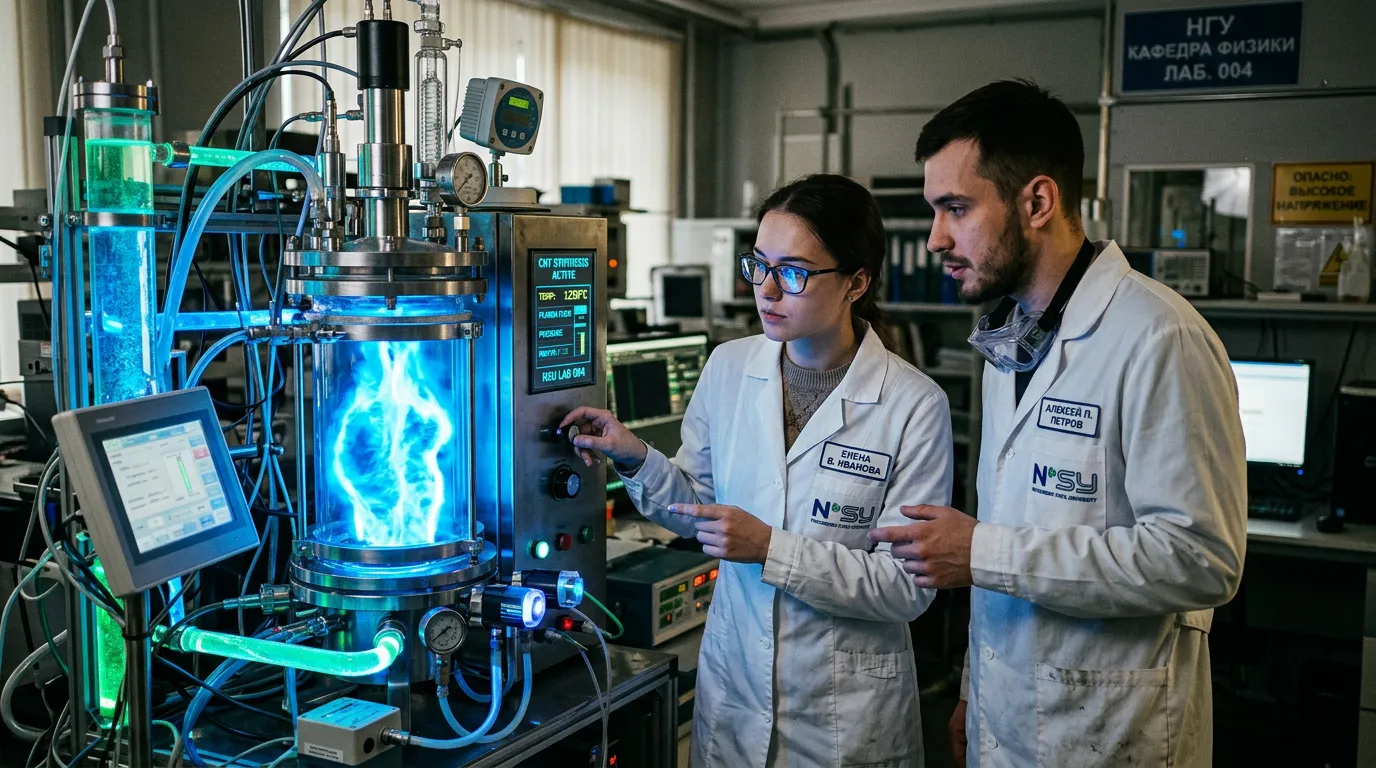
The software took three years to develop and is currently being used internally at TsNFM. According to the center’s management team, the technology could eventually be transferred to industrial partners responsible for deploying it in real-world manufacturing environments.
Researchers also expect the platform to see broader adoption across Russian scientific centers, universities and industrial laboratories involved in advanced materials development.
The key advantage of the Novosibirsk system is its ability to accelerate materials discovery severalfold, allowing researchers to eliminate nonviable samples much earlier in the development cycle.
If the software proves effective under industrial conditions, its stronger performance relative to foreign alternatives could eventually turn it into an export-oriented product with demand outside Russia.
Part of a Broader Russian Trend
The NSU project reflects a broader and increasingly stable trend in Russian materials science toward integrating digital technologies into advanced materials research.
In 2023, researchers at the Russian Academy of Sciences created a carbon nanotube-based composite capable of storing five times more charge than previously used comparable materials. In 2024, researchers from St. Petersburg State University, working together with colleagues from Omsk State Technical University, developed a method for connecting multiwalled carbon nanotubes that simplifies and reduces the cost of supercapacitor manufacturing. In 2025, Rosatom announced plans to create roughly 100 new products under the federal project Tekhnologii novykh materialov i veshchestv (Technologies for New Materials and Substances).
A Contribution to Technological Sovereignty
The software developed by Novosibirsk researchers could accelerate the creation of more efficient energy storage systems, industrial sensors and higher-capacity batteries. More broadly, digital tools that outperform foreign analogues not only reduce Russia’s dependence on imported software, but also shorten the time required to develop domestic materials for strategically important industries.