T2 Says AI Agents Resolve Customer Queries Three Times Faster Than Human Staff
AI assistants are already handling a large share of routine customer requests, helping operators speed up response times and reduce operational load.
Russian telecom operators are deploying AI more broadly across their operations. These technologies help accelerate processes and reduce operating costs, which is driving broader adoption of digital assistants.
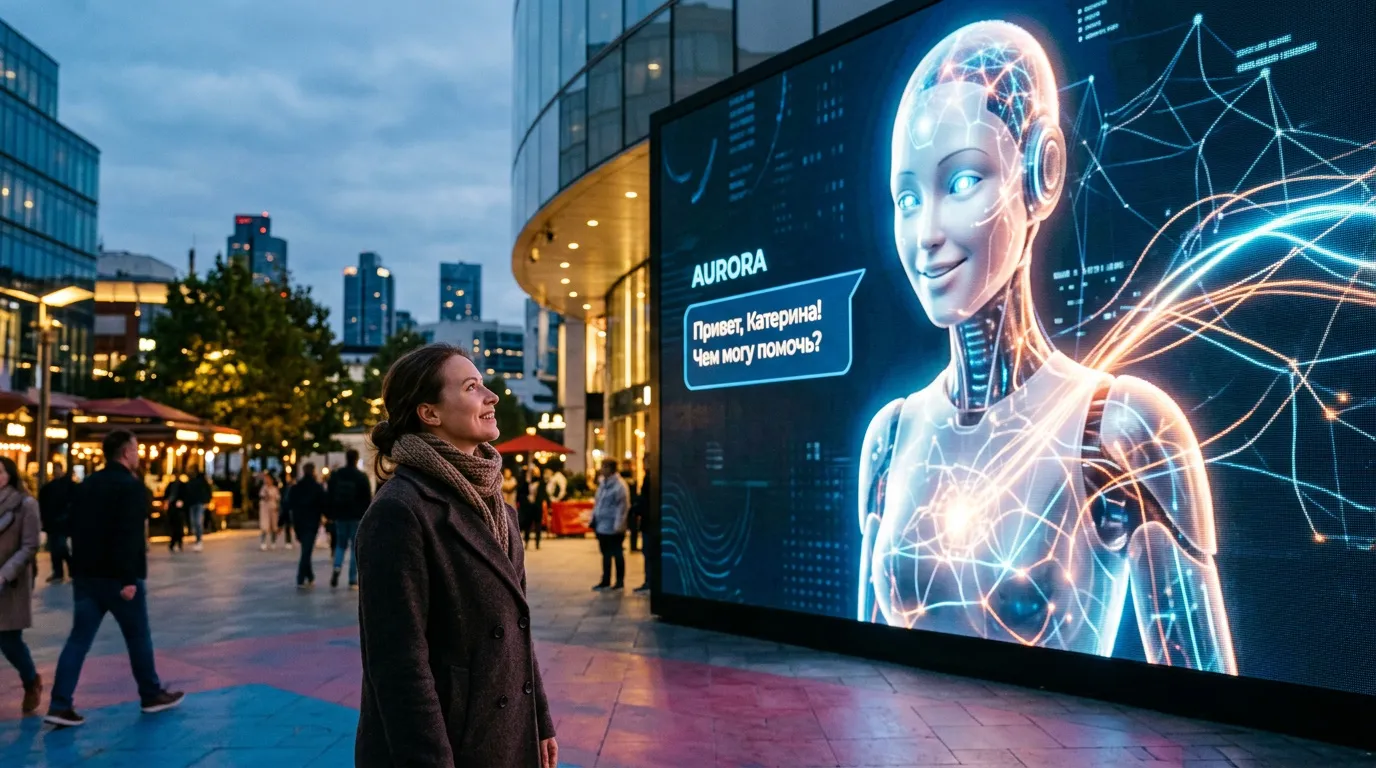
T2 says its AI assistant resolves typical customer issues three times faster than human agents. At present, AI systems can handle around 70% of all potential customer queries.
“Automated systems are well suited to handling simple requests, and customers value them for fast resolution and the ability to avoid involving a specialist for routine tasks. If a human agent resolves an issue in 220 seconds, a robot completes it in 70 seconds, or three times faster. This is possible because the system has access to all relevant service data, including usage profiles and likely request types,” the operator’s press service said.
AI Across Multiple Functions
Within T2’s digital infrastructure, AI is now deployed across multiple functions. The primary use cases include chatbots and voice assistants. In addition, AI tools support human agents during live interactions. The system analyzes calls in real time and surfaces likely causes of issues along with suggested resolutions. For example, if a customer calls about unexpected charges, the system surfaces recent transactions; if there is a network incident, the agent receives relevant outage information. This reduces handling time, as agents immediately see the context, while customers spend less time explaining the issue.
Another application of AI is in training simulators for customer support staff. The system simulates typical interaction scenarios and helps agents navigate conversations more effectively. At the same time, performance data from training sessions is automatically shared with supervisors.

Customers Back the Hybrid Model
“Our company uses AI algorithms across multiple areas, from customer service to network development. In this case, modern technologies act as a tool to support human employees rather than replace them.
In customer service, AI handles many routine tasks, freeing up specialists to focus on more complex issues. Many subscribers value this hybrid approach, where human involvement remains central. However, this would not be possible today without the support of automated systems,” said Vyacheslav Stoyanov, Director of the Baikal and Far East macro-region at T2.
T2 began actively deploying AI systems several years ago. In 2020, the operator launched a text-based chatbot developed in partnership with TsRT and KROK. The solution was built on the ChatNavigator platform, an omnichannel conversational system for creating intelligent virtual assistants. The chatbot initially supported dialogue scenarios across more than 1,000 topics and continued to improve through ongoing interactions with customers.

Ongoing Development
Other telecom operators are also advancing AI integration. In 2024, MegaFon upgraded its voice assistant Elena using solutions from SberDevices. As a result, the assistant’s performance metrics have approached those of human call center agents. Elena’s speech recognition speed increased by 20%, while accuracy reached 95%.
At this stage, it is clear that the capabilities of AI assistants will continue to expand. With algorithms already handling up to 70% of customer requests, the industry may move toward near-complete automation of customer interactions in the foreseeable future.