Russian Road Equipment Gets Smarter
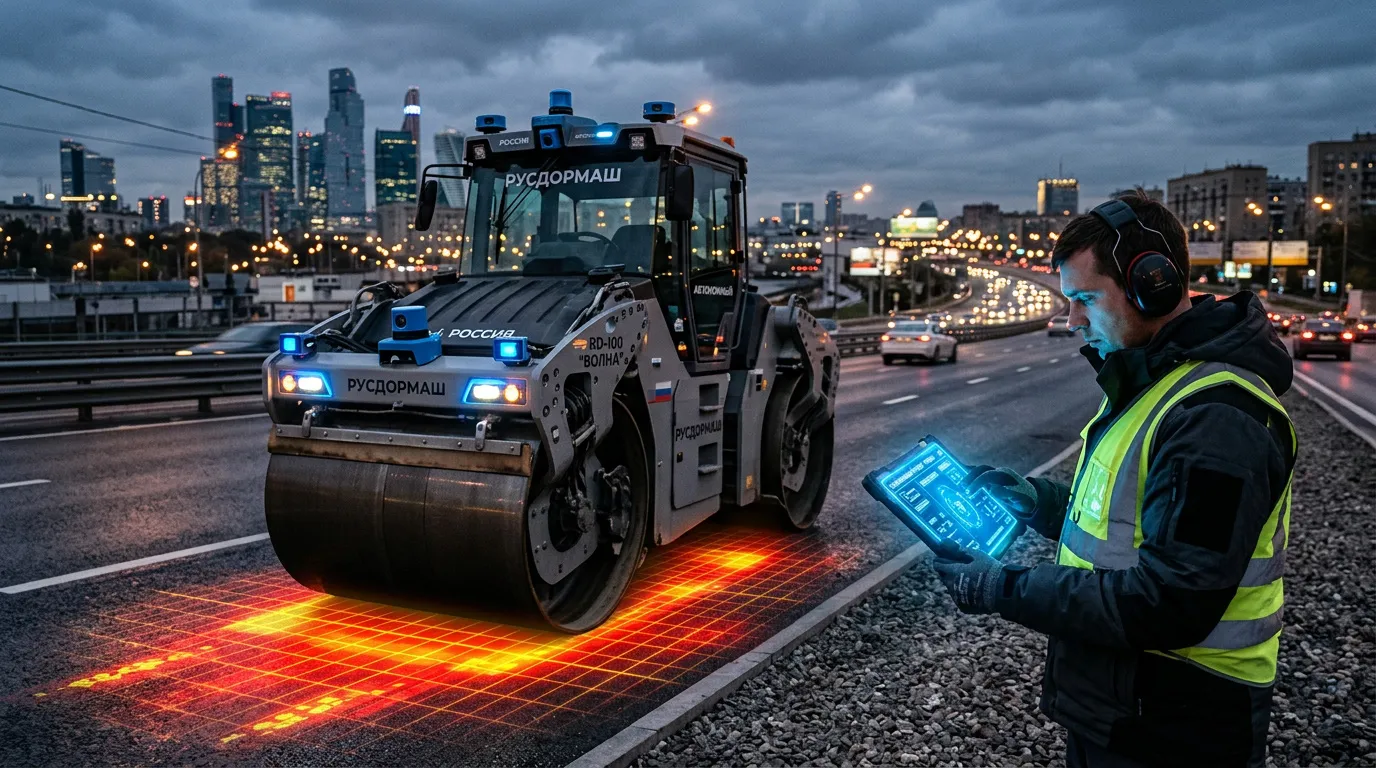
At the International Transport and Logistics Forum in St. Petersburg, Zavod Dorozhnykh Mashin introduced the DM-7,7-VV vibratory tandem roller. The standout feature is an autonomous control system that lets the machine operate with high precision. Component localization reaches 80%, which reflects a broader push toward domestic production.

The model uses intelligent software for precise roadwork. Its hardware includes FPV cameras, front and rear cameras, and an asphalt temperature sensor to maintain process parameters during paving. The system includes built-in safety features: remote emergency stop and automatic shutdown if the communication link is lost.
For now, the roller is controlled by an operator via a remote console at distances of up to 250 meters. However, it is already prepared for autonomous operation – either under supervision from a remote control station or fully independently. The machine is built for large-scale infrastructure projects and can operate in complex and confined environments while maintaining required compaction quality. Serial production is scheduled to begin this year.
Robots Will Build the Roads
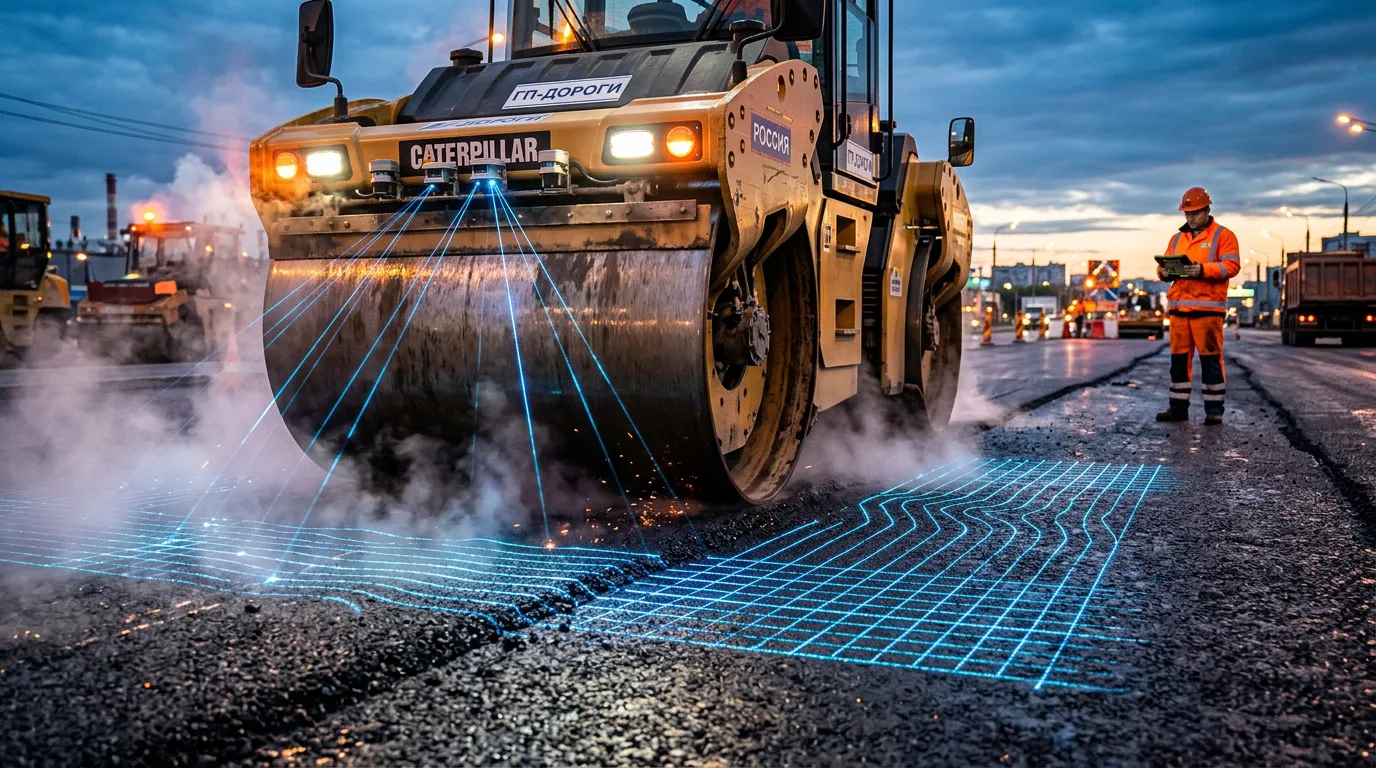
The Zavod Dorozhnykh Mashin development aligns with both global and domestic trends toward digitizing construction equipment. In road construction and maintenance, automation creates new ways to improve quality and efficiency. Autonomous machines can operate around the clock, shortening project timelines, accelerating commissioning of new roads, and improving pavement durability.
At the same time, the industry faces a shortage of skilled labor and rising quality requirements driven by state infrastructure programs. That combination is pushing demand for digital road equipment higher each year. Analysts expect rapid growth over the next decade: the global market for autonomous road equipment was valued at $1.89 billion in 2025 and could reach $8.79 billion by 2036, while autonomous pavers are projected to grow at a CAGR of 20.9%. Leading manufacturers including Caterpillar, SANY, and Dynapac are already investing heavily, and in some countries autonomous paving is becoming a requirement in tenders.
A Digital Turn on Russian Roads
Road construction in Russia is undergoing a structural shift, with digital platforms, artificial intelligence, and robotic systems replacing traditional methods. In 2025, Rosavtodor moved into a new phase of digitalization, focusing on end-to-end integration of IT across the entire road lifecycle. This shift creates new opportunities for the Russian IT sector.
According to the “Novoye industrialnoye PO” (New Industrial Software roadmap), domestic industrial software is expected to account for 90% of the market by 2030. In the coming years, demand is likely to rise for local embedded systems, sensors, telemetry, computer vision, and industrial cybersecurity. Integrating domestic software and control algorithms into heavy equipment is creating a new market for Russian navigation platforms and operator interfaces.

From Test Site to Highway
Autonomous construction equipment is a key focus. In 2025, Russia successfully tested its first fleet of unmanned road-building machines: the Desna-2100 asphalt paver developed by NPO GKMP and the RV-11-DD and RV-7-DD rollers produced by RASKAT. These machines are equipped with wireless data transmission systems and high-precision satellite positioning.
At the core is the Prometey hardware-software system, which integrates control and motion planning. It includes a leveling module for continuous navigation, along with computer vision and safety radars that detect people and obstacles in the work zone. An onboard computer processes sensor data, aligns it with the road design and compaction plan, and feeds instructions to the machine.
Based on this data, the algorithm calculates the optimal trajectory and sends commands to the actuators. The system enables a full cycle of autonomous paving of top asphalt layers – with pavers and rollers operating without drivers, ensuring high compaction accuracy and improved safety.
In August 2025, the first field tests of an autonomous road roller developed by Natsproektstroy and ERA-GLONASS took place on the M-12 highway in Perm Krai. The technology is expected to be used in constructing the Moscow – St. Petersburg high-speed highway.
New Challenges for Russian Developers
Automation and robotics in road construction are now used worldwide. In this context, Russian autonomous construction equipment could find export demand in markets that require reliability, adaptability to harsh climates, and competitive pricing – including EAEU countries, the CIS, parts of the Middle East, Africa, and Asia. Domestically, projects like these generate a multiplier effect by driving demand for local components and software. Over time, this creates a closed loop from development to deployment, strengthening technological sovereignty.