Universal Diagnostic Robot: A Russian Innovation Reshapes Utilities and Energy Infrastructure
In January 2026, Russian researchers unveiled a versatile robotic system that could fundamentally change how pipelines are inspected and maintained across utilities, energy, and industrial networks.
Flexibility Where Others Fall Short
In January 2026, scientists from Perm National Research Polytechnic University and Volgograd State Agrarian University introduced a universal robot designed for pipeline diagnostics and repair. This is not another laboratory prototype, but a practical breakthrough with the potential to transform maintenance practices in municipal utilities, oil and gas, and thermal power systems.
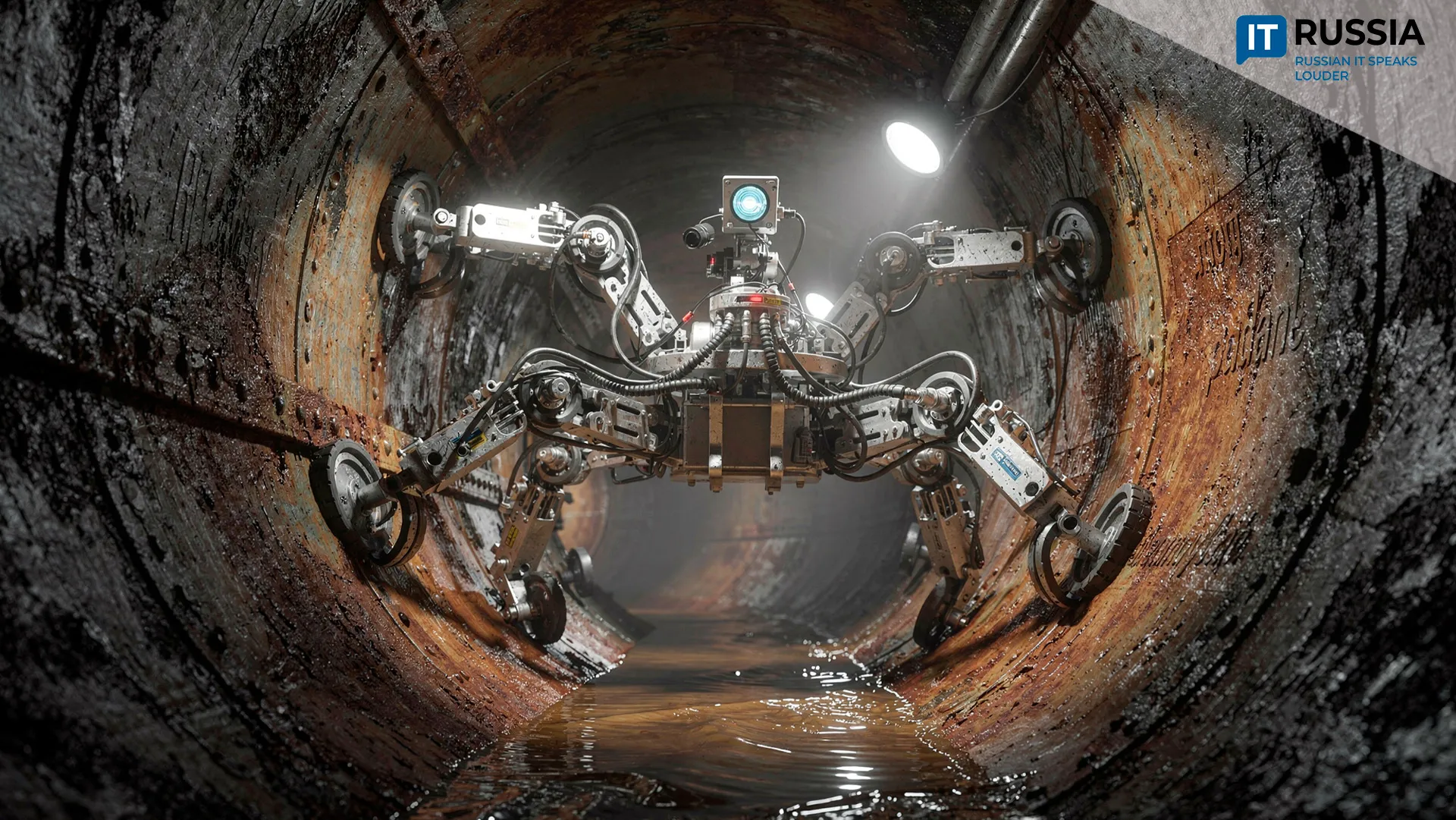
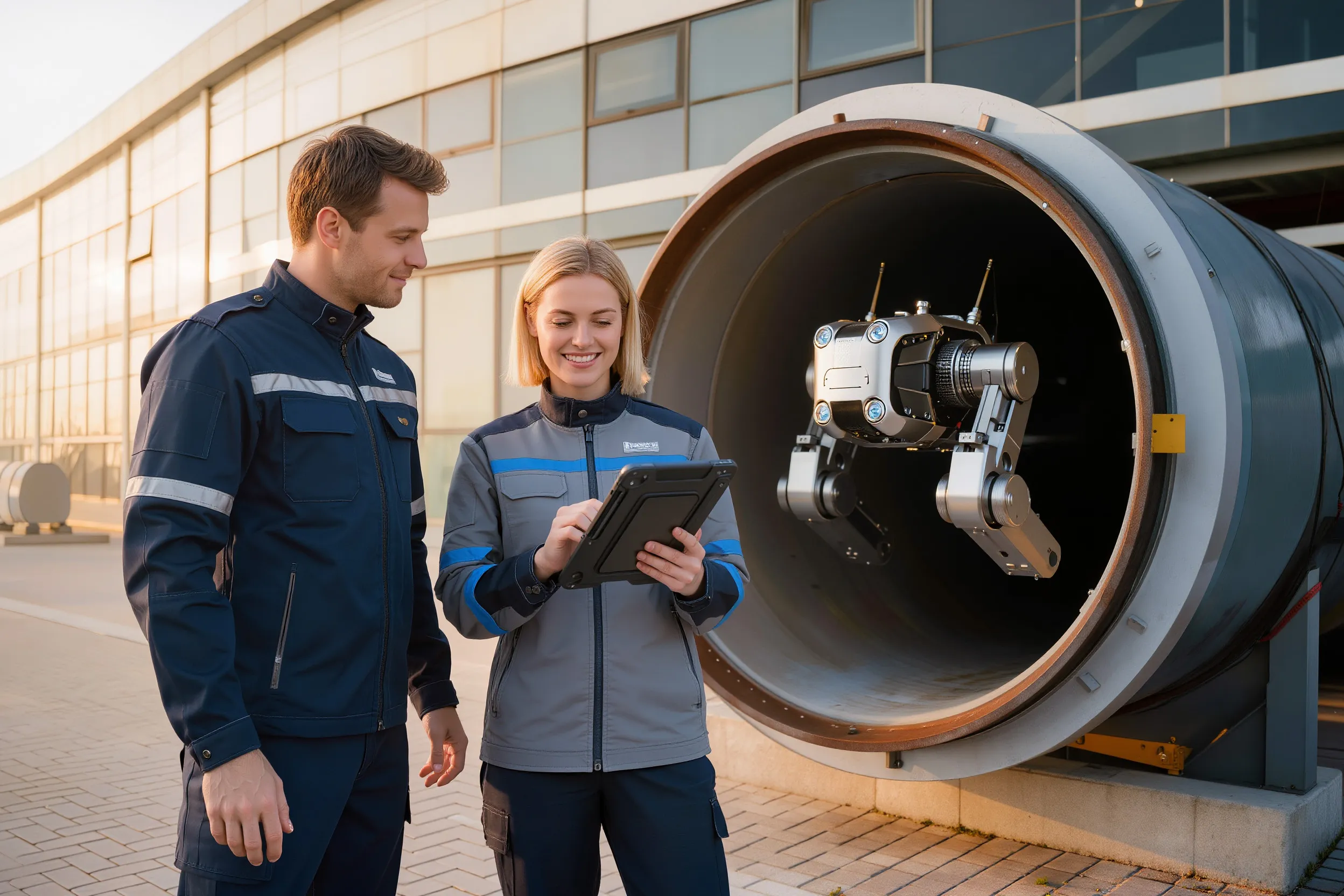
The robot’s defining advantage is its adaptability. It automatically adjusts to pipe diameters ranging from 500 to 1,400 mm, navigates 90-degree bends, and moves confidently along vertical sections. This flexibility is enabled by an intelligent mechanical architecture featuring six spring-mounted support “legs” and twelve drive wheels, which maintain stable contact with pipe walls even on uneven surfaces and sharp curves.
This capability addresses a major limitation of many existing solutions, which typically operate only within fixed diameter ranges and struggle with complex network geometries. During testing, the robot not only moved through pipelines but also performed cleaning operations by delivering a specialized fluid through an attached hose. The development directly targets the challenges of aging infrastructure, offering utilities a tool for preventive maintenance, accident avoidance, and extended pipeline service life.
Russian Technologies Strengthen Competitive Position
The application potential of the technology is broad. It is relevant for mechanical engineering, power utility services, municipal water and heating systems, as well as oil, gas, and chemical industries. By enabling more accurate and frequent inspections, the robot promises meaningful reductions in operating costs and helps prevent costly failures.


Its universality also opens export opportunities. The device could be attractive to countries with extensive and complex infrastructure networks in Europe and Asia, where similar maintenance challenges exist. At the same time, several barriers remain before large-scale deployment can begin. Developers still need to establish serial production, complete extensive field trials, and deliver comprehensive software for navigation and repair management to compete effectively with established international solutions.
The Evolution of Diagnostic Robotics
The new system represents a logical step in the evolution of Russia’s infrastructure-focused robotics. Over the past five years, several notable projects have laid the groundwork.

In 2020, researchers at Tomsk State University patented a robotic complex that travels along the exterior of pipelines, using ultrasonic and infrared sensors to detect defects. Artificial intelligence builds a real-time damage map, and the robot can immediately apply repair materials where needed.
Municipal operators Mosvodokanal and Mosvodostok have also been using fleets of specialized robots for several years to inspect and repair water supply and stormwater systems. One example is the P-200 system, which examines pipes with diameters from 200 to 1,800 mm, supporting flood preparedness efforts in urban environments.
The Case for Universal Solutions
The emergence of a truly universal diagnostic robot signals a shift toward a new generation of maintenance robotics. Instead of relying on multiple specialized machines for different pipe diameters, utilities gain a single, adaptable solution for heterogeneous networks. Regular, high-precision diagnostics reduce the risk of major failures and allow operators to optimize repair budgets.

The robot developed at Perm Polytechnic is not just an engineering milestone. It is a concrete example of how domestic IT and robotics innovations are beginning to address systemic infrastructure challenges. By improving reliability and preventing disruptions, such technologies directly affect the quality of life for millions of people and strengthen the economic resilience of utility and energy systems.