A Synthetic Breakthrough: How Scientists in Tomsk Are Tackling AI’s Biggest Bottleneck
Researchers at the Department of Information Processing Automation at Tomsk State University of Control Systems and Radioelectronics are building a pipeline for generating synthetic images to train neural networks. The project aims to make AI models far more resilient in real-world conditions.
From Scarcity to Abundance: Data Without Limits
Artificial intelligence already recognizes faces, controls drones, and helps diagnose disease. Yet behind these advances lies a fundamental vulnerability: neural networks are data-hungry. They require millions of labeled images for training, while collecting real-world data is expensive, labor-intensive, and often impossible. How can an algorithm learn to recognize industrial accidents if those events cannot be safely recreated in reality?
The answer is emerging from Tomsk. Scientists at TUSUR are developing an “image factory” – a synthetic data pipeline that could reshape the rules of computer vision.
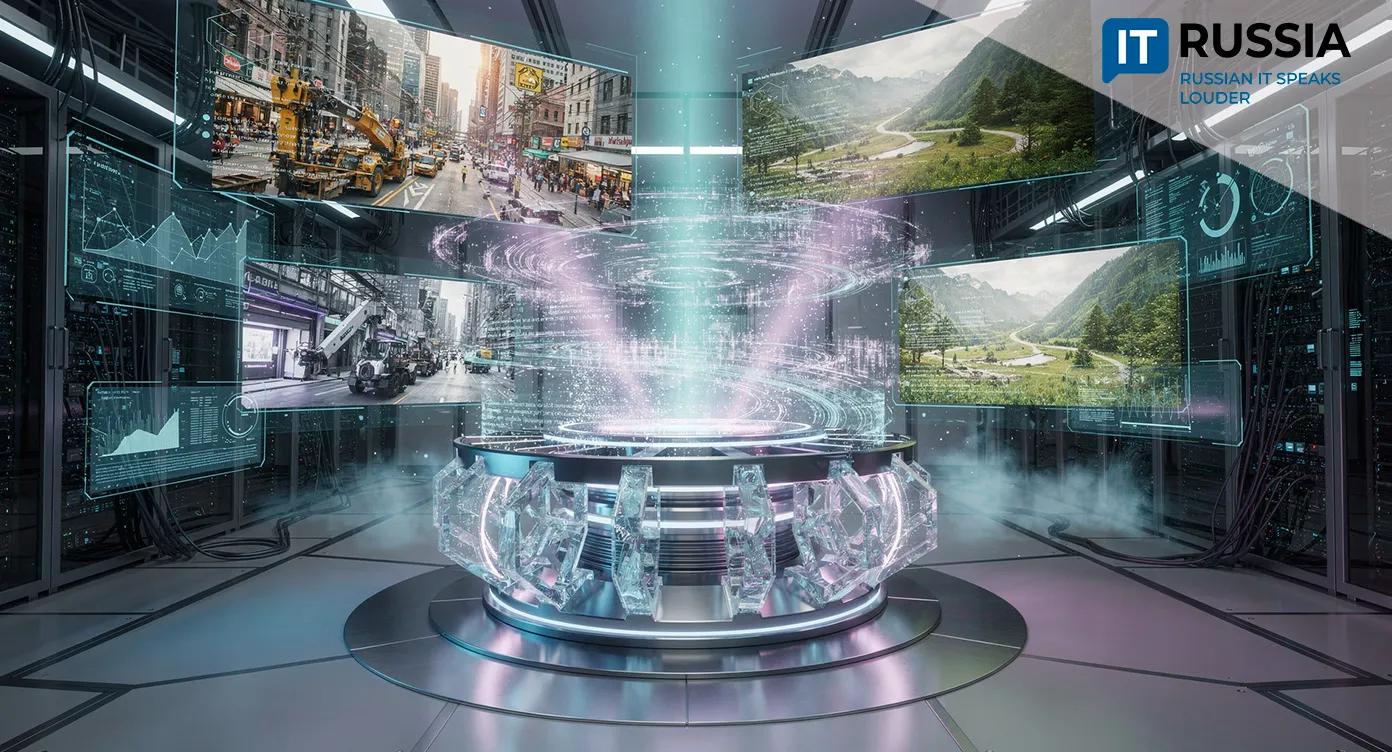
The Department of Information Processing Automation at TUSUR is creating a system for generating artificial images based on 3D models and game engines. The platform produces photorealistic scenes with predefined parameters such as camera angles, lighting, and weather conditions. This approach addresses three critical challenges at once: it eliminates data shortages for rare events, reduces reliance on foreign datasets, and increases the robustness of neural networks in real-world environments. Models trained only on “perfect” images often fail in the field. Synthetic data makes it possible to preemptively “vaccinate” algorithms against noise, shadows, and atypical scenarios.
Strategic Importance for Russia
The project goes well beyond an academic experiment. For Russia’s IT sector, it lays the groundwork for technological sovereignty in machine vision. Today, many Russian developers depend on datasets produced by Western corporations, a reliance that limits flexibility and creates risks under sanctions.
TUSUR’s image factory is forming the core of a national data ecosystem – a platform on which domestic AI solutions for industry, transport, and security can be built. For the education system, the project serves as a unique training ground. Students gain access to infrastructure comparable to that found only in leading global laboratories. This accelerates the development of a new generation of specialists who can design AI systems from the ground up, rather than simply apply existing tools.


A Global Trend With a Russian Twist
Synthetic data generation is not a local novelty, but a global trend. International studies have already shown that neural networks trained on high-quality artificial images can outperform models trained exclusively on real-world data in certain tasks. The key challenge lies in producing synthetic data that is both indistinguishable from reality and legally sound.

Here, the Russian project shows clear export potential. TUSUR’s technology enables data generation without violating copyright, a critical advantage for international companies facing lawsuits over the use of protected images in AI training. Autonomous transport, industrial quality control, and cybersecurity are likely to be among the first sectors to benefit from such solutions.
From the Lab to Industry
The project’s prospects extend far beyond university walls. Within state digitalization programs, including Priority 2030, the image factory could become a foundational infrastructure for dozens of Russian universities and enterprises.
Consider the possibilities: a semiconductor plant trains quality-control systems on synthetic defects; emergency medical services model rare injuries to improve diagnostic algorithms; rescue agencies rehearse debris recognition after earthquakes. All of this becomes possible without endangering lives and without the multimillion-dollar costs of real data collection.
In the coming years, the Tomsk researchers’ work could evolve into a baseline platform for Russian AI – from research labs to commercial products. In an era when data has become the new oil, Russia is betting on its artificial production. That choice may prove not only a technological breakthrough, but a strategic advantage in the global AI race.