AI for Everyone: Russia Proposes AI Education Modules for Every University Student
Artificial intelligence is no longer viewed as a skill reserved for programmers. Russia's Ministry of Science and Higher Education is proposing to make AI education a required part of every university student's curriculum, reflecting a broader transformation of the country's higher education system.

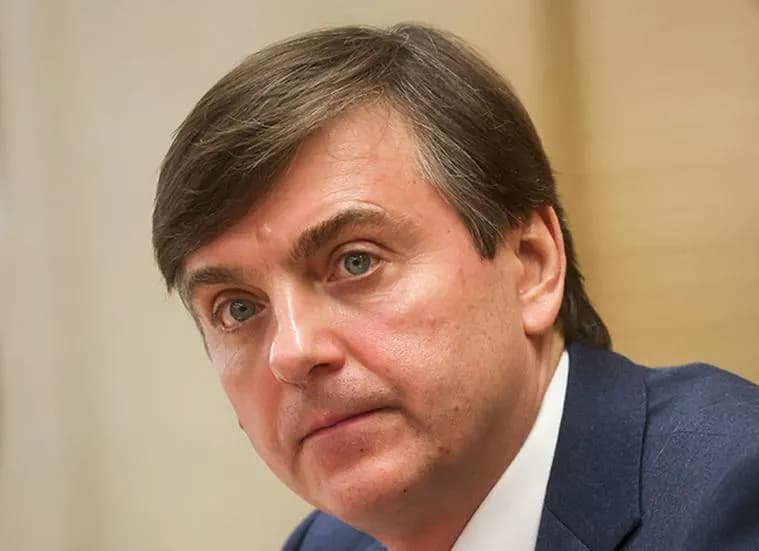
Speaking at the Tekhnologii II v vysshem obrazovanii (AI Technologies in Higher Education) forum in Tyumen, Minister of Science and Higher Education Valery Falkov proposed introducing two mandatory artificial intelligence modules into every higher education program. The first would be a foundational course required of all first-year students. The second would be profession-specific, recognizing that biologists, geographers, engineers and economists need different AI tools tailored to their disciplines.
"Because universities prepare students for specific professions, and artificial intelligence technologies have their own distinct characteristics within each profession, we believe every educational program should include a profession-specific AI module," the minister explained.
If approved, the proposal would affect virtually every university student in Russia. The goal is not to turn humanities majors into software developers. Rather, it is to give every graduate the knowledge needed to communicate effectively with AI technologies relevant to their future profession.

Traditional Degrees Under Review
The content of the courses, the number of instructional hours and the balance between the two modules are still under discussion. To support the rollout of the foundational course, the ministry plans to establish a dedicated academic and methodological association responsible not only for developing the curriculum but also for creating a modern unified platform to monitor learning outcomes. Another priority is faculty development. Because AI technologies evolve rapidly, educators will need continuous professional development. Otherwise, their knowledge could become outdated faster than students are able to take notes.
Falkov also anticipates changes in final student assessment. He echoed concerns increasingly voiced by university faculty that traditional term papers and graduation theses no longer evaluate knowledge as effectively as they did 10 to 20 years ago. The reason is the rapid advancement of generative AI systems capable of producing texts that are sometimes indistinguishable from human writing.
Back to the Roots
Students majoring in economics are currently among the most active users of generative AI. AI-generated content already accounts for as much as 60% of the text in some graduation theses. At that point, the assessment no longer measures subject knowledge as much as it measures the student's ability to formulate prompts for a chatbot.
Falkov suggested that continued advances in AI could eventually lead universities to replace graduation theses with oral examinations. "Oddly enough, we may be returning to the fundamentals. I mean oral assessment and direct communication, where both a person's strengths and, as the saying goes, 'everyone's foolishness,' become fully visible. No system can simply prepare a student for a professor's questions. You can still tell the difference," the minister said. In effect, he proposed returning to a model similar to the Soviet-era examination system, where direct dialogue between student and examiner played the central role.

Raising Academic Standards
The Ministry of Science and Higher Education first announced plans to expand AI workforce training and launch new bachelor's degree programs in 2022. Soon afterward, leading universities began introducing dozens of specialized master's programs for future AI developers.
In 2023, universities were encouraged to add an updated Sistemy iskusstvennogo intellekta (Artificial Intelligence Systems) module to their curricula. The course was intended not only for computer science students but also for future professionals in priority industries, public services and government. Nearly 500 educational institutions offered AI-related instruction in one form or another, although the proportion of students enrolled in specialized AI degree programs remained relatively modest.
Universities expanded their experimentation with generative AI in 2024. The number of institutions offering AI programs continued to grow, reaching 113 universities across dozens of regions by the end of the year. By that time, 207 universities in 69 regions were already training specialists in the field.
At the State Council meeting in December 2026, the President called for a new approach to workforce preparation in response to the rapid spread of AI systems. A broader shift has also taken place in how universities view generative AI in teaching. Falkov argues that universities should integrate AI not through bans and restrictions but through strong academic standards and well-designed educational practices.

A Generation Raised With AI
The minister notes that universities will soon welcome students who have known artificial intelligence since early childhood. They have never experienced a world without smartphones, voice assistants or recommendation algorithms. For them, AI is as natural a tool as a pen or calculator is for today's adults. By the time they begin higher education, they will already bring a fundamentally different way of thinking into the classroom.
That is why, according to Falkov, the central question is how universities can harness artificial intelligence in ways that strengthen rather than undermine traditional academic standards while fostering stronger cognitive skills. Those are longer-term challenges. More immediate questions remain: How should AI literacy be measured? How can educators determine whether students genuinely understand the reasoning behind AI-generated responses? And how should learning environments be designed so AI strengthens, rather than weakens, critical thinking? Answers are likely to emerge soon.