From Portal to Conversation: “Alisa” Turns Public Services Into a Background Habit for Moscow Residents
Digital technologies are becoming deeply embedded in everyday life in Moscow, where residents can now submit electricity meter readings not only through traditional channels, including the mos.ru portal, but also via the virtual assistant Alisa.

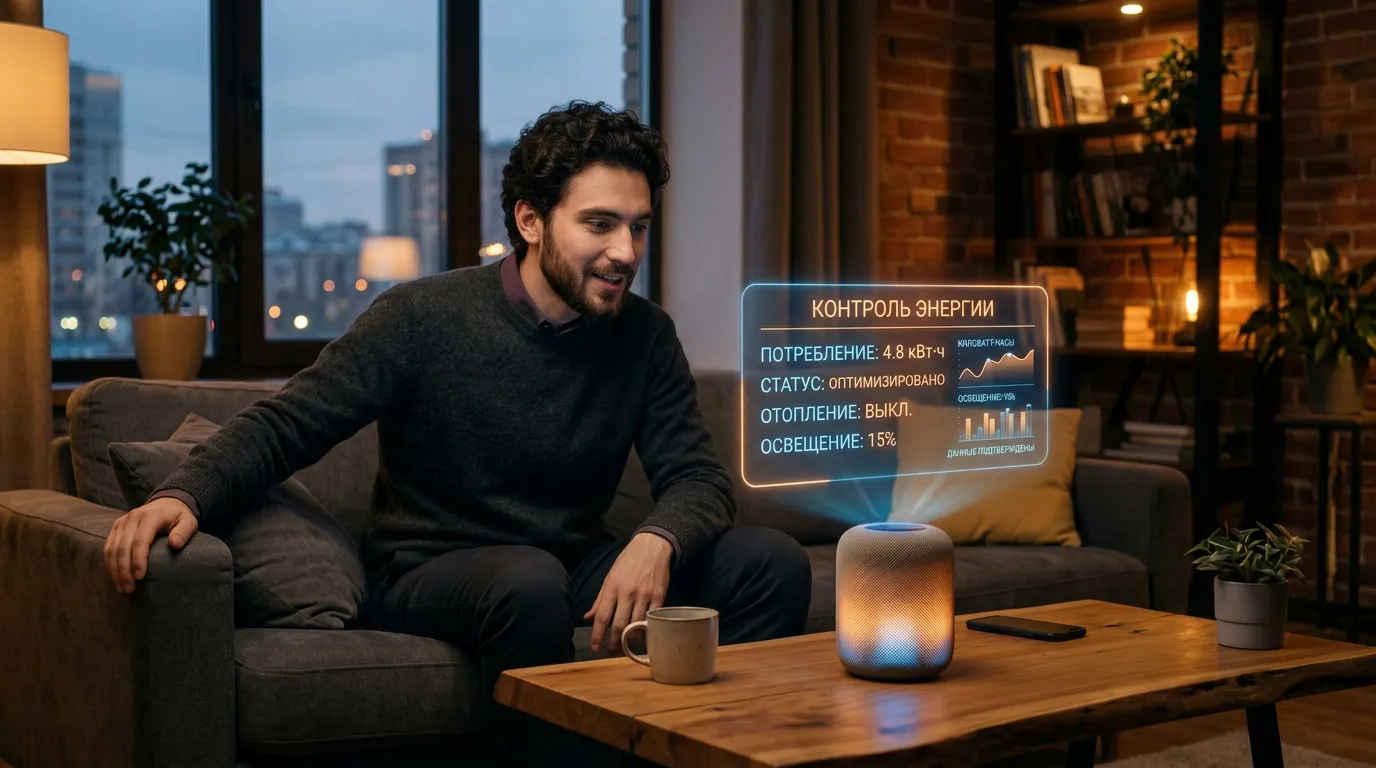
In March 2026, Moscow residents gained the ability to report energy consumption through Yandex’s intelligent services. This can be done via text in the app or chat with the virtual assistant, and most conveniently by voice using a Yandex Station device.
To use the service, residents need an active account on mos.ru. They then activate the Mosuslugi feature on the Yandex Station and link their Yandex ID and Mos ID accounts. No paid Yandex subscription is required. If the service is not used for three months, the accounts must be linked again. With regular use, the data needs to be refreshed once a year.
The service is designed to be simple and intuitive. Users dictate their meter readings, the system calculates consumption, and then confirms the data before submission. The readings are then recorded and transmitted for billing.
The Logic of Scaling
According to Moscow’s Department of Information Technology, about 60 percent of residents regularly use voice assistants for city services, while roughly half of the population already owns smart devices. Expanding voice-based services to additional use cases follows the broader strategy of digitizing the city’s infrastructure.
The department has repeatedly outlined plans to expand smart city services through a multichannel approach that ensures accessibility. Residents can access services via phone, portal, or mobile app, while AI-powered voice interfaces further simplify interactions.
The service itself, tightly integrated with Mos ID and municipal data systems, is difficult to export as a ready-made product. However, the underlying model can be adapted for other markets. Expanding it across Russian regions is more straightforward, as it is built on domestic software integrated with the widely used Yandex ecosystem.

How Moscow Built a Conversational Interface
Moscow leads Russia in municipal digitalization and is steadily moving toward conversational public services.
In 2023, the city introduced a hotline service for submitting electricity meter readings, where an automated system replaced human operators. While the channel remained familiar, the process itself became fully automated.
In May 2025, the Mosuslugi feature was first integrated into the Alisa ecosystem, allowing residents to submit water meter readings via voice interaction.
Nearly a year later, the system expanded to include electricity consumption, completing the transition of these services into a unified voice-based interface.

From Service Availability to Everyday Convenience
The broader rollout of AI-powered voice services in public administration significantly reduces friction in routine interactions. Residents no longer need to navigate websites or apps to find the right section – a simple voice command is enough.
Looking ahead, Moscow plans to move more high-demand, routine services into voice interfaces. For example, residents may soon be able to book medical appointments or submit requests to property management companies through Alisa.
For Russia’s IT sector, this project demonstrates a working model of integrating government digital infrastructure with domestic AI systems. For Moscow and the country as a whole, it highlights how digital public services are becoming a natural part of daily life.