Algorithmic Whispers: Tomsk Experts Outline Four AI Models for Universities
Experts at Tomsk State University (TGU), together with the Center for Strategic Research “Severo-Zapad” (North-West), have examined how universities in Russia and across global higher education are using artificial intelligence.

AI breakthroughs dominate headlines, creating the sense that anyone not coding today risks falling behind. Universities are reacting in different ways: some are investing heavily in GPU infrastructure, others are banning tools like ChatGPT under threat of expulsion, while some are choosing to wait and see. The experts bring structure to this fragmented response, presenting a report that defines four models of transformation.
A Diagnostic Scan for Higher Education
The conversation was sparked by TGU Rector Eduard Galazhinskiy, who personally presented the report to the Ministry of Science and Higher Education. The authors analyzed how AI is reshaping both global university leaders and Russian institutions that train future professionals. The result reads like a diagnostic scan of the modern university, revealing how algorithms are restructuring governance, upgrading infrastructure, and driving the emergence of entirely new institutional models.
Minister of Science and Higher Education Valeriy Falkov set the tone, emphasizing that the pace and quality of AI adoption in universities will shape the country’s trajectory. This goes beyond student outcomes, it directly affects Russia’s position in what he describes as a new technological reality.

Four Pathways to AI Adoption
The report identifies four models for how universities can engage with AI. The first is a multi-format model, AI-enabled learning and R&D. It focuses on selecting a single area for leadership and running targeted experiments. This approach prioritizes rapid iteration and is accessible to most institutions because it does not require large-scale restructuring.
The second model embeds AI across all layers of the university, including governance, teaching, research, and student services. Known as the AI-native model, it represents a full transformation that only institutions with substantial infrastructure can realistically achieve.
The third model, AI-focused, offers a more gradual path. It builds an environment where AI tools are treated as collaborative resources, with faculty and students adopting them step by step. This model also emphasizes the development of ethical guidelines and institutional policies.
The fourth model, AI-as-service, centers on a unified platform of AI tools delivered in partnership with technology companies. Its defining feature is accessible infrastructure that lowers the barrier to entry.

From Policy to Practice
In 2023, UNESCO released guidelines on AI, calling for strong data protection and a human-centered approach. That marked a turning point, signaling the need for governance frameworks as AI adoption accelerates.
A year later, OpenAI launched ChatGPT Edu, designed specifically for schools and universities. Soon after, California State University provided access to AI tools to all 460,000 students, a clear example of the AI-as-service model in action.
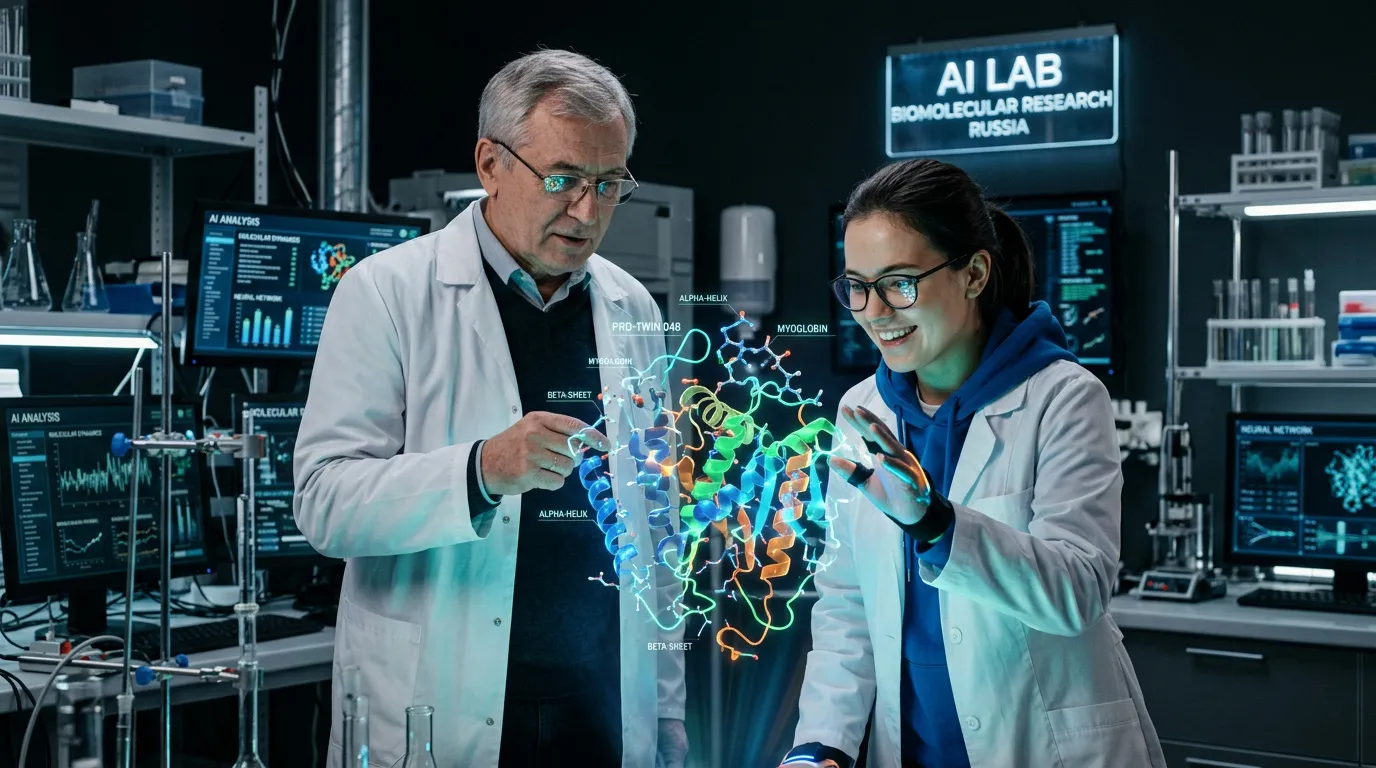
Meanwhile, Russian universities are moving from theory to implementation. Since 2025, Tomsk State University has launched what it calls a laboratory “factory.” These labs explore applications ranging from journalism to chemistry, including AI-assisted veterinary care, drug discovery, and automated content production. In total, seven labs are tackling interdisciplinary challenges. The university has also opened specialized labs focused on nuclear energy and unmanned aerial systems.
At the national level, Russia introduced its first AI university ranking by the AI Alliance. In 2025, Mintsifry selected 22 universities to train top AI specialists through 2030, including MIPT, ITMO, SPbU, and Innopolis University. At a Kremlin meeting, the President stated that technological sovereignty is not achievable without AI, reinforcing the country’s strategic direction.
A Playbook for University Administrators
For most Russian universities, the report suggests that the first two models, pilot-driven experimentation and gradual integration, are the most practical starting points. At the same time, institutions aiming for leadership can move toward the AI-native model, where AI becomes the foundation for all operations.
The TGU and Severo-Zapad report is more than a classification system. It serves as a practical guide for policymakers, university leaders, AI specialists, research teams, and curriculum designers navigating the transition.
Rector Eduard Galazhinskiy notes that AI expands opportunities while introducing new constraints. This dual effect has led to the concept of the AI University, where institutions are built around intelligent systems. The Tomsk team proposes four distinct pathways, allowing each university to choose its own trajectory.