Tracking a Geochemical Signature: Machine Learning Helps Decode Ancient Ceramics
Russian researchers have analyzed the composition of medieval ceramics using a blend of advanced technologies. The study marks the first successful effort in Russia to combine a nuclear-physics-based analytical method with machine learning. This interdisciplinary approach made it possible to determine chemical composition, origin, and more precise dating of the artifacts.
Scientists from the Laboratoriya neytronnoy fiziki imeni I.M. Franka (I.M. Frank Laboratory of Neutron Physics, LNF) at Obedinennyy institut yadernykh issledovaniy (Joint Institute for Nuclear Research, JINR), working with colleagues from Institut arkheologii RAN (Institute of Archaeology, Russian Academy of Sciences) and the Egyptian Atomic Energy Authority (EAEA), applied neutron activation analysis alongside machine learning algorithms. Their goal was to identify the provenance of medieval Russian ceramics and calculate the concentration of chemical elements with high accuracy.
Chemistry as a Historical Fingerprint
Ceramics are among the most information-rich types of archaeological finds. The composition of clay and additives preserves a distinct geochemical signature of the raw material source, while also reflecting the technological practices of ancient pottery production.
Until recently, studies of the origins of medieval Russian ceramics were limited. Small sample sizes and the absence of comprehensive geochemical databases restricted progress. That is now changing. Using modern analytical tools, researchers examined 149 ceramic fragments dating from the 13th to 17th centuries, producing a far more detailed dataset. Their chemical profiles allow more precise identification of production sites and help reconstruct medieval trade routes and craftsmanship techniques.
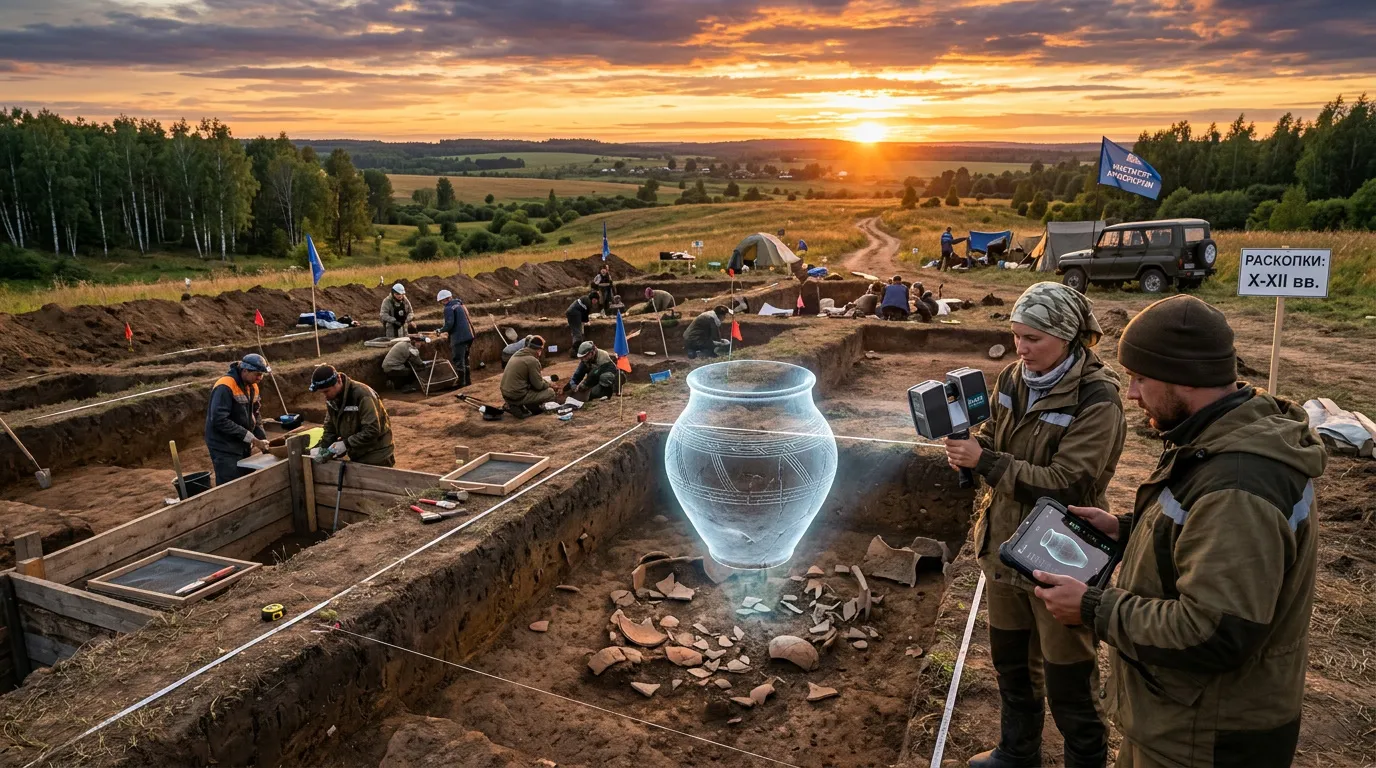
The samples included clay vessels from the Moscow Kremlin, Tver, and Selitrennoe gorodishche, as well as craft ceramics from Bolgar and Bilyar. The team also analyzed fragments of Byzantine amphorae and ceramic artifacts from the ancient state of Khorezm, located in Central Asia.
For example, ceramics from Bolgar were found to contain distinctive levels of chromium, antimony, manganese, arsenic, and nickel. These elements reflect the geological characteristics of local clay sources and act as reliable markers of origin.
The authors note that the findings could serve as a foundation for future geochemical research and for developing new classification methods for archaeological artifacts.
New Tools for Old Questions
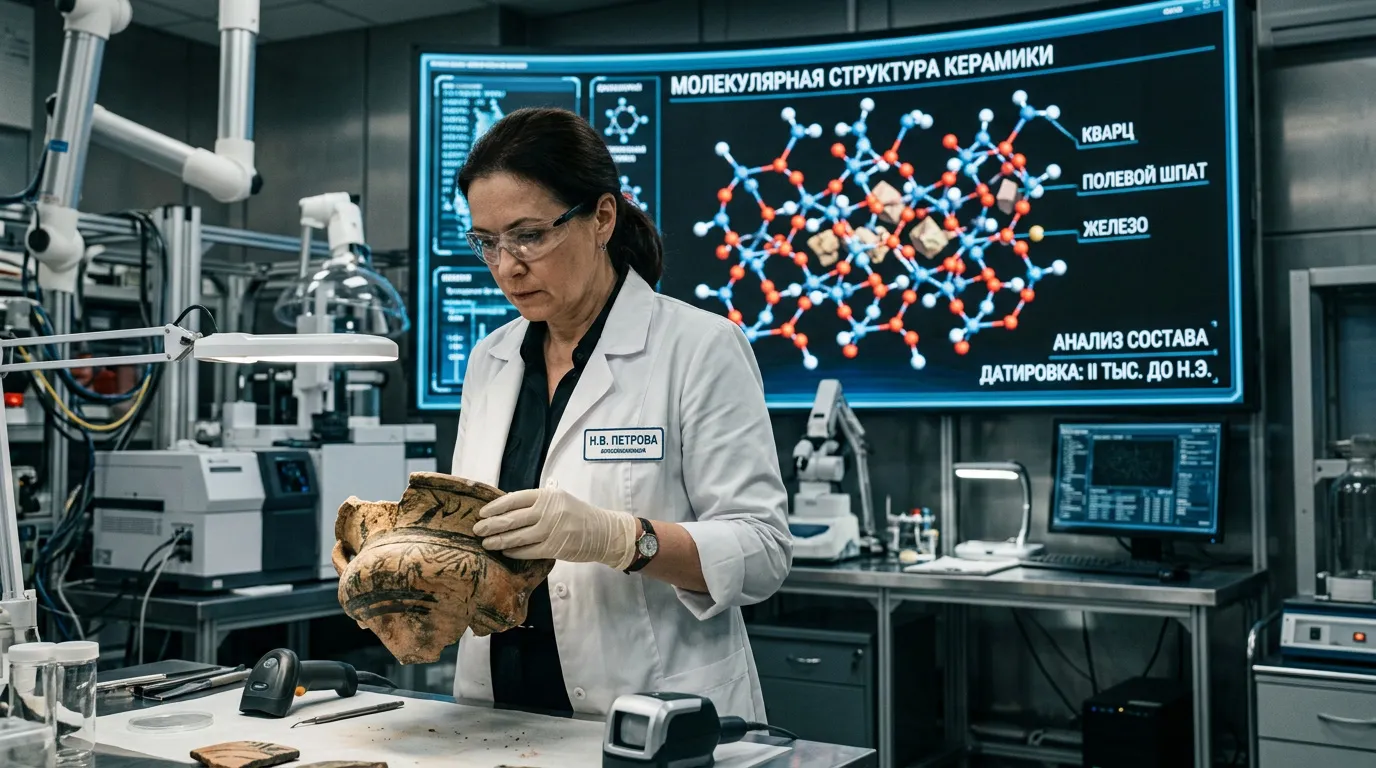
To determine elemental composition, the team used instrumental neutron activation analysis on the IBR-2 pulsed reactor at LNF JINR, along with X-ray fluorescence analysis conducted on additional facilities. Together, these methods enabled precise measurement of 29 chemical elements in each sample.
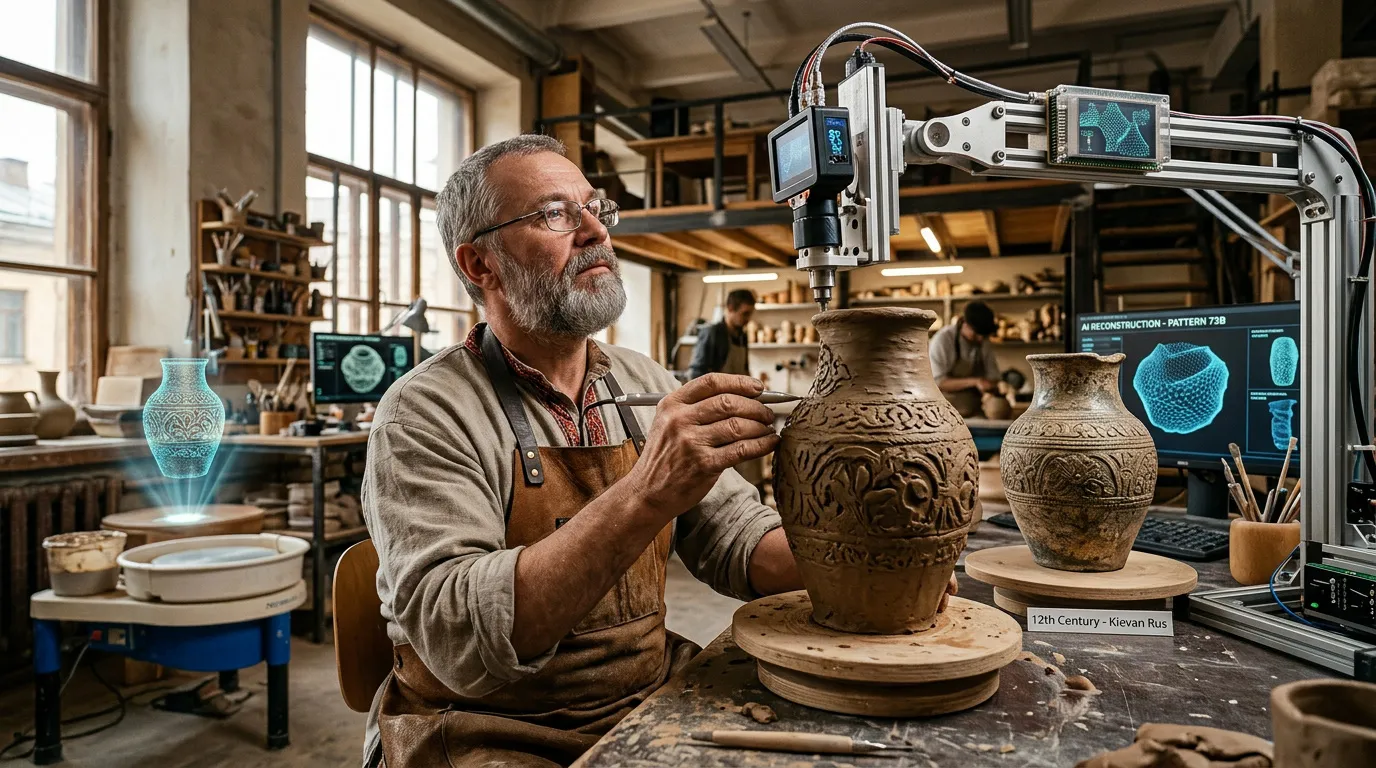
What sets the study apart is its use of supervised machine learning. Researchers applied support vector machines, random forest, gradient boosting, and multilayer perceptron models to classify ceramic fragments with unknown origins based on their geochemical signatures. The system achieved an accuracy rate of 85 to 88 percent, demonstrating the robustness of the approach.
From Lab Experiments to Digital Archaeology
The study represents the first successful integration in Russia of nuclear analytical techniques with machine learning for tracing the origin of ancient ceramics and establishing baseline values for Bolgar artifacts. The researchers also introduced a new methodology for attributing archaeological finds. In practice, this approach enables more precise identification of production sites and supports the creation of detailed maps of medieval trade networks.
The implications extend beyond Russia. Many valuable artifacts worldwide remain only partially studied. Technologies like AI can help fill those gaps, offering new insights into entire historical periods and cultural systems. In the coming years, such efforts are likely to evolve from isolated experiments into large-scale datasets and digital research environments.