Closing the Loop: SberCRM Reshapes How Businesses Sell
Managers handling large customer bases no longer need to remember which channel they used to contact a client or what stage that interaction is at. SberCRM now pulls conversations from Telegram, VKontakte, Avito, and the MAX messenger into a single interface and automatically creates a contact card.

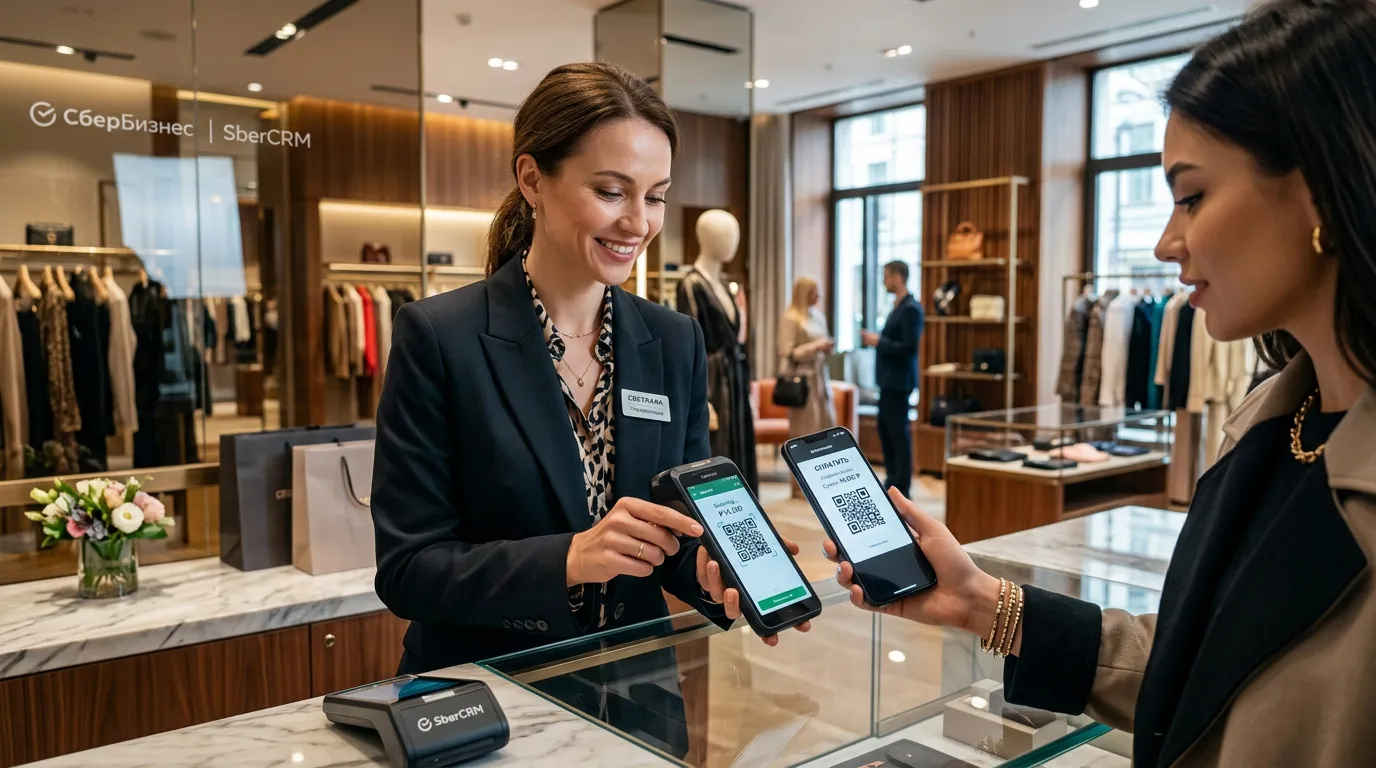
The same interface lets teams close deals and accept payments without jumping between apps. The updated CRM allows transfers from business cards, automatically generates receipts via YuKassa, and accepts payments from legal entities directly into a company account at Sber, all without switching to a banking app.
Customers Pay Their Way
The update, released by Sber Business Soft, turns the CRM from a tracking tool into a closed-loop operational platform built around a “client – dialogue – deal – payment – receipt” flow. That shift reduces staff workload, shortens time to close, and lifts conversion rates.
Customers benefit from faster, more consistent service, including quick replies in their preferred messenger and flexible payment options. Businesses, in turn, get tools that automate routine work and simplify day-to-day operations.
SberCRM also addresses data protection and compliance. Databases cannot be accidentally deleted or altered, while fiscal requirements are handled within the platform. Payments can be made via QR code or link through the Moy CRM (My CRM app), and legal entities can use SBP (Faster Payments System) without generating separate payment links.

The Defining Trend in CRM
According to TAdviser, Russia’s CRM market grew by 25% in 2025, surpassing 44 billion rubles (about $570 million). The top three vendors include Liga Tsifrovoy Ekonomiki, BPMSoft, and AmoCRM, with 25 domestic providers ranked overall, including Sber Business Soft in 11th place. Together, they both follow and shape the direction of the market.
The dominant trend is the shift toward CRM as an “operating system” where companies manage all business processes within a single environment. That is driving expansion of payment scenarios, deeper integrations with marketplaces and telephony, adoption of AI analytics, mobile-first interfaces that turn smartphones into offices, and tighter connections across digital services.
A Market in Transition
Active migration from Western CRM platforms to Russian software began about five years ago. At first, companies were looking for substitutes, but they quickly recognized the advantages of local platforms that can rapidly expand functionality while adapting to both business needs and regulatory requirements.
In 2023 – 2024, Russian CRM providers accelerated integration with financial and communication services. Bitrix24 and AmoCRM, for example, connected YuKassa for payment processing, while Sber enabled the exchange of legal and payment documents directly within SberCRM.
Last year, demand shifted toward full digital ecosystems. The SberCRM update reflects that transition, addressing multiple business pain points at once within a single platform.

Depth of Services as a Competitive Edge
Today, CRM systems in Russia act as platforms that combine sales, finance, communications, and compliance. They give businesses automation of routine workflows, quality control over tasks, team collaboration tools, data synchronization via public APIs, seamless payments, and more.
These systems are also used beyond the private sector. In the Amur Region, the Ministry of Justice deployed SberCRM for magistrate courts, reducing request processing time by up to 40% by delegating part of the workload to an AI assistant.
In the coming years, competition in the CRM market will hinge on the depth of embedded services, including cloud telephony, AI analytics, industry-specific workflows, and fintech capabilities. As the digital economy raises expectations for business efficiency, Russian IT providers are keeping pace with those demands.