Library Books, On Demand: Russia Brings Self-Service RFID Lockers to City Streets
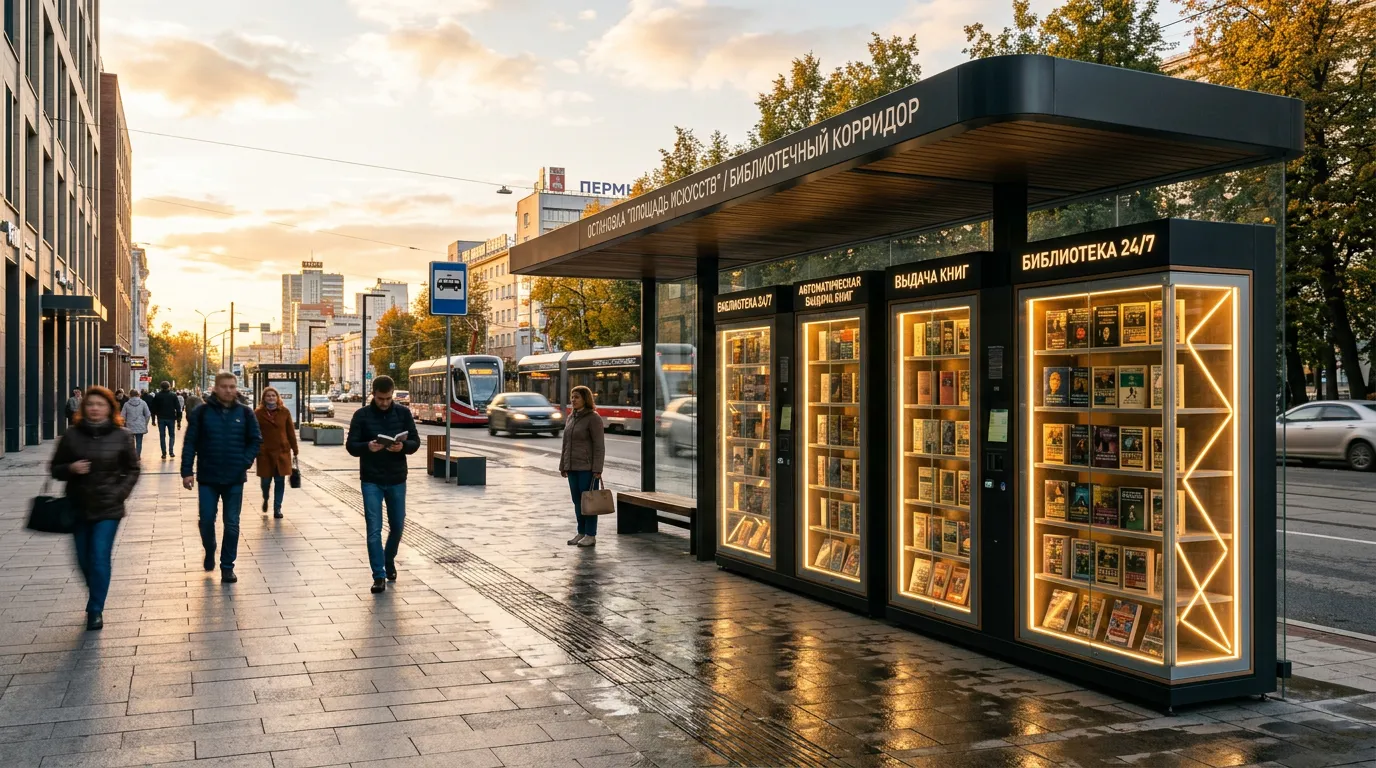
Perm's Municipal Library System has introduced RFID-enabled self-service book lockers. Developed by Russian technology company RST-Invent, the solution allows readers to borrow and return library books without assistance from librarians and without visiting a library building.

More and more readers are choosing to buy books instead of borrowing them from libraries. According to publishing group Eksmo-AST, sales of printed books through online marketplaces grew by 34.7% in 2025. Book sales on Wildberries increased by nearly 30%, with more than 80 million copies sold. Meanwhile, the Yandex Knigi (Yandex Books) online reading service reached a monthly audience of 5.2 million users.
The rise of digital services has contributed to declining library attendance. According to SuperJob.ru, only 37% of Russians visit libraries regularly, while another 14% do so less than once a year. Yet libraries remain the only institutions preserving vast collections of rare editions, original documents and scholarly publications, all available to readers free of charge.
Experts believe the issue lies largely in how library services are delivered. Many people still perceive libraries as inconvenient or difficult to access. New technologies, including RFID self-service lockers, could help change that perception.
Library Services Come to the Reader
RFID lockers fundamentally change how libraries deliver services. Borrowing or returning a book takes just 30 to 60 seconds, compared with several minutes through a traditional circulation desk. More importantly, books become available near places where people study, work and go about their daily routines. Because the equipment is mobile, lockers can be installed throughout the city. Libraries can expand access for patrons without opening additional branches.
"The Autonomous Library self-service book terminal has become a real lifesaver for neighborhoods in Perm that do not have a permanent municipal library," says Svetlana Khayerzamanova, Director of the Perm Municipal Library System.
The technology allows libraries to open additional service points without leasing new premises or hiring more staff. Automating book borrowing and returns reduces employees' workloads while making library services more attractive to the public.
Bookshelves Across the City
People today expect convenience, value their time and are accustomed to high-quality service. Traveling across town just to borrow a book is often inconvenient, and for many readers it directly affects whether they use library services at all. Bringing books closer to where people already live and work changes that equation. Borrowing from a library becomes much easier, encouraging more people to do it.
According to RST-Invent, the RFID lockers are also designed to promote reading. The company says they function as recommendation displays, allowing libraries to feature themed collections, school reading lists, award-winning titles and other curated selections. Solutions like these support the digital transformation of libraries while integrating traditional cultural services into today's urban infrastructure.

Library Lockers Expand Across Russia
RFID technology is already well established in libraries around the world, including Russia. In 2021, RST-Invent created an automated library at Tatneft's Corporate University. The RFID equipment was integrated with the institution's automated library management system, allowing readers to work with the collection independently.
At the Libcom-2024 conference, RST-Invent showcased technologies for locating books, inventorying collections and automating library operations. RFID makes it possible to locate specific titles without checking every individual copy and significantly speeds up collection management.
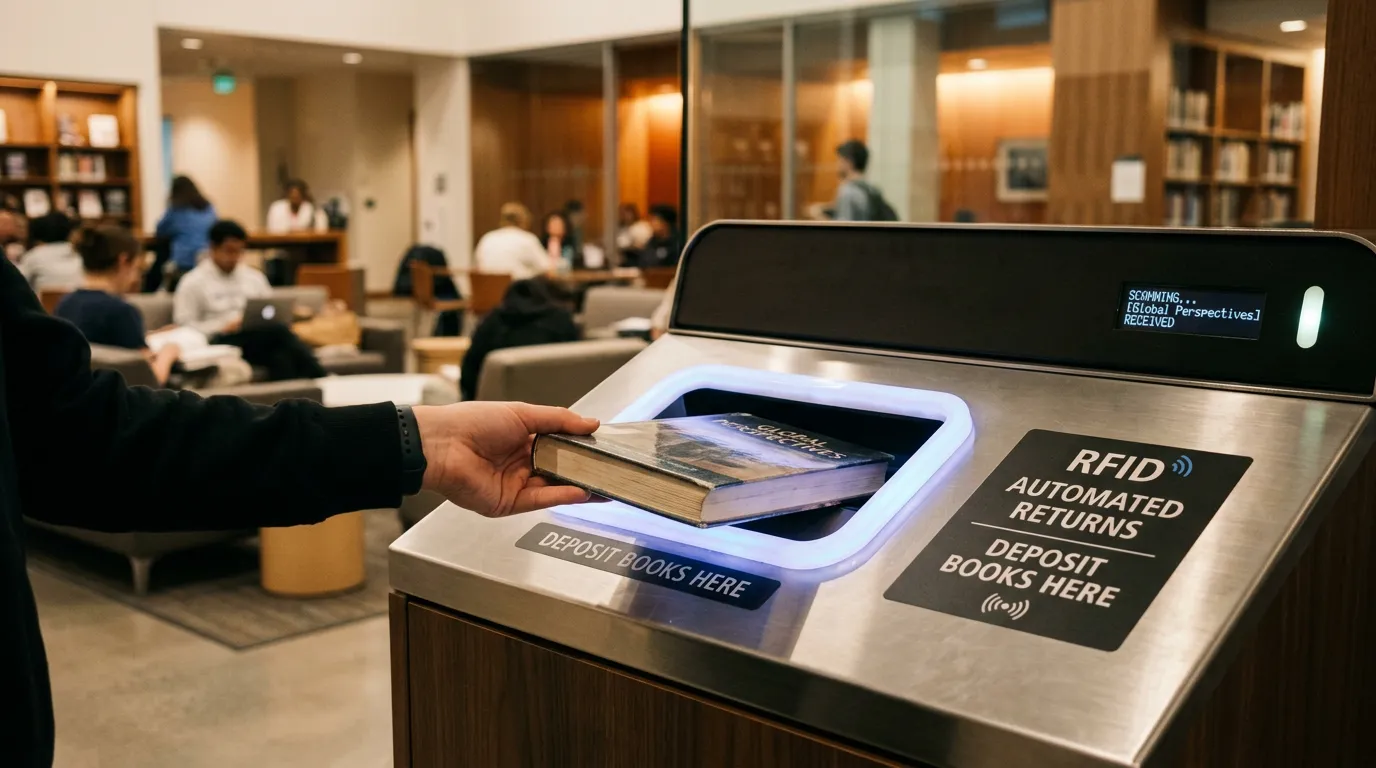
By the spring of 2026, Moscow's libraries had deployed 45 RFID self-service stations. Readers can use them to return books and renew borrowing periods independently, while transaction data is immediately synchronized with each user's digital library account.
Russia is already implementing a scalable model for digitizing municipal libraries. The installation of RFID lockers in Perm reflects a broader shift from libraries operating only within their own buildings toward distributed digital services. Book lending is gradually moving into public spaces and increasingly resembles the parcel locker model that has become familiar to residents across the country.
Over the next several years, similar systems are expected to spread primarily across large cities, university campuses and newly developed residential districts. At the same time, RFID stations could prove especially valuable in sparsely populated communities where no library network currently exists. RFID lockers will not replace traditional libraries or librarians, since they cannot perform the cultural, educational and advisory roles that libraries provide. They will, however, expand access to library services and help reach a broader audience.