One Key for Every Door Syktyvkar State University Becomes the First in Russia to Use Digital ID Inside the MAX Messenger
The student ID has evolved from a simple QR code on Gosuslugi into a real digital key. Students can now use it to unlock university doors directly through the national MAX messenger platform.
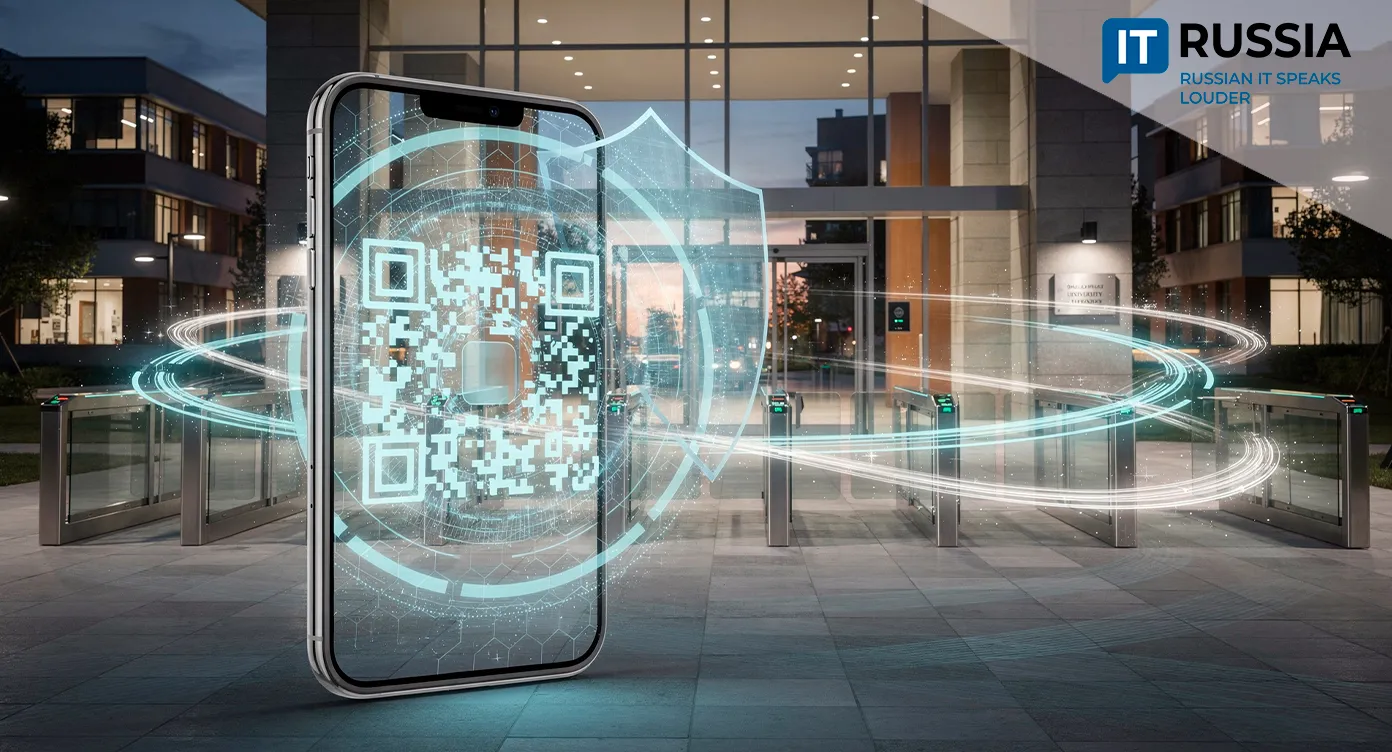
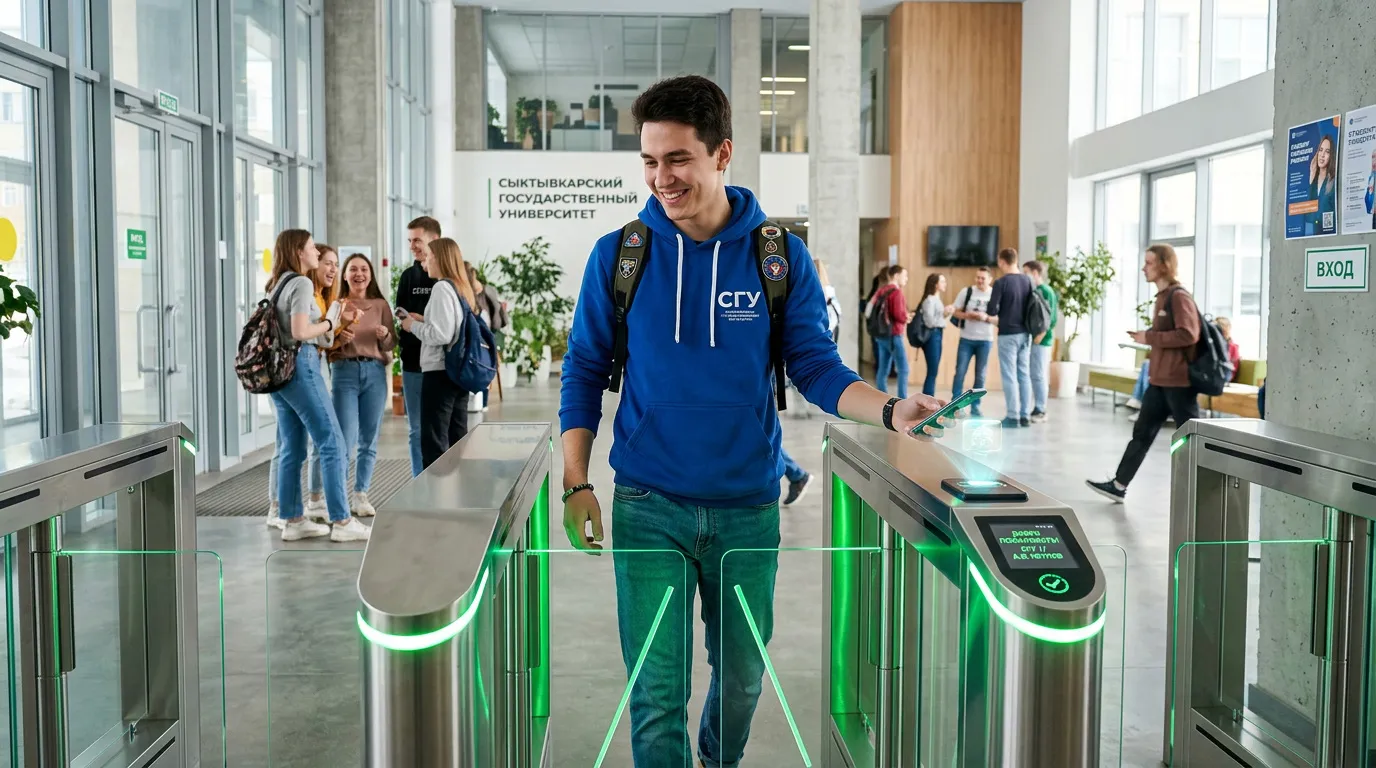
At the university entrance, students no longer need to present a physical student card. Instead, they simply take out a phone and show a screen displaying a moving QR code. The turnstile opens automatically. Pitirim Sorokin Syktyvkar State University has integrated a digital student ID into its campus infrastructure. This is not just a visual copy of a document stored on a smartphone, but a full replacement for physical credentials. The project is being implemented through the national programs Ekonomika dannykh (Data Economy) and Tsifrovaya transformatsiya gosudarstva (Digital Transformation of the State).
The Student’s Digital Shadow
Even for non-technical users, the technology is relatively straightforward. The service pulls information from a student’s account on Gosuslugi, Russia’s government services portal. Identity is verified through biometrics, after which the system generates a dynamic QR code. The code refreshes every 30 seconds to prevent screenshots and forgery. University staff or campus turnstiles then scan the code through a dedicated application.
No personal information is exposed to outside systems in the process. Only the student’s status is confirmed. For universities, that means full visibility into who enters academic buildings and dormitories and when. For students, it removes another layer of paperwork and physical documents.
Mikhail Zamyslov, one of the developers, explains: “Why do we need technology? To simplify life. Adding Digital ID – and specifically expanding it beyond age verification to include student status confirmation and electronic passes, not only for universities – creates maximum convenience.”
Five Million Student IDs
The experiment, which ran from April 2024 through the end of 2025, has now officially concluded successfully. All state universities in Russia have switched to digital student IDs. Every university is now required to transfer student data into the state information system. To date, nearly five million electronic student IDs have already been created on Gosuslugi.
The electronic student ID has effectively become the standard. Meanwhile, students still retain the right to request a paper version if they choose. Yet the long-term direction is already clear. According to forecasts from Russia’s deputy minister of science and higher education, universities are expected to phase out paper student identity cards entirely in the near future.
Creating a Digital ID requires biometric enrollment in the Unified Biometric System. Students without existing biometric records will be offered registration during the ID setup process itself. They can complete it either with a new-generation international passport or by visiting a nearby bank branch. And the system is not limited to a single service. Later, the same biometric profile can be used to obtain an enhanced electronic signature in GosKlyuch, activate an eSIM or receive a fan ID card. The appeal is obvious when one face becomes the key to multiple services at once.

Law and Order
Back in 2023, Russia’s Ministry of Digital Development first announced plans to add electronic student IDs and grade books to Gosuslugi. The following year brought the first practical steps. The Gosuslugi application introduced the now-familiar student QR code. Initially, however, many people viewed it mostly as a way to receive discounts at museums. Then, in April 2024, the official experiment began, originally scheduled to continue through the end of 2025. Students were allowed, in test mode, to present a QR code instead of a paper student identity card.
Several major developments followed in 2025. First, the president signed legislation establishing the national MAX messenger platform. That moved the initiative into an official state-backed framework. Second, Digital ID functionality was launched directly inside the messenger itself. The system was already capable of verifying both age and student status.
Later, the experiment – originally expected to continue until the end of 2025 – was declared successful ahead of schedule. Then, on December 29, a major milestone followed: the president signed legislation introducing mandatory electronic student IDs and electronic grade books across Russian universities. From that point on, the system was no longer an “experiment” or a “pilot,” but a formal requirement.
QR Codes Open Doors
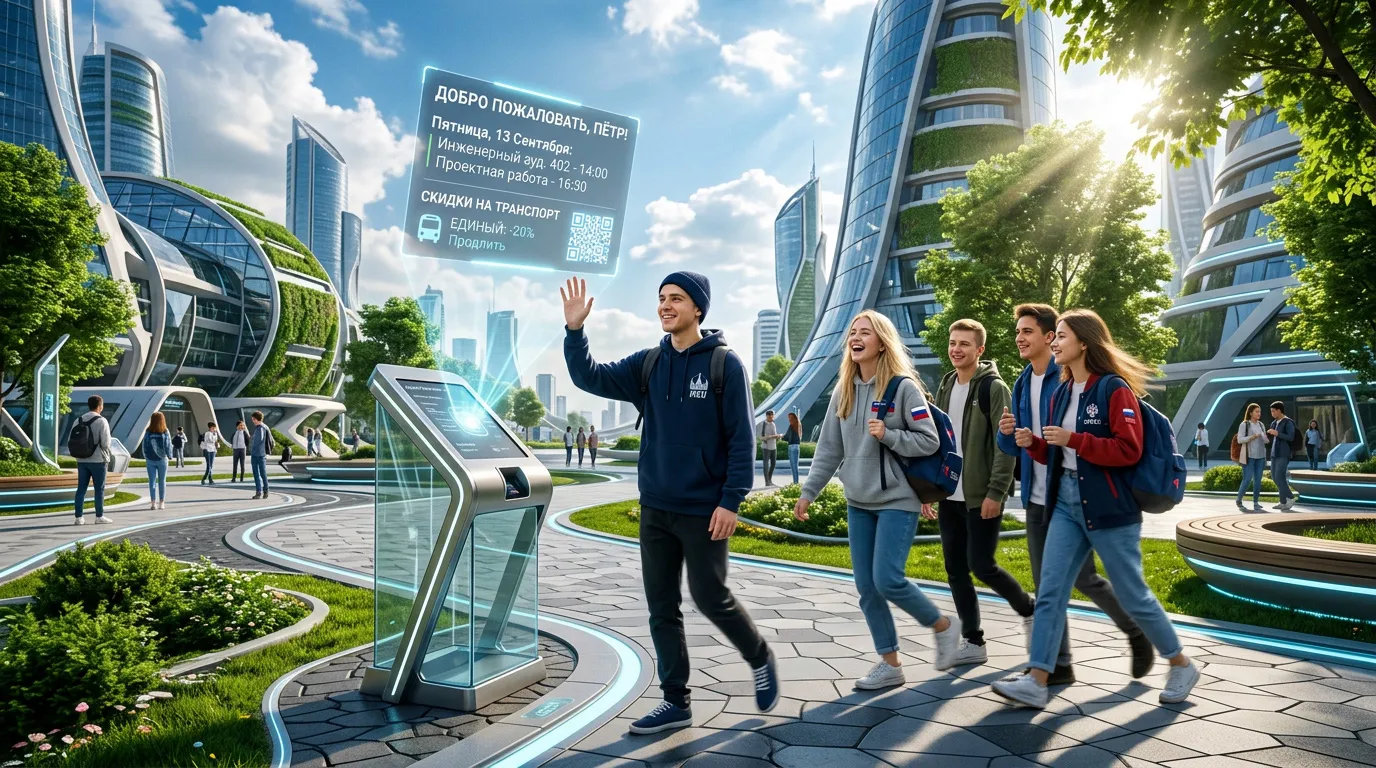
What comes next is already becoming clear. Universities are expected to roll out broader deployments where the digital student ID works inside the app as a real access key – for academic buildings, dormitories and libraries. The same tool could also verify eligibility for transportation and museum discounts.
The next logical step is tighter integration with class schedules, where a QR code opens a classroom only during the correct lecture period, alongside cafeteria payments and electronic grade books directly inside the MAX messenger. Beyond universities, the same infrastructure could eventually extend to stores, movie theaters and airline ticket offices. One QR code for everything.