Alexey Likhachev Positions Rosatom at the Forefront of the AI Era
Alexey Likhachev, Director General of State Atomic Energy Corporation Rosatom, has outlined a new phase of digital transformation built around the large-scale integration of artificial intelligence into the corporation’s day-to-day operations.
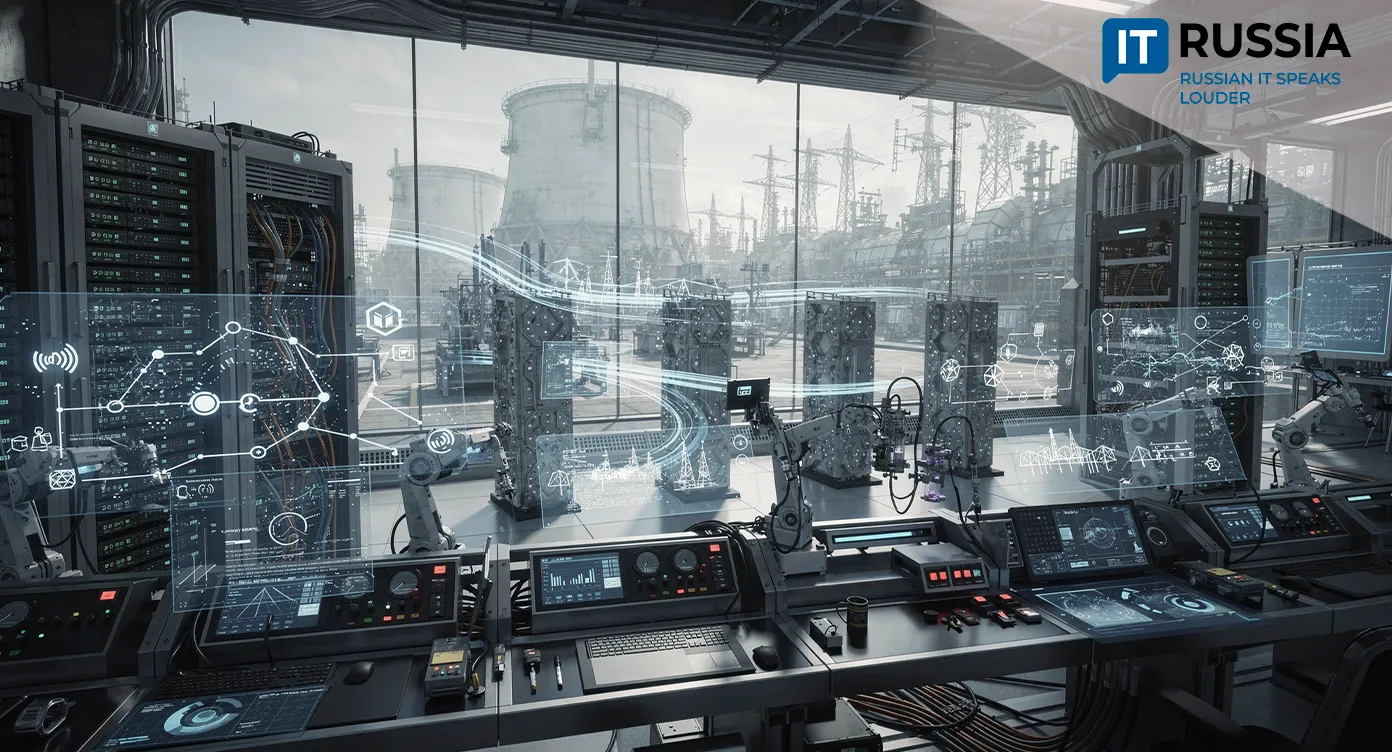
According to the plan, deploying AI agents across the corporation could sharply reduce operating costs and increase operating profit by 20%.
Three Pillars of the Digital Transformation Strategy
Rosatom’s digitalization strategy is built around three core directions. The first focuses on technological tasks, including the development and continuous modernization of platform-based solutions, broad deployment of artificial intelligence and the creation of autonomous systems. The second involves balancing efforts between the corporation’s internal operational needs, scaling technologies across Russia and expanding into international markets. The third direction centers on defining the immediate practical steps required to implement the strategy.
A key priority is workforce development, since the initiative cannot be implemented without qualified personnel. Alexey Likhachev stressed the need for all Rosatom employees to develop digital competencies. The corporation employs more than 420,000 men and women. Close cooperation with leading universities will also be essential to ensure that educational programs align with the industry’s actual operational requirements.

The AI Agent Factory and the Path to Large-Scale Deployment
Particular emphasis has been placed on the AI agent factory project. In the near term, Rosatom plans to launch pilot deployment of six initial intelligent agents designed to handle routine tasks, including preparation of technical presentations, transcription of meeting recordings and preliminary analysis of large data volumes. By 2027, the corporation intends to scale these solutions across all operational levels.
The platform-based approach is expected to accelerate AI deployment, improve transparency around development costs and enable repeated use of existing infrastructure. That, in turn, could free employees to focus on more complex and strategically significant work.

Workforce Development and Technological Sovereignty
Rosatom’s large-scale employee retraining program is intended to build a workforce reserve capable of operating within a digital economy. By synchronizing university curricula with the practical requirements of the nuclear and technology sectors, the corporation is creating a long-term foundation for technological sovereignty.
The creation of a factory-modular architecture for AI agents could also reduce dependence on imported software solutions, strengthening security and operational independence for critical infrastructure facilities.

Economic Impact and Strategic Advantage
Rosatom’s digital transformation program is tied to measurable financial targets. The corporation expects labor productivity to rise by 12% as early as 2026, while operating profit is projected to increase by 20%. The longer-term roadmap also targets additional cost reductions of 5% in 2027 and a further 3% in 2028.
Through this strategy, Rosatom is evolving from a traditional energy corporation into a global technology integrator setting new standards for operational management in a rapidly changing technological environment. Artificial intelligence is increasingly positioned not as an auxiliary tool, but as a full-scale partner supporting human decision-making in highly complex tasks.