The “Flying Eye” Over Russian Roads
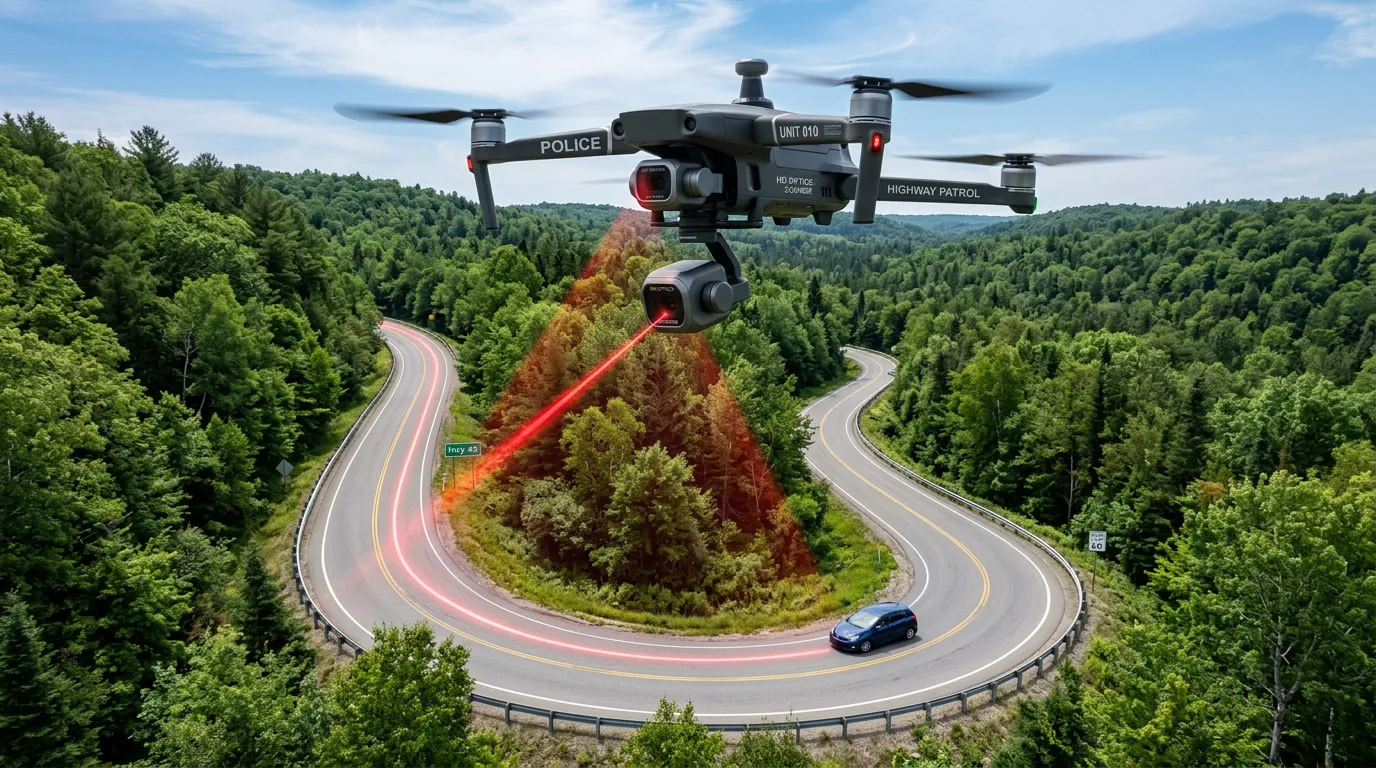
Drones are appearing more frequently above Russian highways. Traffic police inspectors are using them to catch drivers crossing into oncoming traffic lanes and violating road markings.
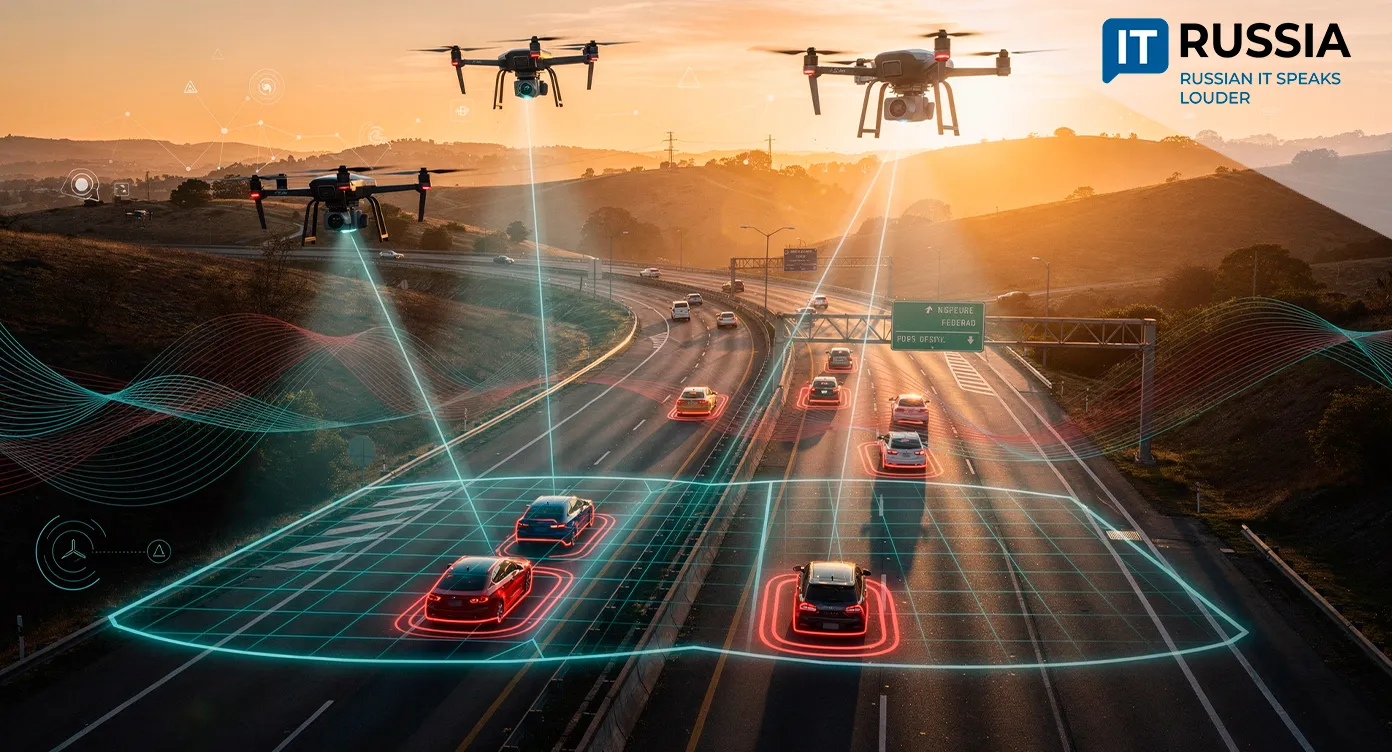
The drone records the violation from above and transmits information about the vehicle and the section of road to the nearest traffic police crew, after which inspectors stop the driver.
The significance of this approach is now extending beyond isolated enforcement raids. According to State Traffic Safety Inspectorate chief Mikhail Chernikov, driving into oncoming traffic lanes accounted for 24.8% of road fatalities in 2024. Drone technology helps close “blind spots” in road monitoring, especially on dangerous stretches without fixed traffic cameras.
This is a concrete example of the practical deployment of unmanned systems, computer vision and secure data transmission channels in the public safety sector, highlighting the growing capabilities of Russia’s IT industry.
From Enforcement Raids to Permanent Air Patrols
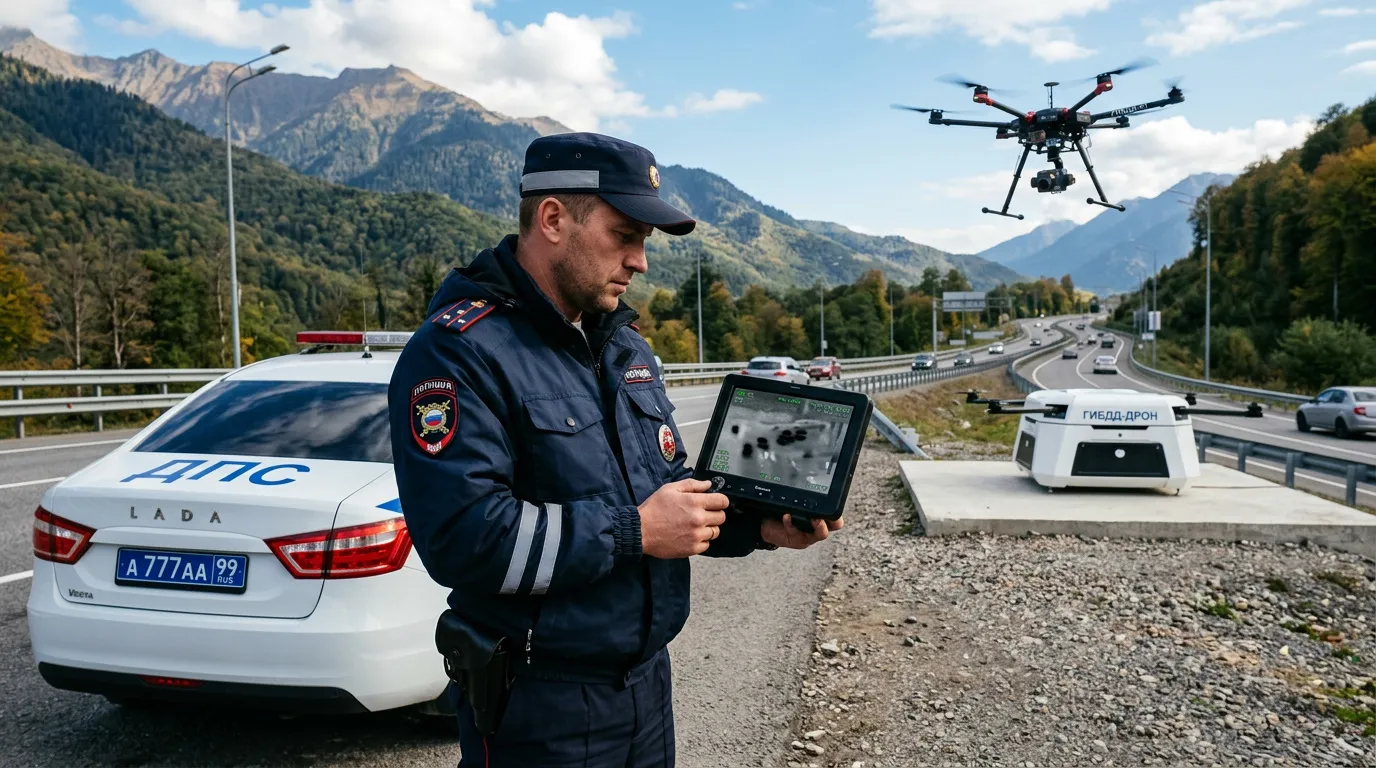
The main long-term prospect is a transition from episodic drone deployments to a systematic “air patrol” model on hazardous road sections. That is particularly relevant for federal and regional highways with difficult terrain, sharp turns and limited visibility.
The technological capabilities are also expanding. In the near future, the system could include drone boxes installed on rooftops, automated UAV takeoff, landing and charging, as well as integration with traffic police databases and regional traffic management centers. In addition, drones could assist with documenting traffic accidents, locating stolen vehicles and monitoring congestion.
Export potential remains limited by differences in national legislation, but demand exists for integrated solutions that combine unmanned road monitoring platforms, video analytics software, infrastructure integration systems and smart city technologies. That aligns with the national Bespilotnye aviatsionnye sistemy (Unmanned Aviation Systems) project, which is aimed at developing domestic UAV technologies and expanding their deployment.
From Experiments to Operational Deployment
The use of drones in traffic enforcement has been evolving for several years. In 2021, Russia’s Interior Ministry reported that traffic police drones were being used in 17 regions to detect illegal entry into oncoming traffic lanes and unauthorized crossing of road markings. In 2022, Autonews noted that such violations are especially dangerous and can result in license suspension or fines.
In 2024, new certification requirements for automated photo and video enforcement cameras came into force. That creates a regulatory foundation for the future legalization of automated drone-based traffic enforcement. In 2025, the Federation Council discussed that possibility, while the traffic police reported that drones helped identify around 35,000 violations during 2022–2023.
International practice is also expanding. In Hangzhou, China, for example, drones already record violations such as crossing solid lane markings and running red lights. Russia, meanwhile, has recently reported successful drone enforcement operations across multiple regions.
For example, in May 2026, authorities reported that a Road Patrol drone recorded a dangerous overtaking maneuver involving entry into an oncoming traffic lane on the Blagoveshchensk – Gomelevka highway. The materials were subsequently transferred to the State Traffic Safety Inspectorate.

The Future of “Air Surveillance”
Over the next one to three years, drones are expected to be used more frequently on highways, particularly on stretches with a high risk of dangerous overtaking. However, automated airborne fines are unlikely to appear until legislation is updated and the systems receive formal certification. For now, the most realistic model remains one in which the drone records the violation while a human inspector issues the citation.
The technology’s expansion is also expected to trigger public debate. Drivers are likely to raise questions about the legal status of drone evidence, notification requirements, video data storage and procedures for appealing fines. The government’s primary argument, however, remains safety: reducing the number of dangerous entries into oncoming traffic lanes could save hundreds of lives. In practice, drones are becoming part of a hybrid traffic enforcement model in which inspectors, cameras and analytical systems operate together.