Perm Scientists Develop Method to Predict Hidden Defects in Polymer Pipelines Before They Appear
A new modeling system aims to identify structural weaknesses in reinforced plastic pipes at the design stage.
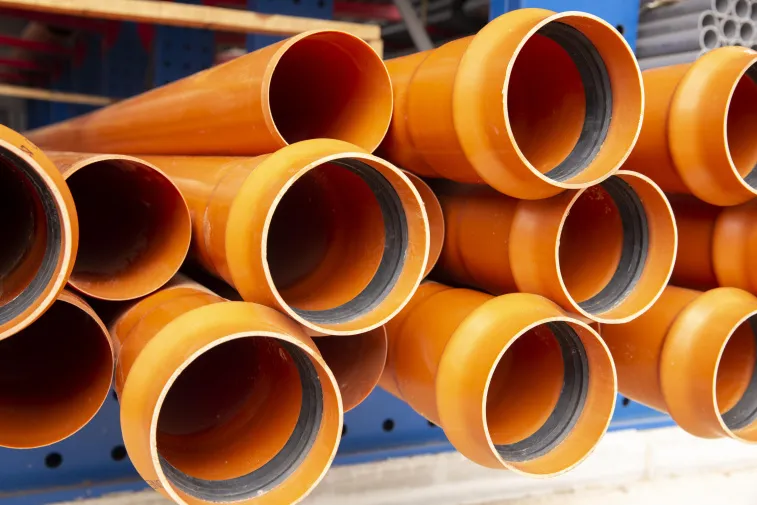
Beneath the ground and across the seabed runs a vast global network of pipelines that transport resources around the world. Steel pipes, however, are vulnerable to corrosion, and repairing them is costly and risky. Reinforced plastic structures have emerged as an alternative. They are lightweight, resistant to rust, and designed to last longer.
But these materials come with their own challenges. Such pipes can contain hidden internal damage, including delamination and uneven reinforcement. These defects are impossible to detect by visual inspection alone. The solution lies in anticipating problems early, forecasting and preventing risks at the design and manufacturing stages. Researchers at Perm National Research Polytechnic University have proposed a method to do just that.
Breaking It Into Millions of Pieces
The team developed software that predicts where defects are likely to form. The system creates a virtual replica of a future pipe and calculates whether dangerous stress concentrations will arise and, if so, where and under what conditions.
The algorithm supports all three stages of production. First, engineers input baseline parameters of the future pipe, including material composition, fiber winding angle, and binder properties. Based on these inputs, the program calculates technical characteristics such as strength, stiffness, and behavior under tension, compression, or heat.
Next, the software assembles the pipe layer by layer according to the specified parameters and identifies weak points. In the final stage, the pipe undergoes strength testing under simulated real-world operating conditions. The algorithm divides the structure into millions of small elements and analyzes how each behaves under load. Using this approach, researchers found that a pipe with seven reinforcement layers experiences significantly more dangerous stress than a two-layer design.
From Invisible Threat to Measurable Risk
The Perm-developed system is designed to pinpoint potential flaws in a finished pipe and recommend how to prevent them by adjusting production parameters. It effectively turns an invisible threat into a measurable risk that engineers can manage at the design stage.
Major Russian oil companies have already expressed interest in the development.
Earlier, researchers at Perm Polytechnic developed a pipeline design technology for hydrogen transport. The method enables precise calculations of destructive vibrations inside pipes and is expected to make Russia’s hydrogen infrastructure more reliable.