In Russia, Scientists Have Synthesized Materials That Could Help Shrink Computers
New compounds developed by Russian researchers could be used in quantum computers and data-storage devices.

Scientists at Lomonosov Moscow State University have created new heterostructures based on europium and phosphorus. The materials could eventually make computing devices significantly smaller and speed up data transmission.
Defect-Free Materials
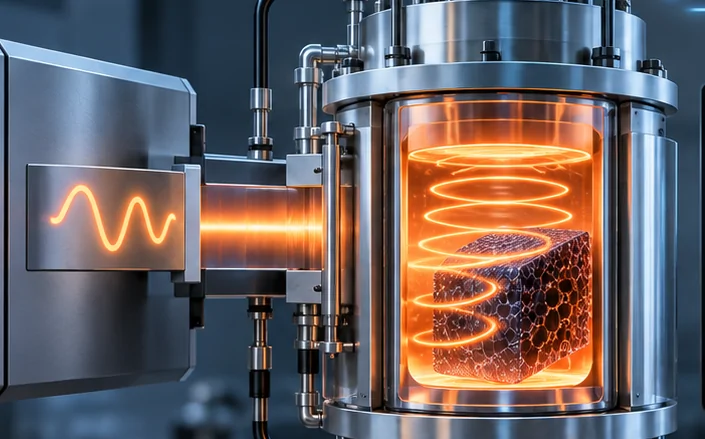
The new compounds were synthesized by researchers from the Department of Inorganic Chemistry at MSU’s Faculty of Chemistry. The team succeeded in creating a group of materials with a perfectly ordered, defect-free crystal structure — defects that typically arise when producing similar materials for spintronics applications.
For Quantum Computers
The university noted that the new materials could be used in memory devices and quantum computers — areas where data-transfer speed and component compactness are critical.
Specialists from the Institute of General Physics of the Russian Academy of Sciences also took part in the study. The results were published in the scientific journal Journal of Materials Chemistry C.