AI Takes a Closer Look: Russian System Assists Doctors During Colonoscopy
Russian developers continue to expand the use of AI in healthcare. A new system called Polyptron.AI helps doctors spot abnormalities faster during colonoscopy and reduces the risk of missing the early signs of a potentially dangerous disease.
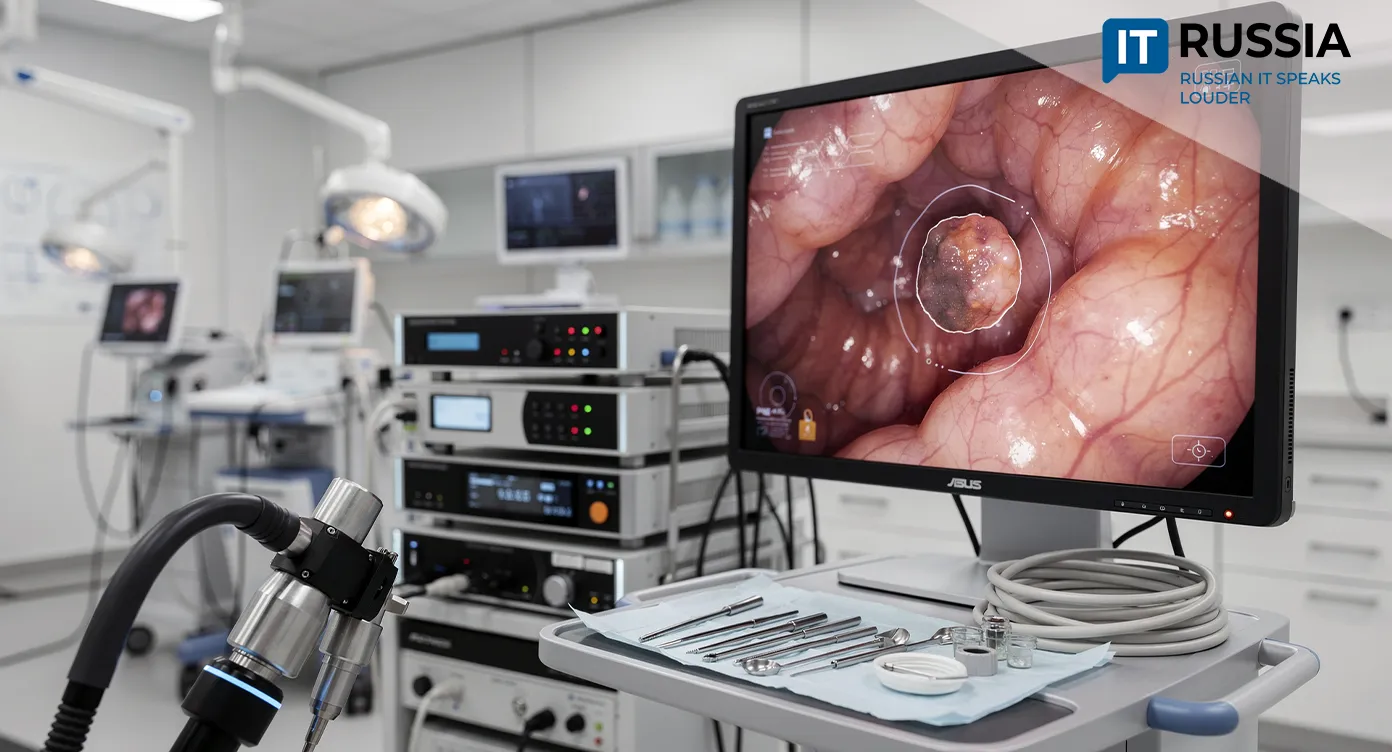
Russia’s Federal Service for Surveillance in Healthcare, Roszdravnadzor, has registered Polyptron.AI, a system developed by Chelyabinsk-based Eva Lab. During a colonoscopy, it analyzes images from the endoscope in real time, highlights suspicious areas and helps the physician avoid overlooking even the smallest abnormalities.
In doing so, however, the AI does not replace the physician. Instead, it serves as an attentive assistant capable of flagging atypical changes, including during lengthy and complex examinations.
Every Detail Matters
Colonoscopy remains one of the primary methods for early detection of intestinal diseases, including precancerous changes and malignant tumors. At an early stage, many growths can be removed before they pose a serious threat to a patient’s health or life. Small lesions, however, can easily be missed because the physician must analyze a continuous video stream throughout the procedure. And the cost of overlooking a single detail can be high. Clinical decision-support systems are being developed for precisely these situations.
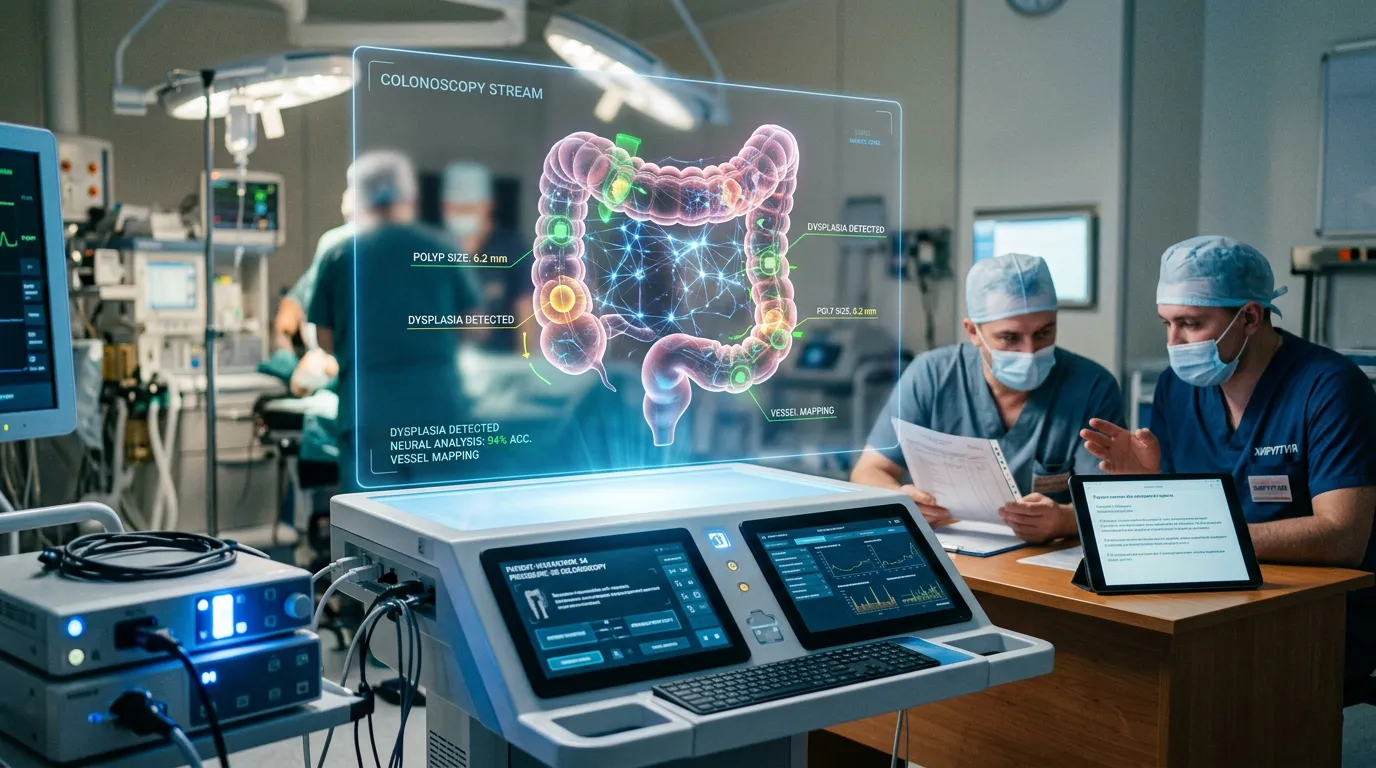
Polyptron.AI connects to a digital endoscopy system and starts automatically. As the physician performs the examination, the algorithm continuously analyzes the video feed, flags suspicious areas, determines the size of a detected lesion and displays the result directly on the screen. After the procedure, the system saves images and video and generates a final report.
According to the developer, the AI-powered system achieves 89.9% sensitivity in detecting abnormalities and 93.8% sensitivity for lesions measuring up to 10 millimeters. Changes this small are among the hardest to detect, yet they can be early warning signs of disease. The developers emphasize, however, that Polyptron.AI does not make a diagnosis or decisions for the physician. The final assessment remains with the endoscopist.
How the Project Began
Work on the system began in 2021. Eva Lab brought together computer vision specialists and physicians from the Chelyabinsk Regional Clinical Center of Oncology and Nuclear Medicine. Together, they began training the AI algorithm to recognize pathological changes during endoscopic examinations.
The model was trained on more than 46,000 annotated images derived from nearly 2,000 colonoscopies. Practicing endoscopists contributed a significant portion of this dataset. That allowed the AI model to learn to identify the kinds of changes physicians look for in everyday clinical practice.
The project was developed with support from Russia’s Foundation for Assistance to Innovation. Over several years, the team took the system from a research project to a registered medical device. Before receiving regulatory clearance, it underwent clinical trials and more than 10 pilot deployments at Russian clinics.
Opportunities for Russian Health IT
For patients, the technology could mean higher-quality examinations. Colonoscopy is a complex procedure, so getting the most informative result possible the first time matters – as does making that result as accurate as possible.
For healthcare organizations, the system offers a way to improve diagnostic quality without changing the established clinical workflow. It launches automatically with the equipment and requires virtually no additional action from the physician.
AI-assisted endoscopy is advancing outside Russia as well. Systems that help physicians identify suspicious changes during examinations are emerging in many countries, creating an opportunity for Russian developers to enter international markets. Many countries are building digital healthcare systems but still lack homegrown AI solutions. If Russian products are compatible with medical equipment widely used abroad and meet international requirements, they could find applications beyond Russia. That, in turn, could give more patients a chance to detect disease at an early stage, when treatment is most effective.