Rostec Is Rethinking Welding Robotics
Zero-defect welding from a mobile robotic system, new high-tech occupations and a plan to produce 6,000 robotic arms a year – Rostec is shaping the future of industrial automation.
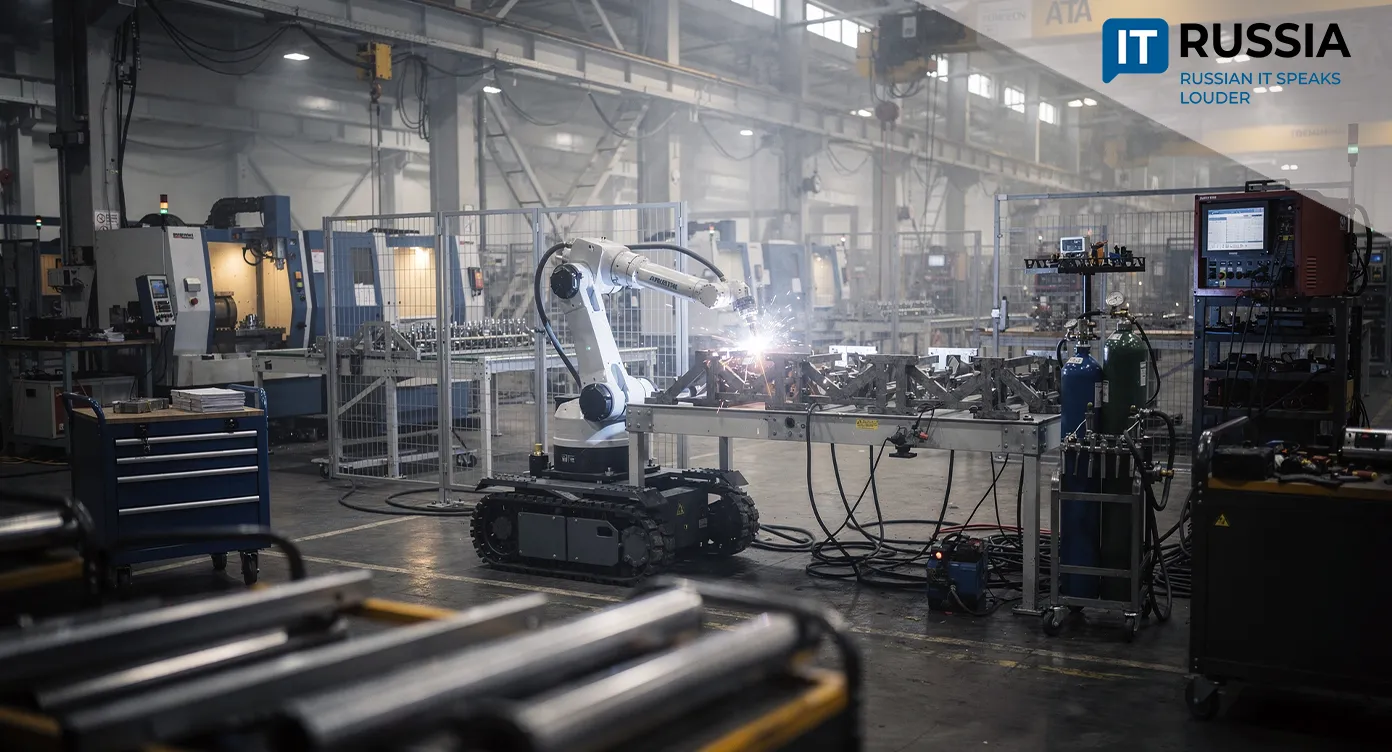
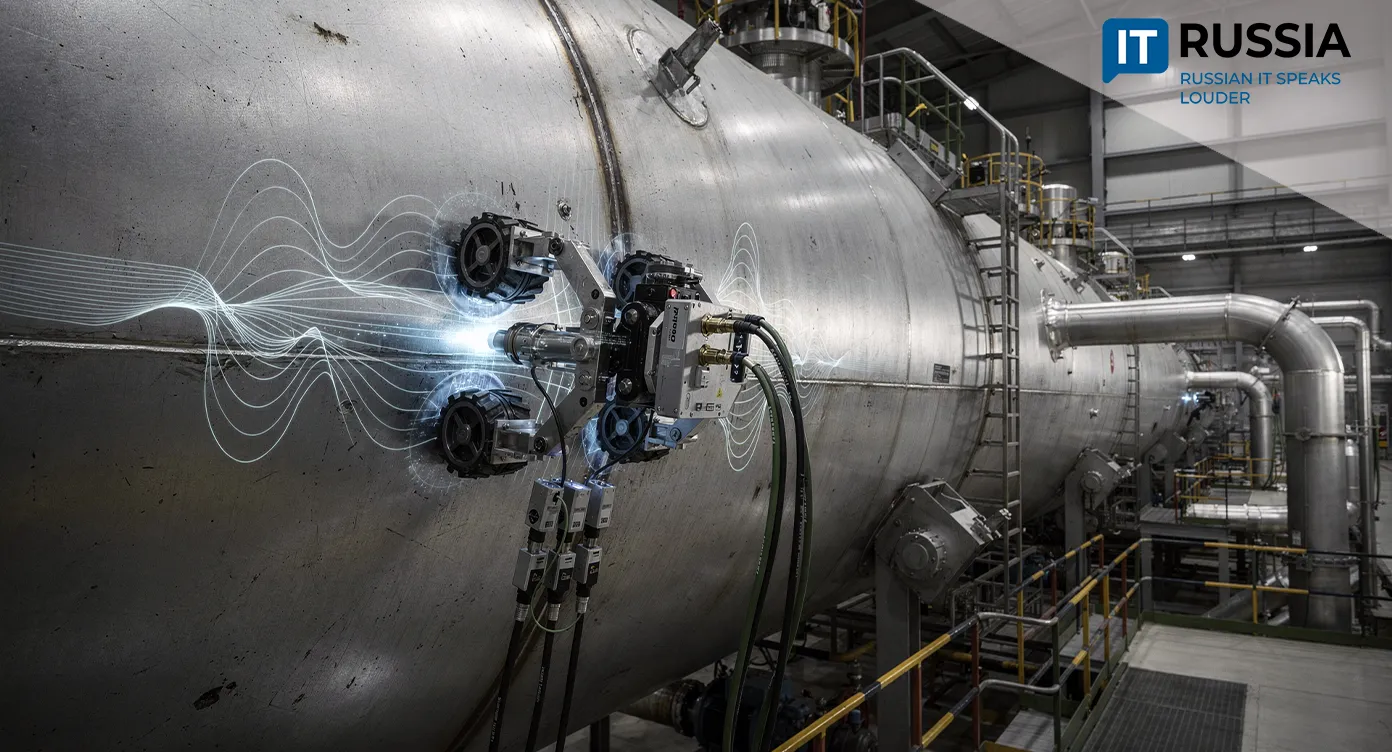
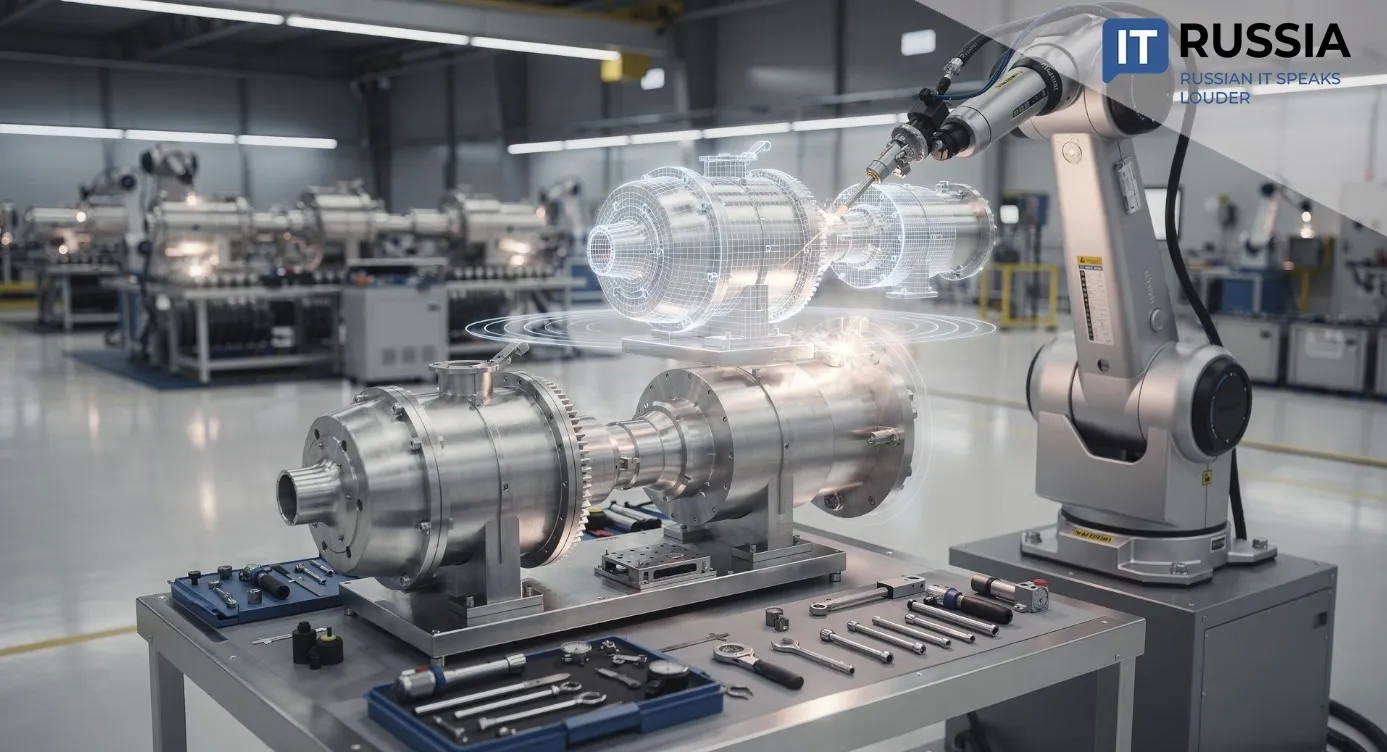
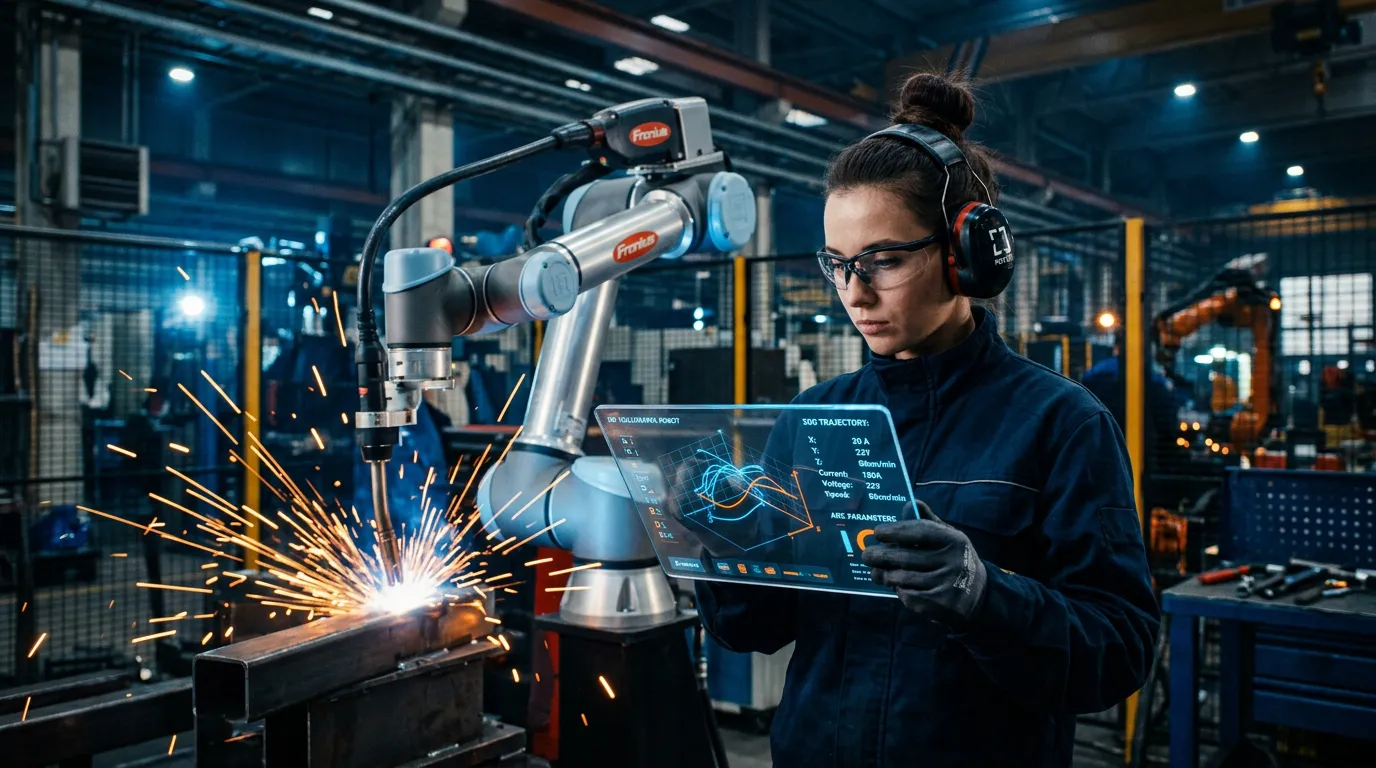
At Rostec’s fifth internal Vremya Pervykh (Time of the First) professional skills championship, the corporation’s professionals tested a unique system developed by KEDR around the DOKA RC10 collaborative robotic arm made by ROBOPRO, a Rostec partner. The technology, developed and tested in 2025, has already demonstrated its reliability.
Three Times Faster, With Zero Defects
At the championship, professionals from Rostec companies had an opportunity to put the new system through its paces: configure the equipment, program the robotic arm’s motion path and monitor welding quality in real time.
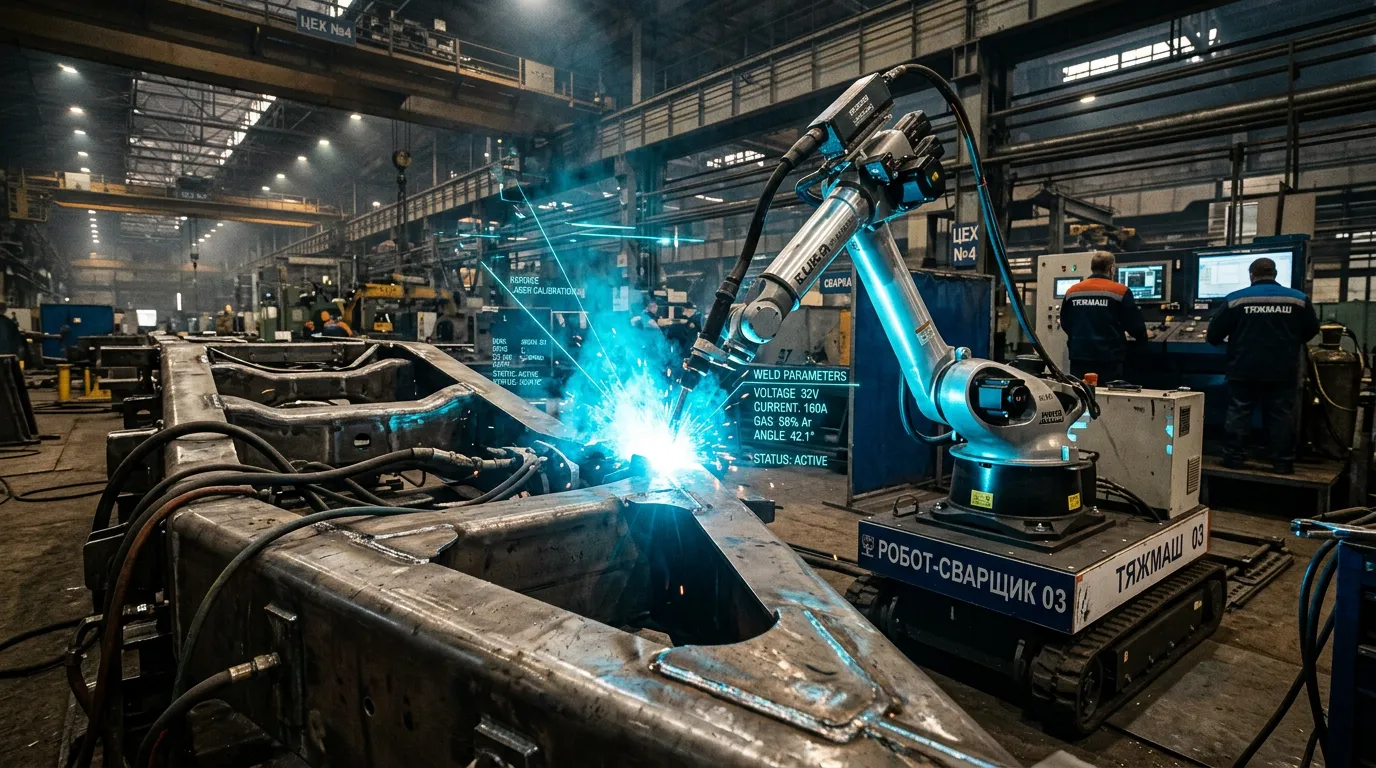
The key outcome of the demonstration was confirmation that the system is ready for large-scale deployment. The robot can operate 24/7 without breaks or days off. Pilot results are striking: productivity at a single workstation increased by 57%, equipment utilization reached 90%, production time was cut threefold, and the defect rate fell effectively to zero. The machine’s capabilities also extend beyond welding. With quick changes of tooling, the robot can be readily adapted to move heavy parts, apply specialized materials and perform high-precision quality inspections.
The welding system’s mobility means it can be transported and installed at facilities of virtually any size – from a workshop to a large factory. That makes it possible to introduce targeted automation without shutting down production areas or reconfiguring entire manufacturing operations. The system could find demand in machinery manufacturing and the production of metal structures, power equipment, automobiles and agricultural machinery, where product mixes change frequently and fast retooling is essential. The technology is set to be deployed soon at facilities operated by BET JSC, with an investment project calling for sites in Vyazma and the town of Gorny to be equipped with the system.
New Standards for the Jobs of the Future
The adoption of advanced robotics will inevitably reshape the labor market. The traditional role of a Grade 6 welder is giving way to a range of high-tech occupations: collaborative systems operator-technician, digital twin process engineer, welding process architect and AI diagnostics specialist. Rostec will develop new industry qualification standards together with the Agency for Professional Skills Development and Bauman Moscow State Technical University.
Rostec’s specialized competitions serve as a key venue for sharing expertise. One example is the Vremya Pervykh championship, which focuses on developing young professionals and strengthening the industrial professional community. Participants include employees of Rostec companies as well as school students and students from partner vocational and technical schools. This year’s championship set participation records: 5,500 professionals from 16 holdings, representing 45 Russian regions and 67 cities, competed across 29 skill categories.
Driving Industrial Automation
Rostec State Corporation is one of Russia’s largest industrial companies, bringing together hundreds of enterprises across mechanical engineering, radio electronics and the defense industry. The corporation develops, manufactures and deploys high-tech products. Over the past several years, Rostec’s welding robotics have evolved from highly specialized installations into versatile intelligent systems being deployed at key enterprises across the corporation.
In 2022, Rostec developed a large-scale system for orbital electron-beam welding capable of automatically processing complex-shaped structures. That same year, a robotic laser system began operating at UEC-Kuznetsov to manufacture thin-walled components for next-generation aircraft engines, significantly increasing component output. In 2023, an industrial robot for the nuclear sector was unveiled: the system operated at currents of up to 500 amps for three hours without interruption, carrying out the entire process automatically.
As additive manufacturing advanced, NITI Progress, part of Rostec, patented an electron-beam welding-based 3D printing technology in 2024 that can “grow” ultra-strong parts from titanium and heat-resistant steels. Around the same time, UEC-Saturn introduced rotary friction welding: the PST-100S machine replaced previous methods and achieved a 100% yield rate for aircraft engine rotors.
In 2024–2025, the focus shifted toward mass-production machinery manufacturing. Concern Avtomatika automated the welding of electricity metering cabinets: its new cell welds one enclosure in five to seven minutes, 10 times faster than manual work. RT-Techpriemka unveiled the modular Kibermodul MIG/MAG (Cybermodule MIG/MAG) system, which uses two work zones on a rotary table to increase welding productivity three- to fourfold and can be readily adapted to specific technical requirements. In 2026, Rostec brought to market a “smart” electron-beam system capable of independently locating the joint between parts and adjusting the beam’s movement.
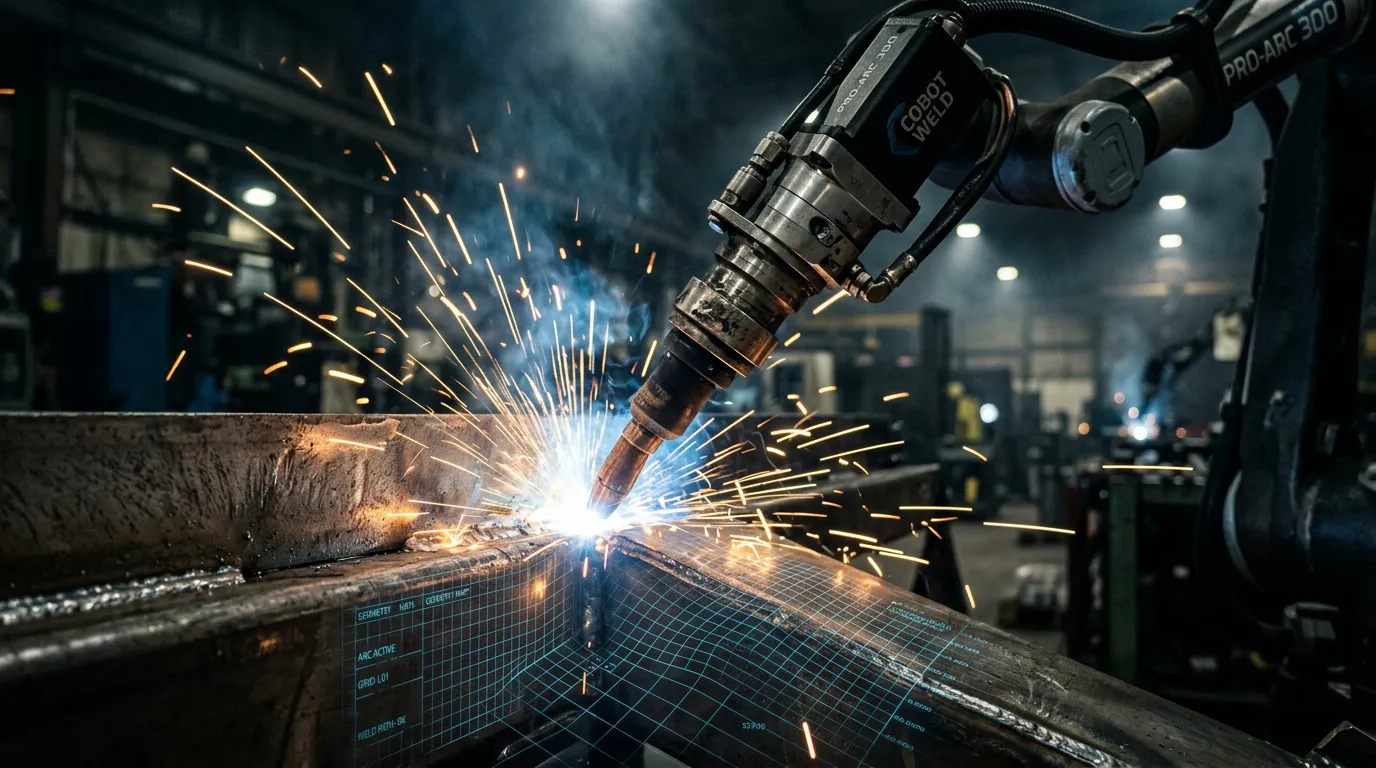
To bring advanced solutions not only to its own enterprises but to the broader Russian market, Rostec is steadily expanding production of industrial robotic arms. The ROBOPRO plant already produces up to 550 robots a year, with annual output expected to reach 6,000 by 2030. About 75% of the robotics technology is localized in Russia. That pace of production directly supports the government’s goal of increasing robot density at Russian industrial enterprises by 2030.