Digital Habits: Russian Students Use AI for Learning and Leisure
A new nationwide survey reveals how Russian students are weaving AI into their learning routines, entertainment, and digital self‑expression, offering insights into the next generation’s relationship with emerging technologies
From Homework to Memes
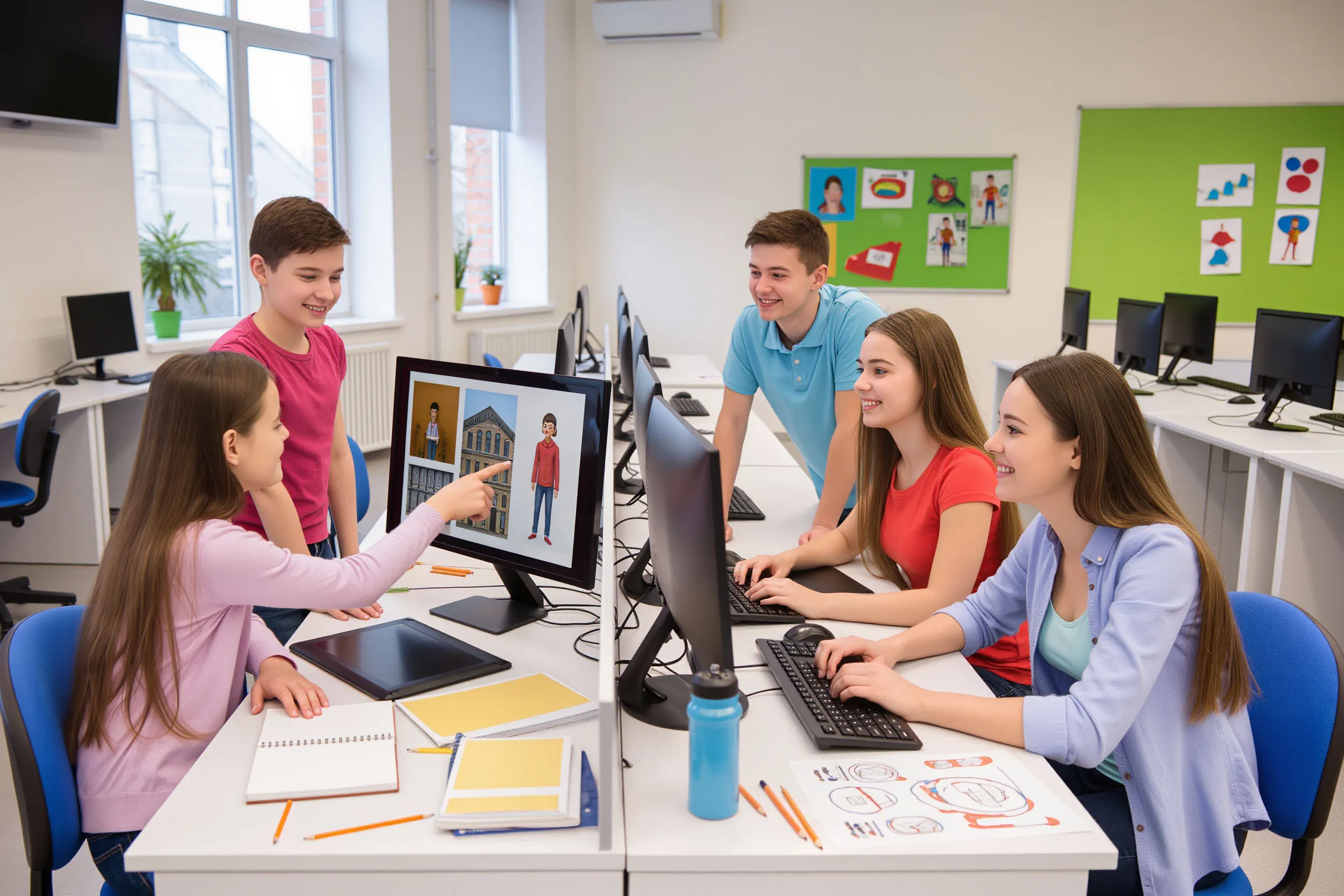
The digital lives of Russian students are far more complex than they appear. A survey by the communication platform “Sferum,” which included 3,400 students, shows that AI is not an abstract innovation for Generation Z but a daily tool, a digital companion, and even a system to experiment with.
Nearly one in three students (29%) said they use AI to complete homework. For them, neural networks act as personal tutors, helping find information, write essays, or solve problems.
But their motivations go far beyond academics. A full 23% of respondents interact with AI “just out of boredom,” turning sophisticated algorithms into casual conversational partners.
AI is also a powerful creative engine. About 14% of students use it to generate avatars, memes, and digital postcards — making intelligent systems part of their social‑media identity.


Testers, Skeptics, and the Unaware
A surprising finding is the emerging “AI‑testers” group: 7% of students challenge algorithms with tricky questions to expose mistakes. This signals a new type of digital literacy, where young users do not blindly trust technology but instead stress‑test it.
Not all students embrace AI. Around 16.5% consciously avoid neural networks to build their own skills. Another 10% do not know what AI is at all.
This uneven adoption shows that despite the rapid spread of digital tools, traditional learning methods still hold space, supporting independent thinking.
The Digital Compromise
“There is no way to avoid modern technologies, especially in education. But students must still complete assignments independently, without turning to AI every time they face difficulty,” said Natalia Kosikhina, a member of the Federation Council’s Social Policy Committee.
Parents share similar concerns. According to an April survey by VCIOM, 46% of Russians would not allow their children to use AI for schoolwork. Only 30% approved — and usually for specific subjects.
By September 2025, however, public opinion shifted: 71% of citizens supported teaching students how to use AI ethically and intelligently.
The trend is unmistakable: AI is becoming an integral part of school life. A September poll showed that 62% of Russian students already use neural networks, and 17% use them regularly — 63% for learning and 51% for entertainment.
AI Cannot Replace the Desire to Learn
“It is crucial to carefully integrate AI into education so that new technologies, despite their advantages, never replace the core motivation — the desire to learn and discover, including through dialogue with teachers,” said Lyudmila Skakovskaya, Deputy Chair of the Federation Council Committee on Science, Education and Culture.
The rapid pace of technological adoption challenges schools to rethink their systems. The education sector must move from theoretical debate to practical action: building curricula, regulatory frameworks, technology infrastructure, and domestic platforms aligned with national standards.
Only then will AI tools be both effective for students and trusted by parents.