Messenger MAX Is Rapidly Evolving Into a Super App
Launched in March, Russia’s new domestic platform has added a broad set of features in just a few months, allowing users to handle a wide range of everyday tasks inside a single application.
Part of a Digital Triad
March 2025 marked a milestone for Russia’s IT industry with the launch of the national messenger MAX. With its rollout, the country moved into the final stage of building what officials describe as a domestic “digital triad,” consisting of a search engine, social networks, and a messenger. Today, only four countries have assembled a comparable, fully national communications stack: the United States, China, South Korea, and Russia. The launch reinforced Russia’s ambition to remain among the world’s major technology powers.
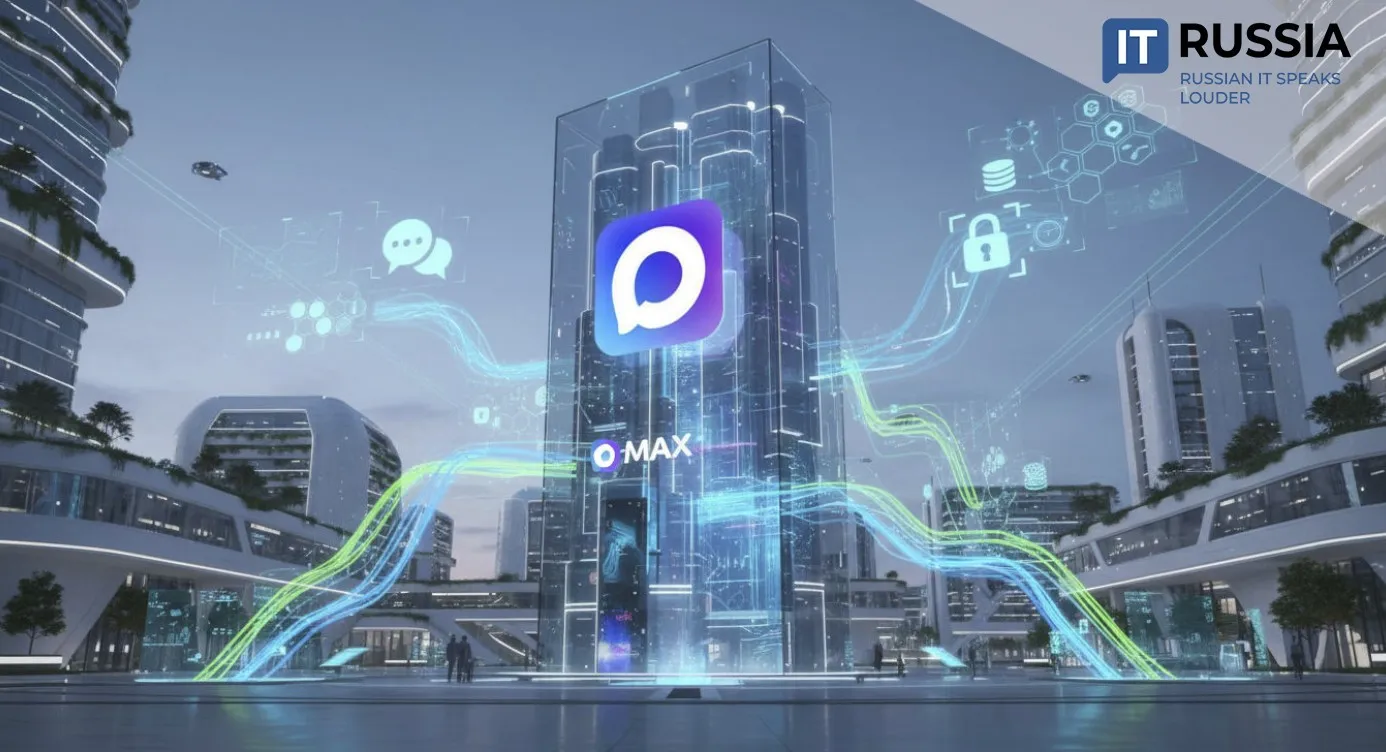
MAX is developed and operated by VK, which was tasked with building more than a simple chat app. The goal was to create a tool for solving everyday problems. Users can exchange messages, make payments, confirm their age for in-store purchases, and access other services. A key feature is deep integration with the government’s digital services platform, allowing the messenger to function as a gateway to official online services.
Always Connected
Over the summer, the Ministry of Digital Development added MAX to a so-called “white list” of services that continue to operate during periods of restricted mobile internet access. The list includes search engines, marketplace apps, banking services, and ride-hailing platforms. Inclusion confirmed MAX’s role as a critical element of national digital infrastructure. From September 1, pre-installation of the messenger became mandatory on all smartphones and tablets sold on the Russian market.

From its first days, MAX began to gain traction. By early winter 2025, the platform had surpassed 55 million registered accounts, indicating rapid adoption in a relatively short time frame.


Security Under the Spotlight
As popularity grew, rumors circulated that the app might spy on users by collecting data from contact lists, media galleries, or even using device cameras and microphones. Those claims were later debunked. Multiple audits found no evidence of abnormal or unauthorized activity.

In September, security specialists at RKS Global conducted extensive testing of MAX on both Android and iOS devices. During the review, the messenger did not attempt autonomous connections to device infrastructure and showed no signs of bypassing user-controlled permissions. In short, allegations of surveillance proved unfounded.
Data security has also been tested in more formal settings. In late November, MAX developers acted as strategic partners at ZeroNights, one of Europe’s largest practical cybersecurity conferences. Participants were invited to probe the messenger’s code as part of the MAX bug bounty program, with financial rewards offered for identifying vulnerabilities. No critical weaknesses were discovered by the invited hackers.
Not a Copy of Someone Else’s Playbook
Development of MAX continues at a rapid pace. In addition to core functionality, the platform now supports public channels. After an initial closed trial, channels were opened to established creators. By mid-October, more than 11,000 channels were active on MAX, with a combined audience of several million users.

The messenger is often compared to China’s WeChat, another platform that evolved into an all-purpose digital tool. Industry observers note, however, that MAX is not copying a foreign model. Instead, it is following its own development path shaped by local regulatory, cultural, and market realities. The platform’s early success is no longer in doubt. Over time, MAX could expand beyond Russia’s borders, although that would require further work, particularly in strengthening protections for users outside the domestic market.