MIPT Benchmark Could Teach AI to Understand Each Person's "Muscle Signature"
Researchers at the Moscow Institute of Physics and Technology have developed an open benchmark for testing and calibrating algorithms that recognize human gestures from the electrical signals generated by muscles. These systems rely on surface electromyography, in which sensors record muscle activity and neural networks translate those signals into commands for prosthetic limbs, robots, VR devices, and other equipment.
Imagine buying a smart car that correctly interprets your commands only 35% of the time because every driver has a different driving style. Robotics and prosthetics face a remarkably similar challenge today. Researchers at the Moscow Institute of Physics and Technology (MIPT) have developed an open benchmark – a standardized evaluation framework – designed to help artificial intelligence reliably interpret the electrical signals produced by human muscles.
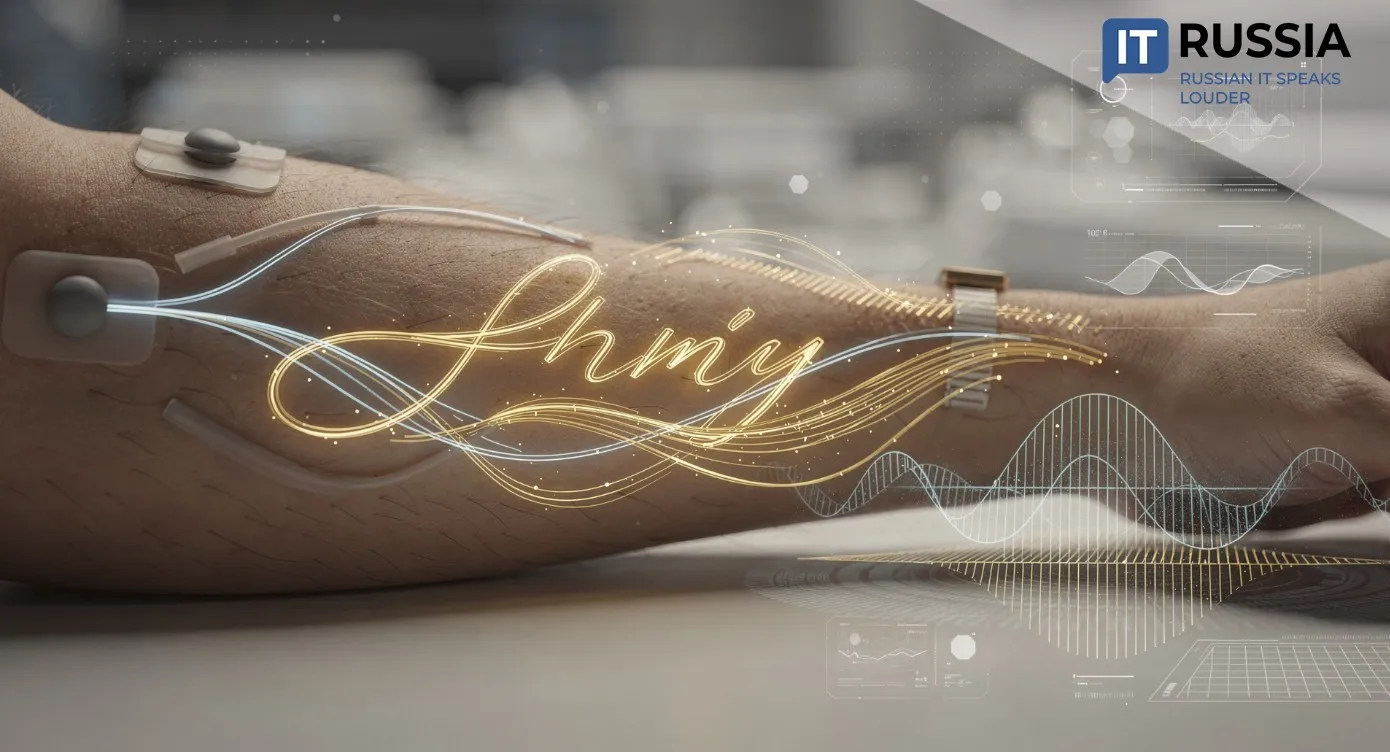
Electromyography records the electrical activity generated when muscles contract. Sensors and electrodes capture those signals. For example, when a person moves their fingers, muscles in the forearm produce electrical impulses that the sensors detect, while software converts them into commands for external devices. Technologies based on this principle already enable users to control prosthetic limbs, drones, and virtual or augmented reality systems.
The MIPT project sits at the intersection of artificial intelligence, biosignal analysis, robotics, medical information technology, and VR/AR. The work was published in the proceedings of the 2026 28th International Conference on Digital Signal Processing and its Applications (DSPA).
The Problem of a "Muscle Accent"
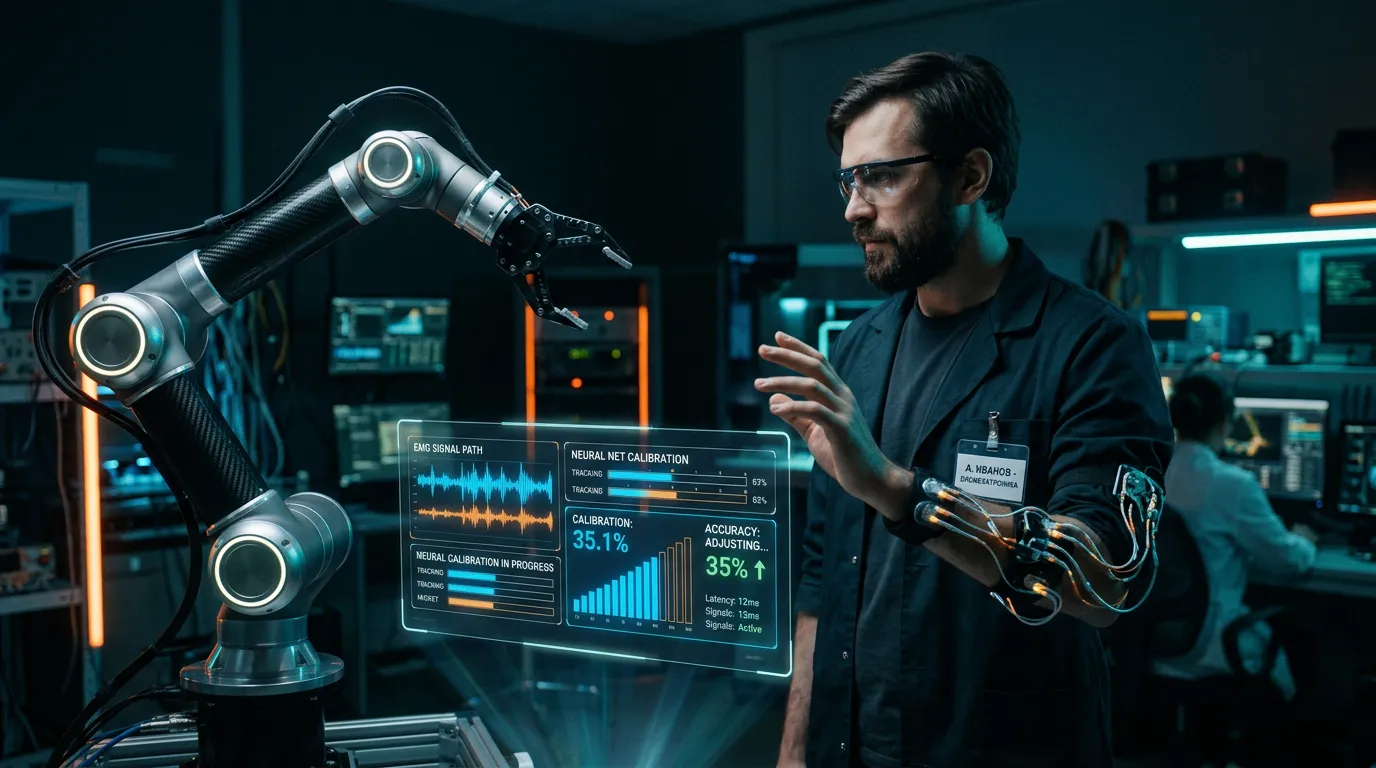
The concept behind surface electromyography (sEMG) can sound almost futuristic: sensors placed on the skin capture electrical activity generated by muscles, and a neural network translates those impulses into commands for a prosthetic limb, robot, or VR controller. But one fundamental obstacle remains. Human physiology varies from person to person. Fatigue, skin temperature, stress, and individual biological characteristics all change the signal. After evaluating more than ten AI models, the researchers found that gesture recognition accuracy for a previously unseen user falls to only about 35% without individual calibration.
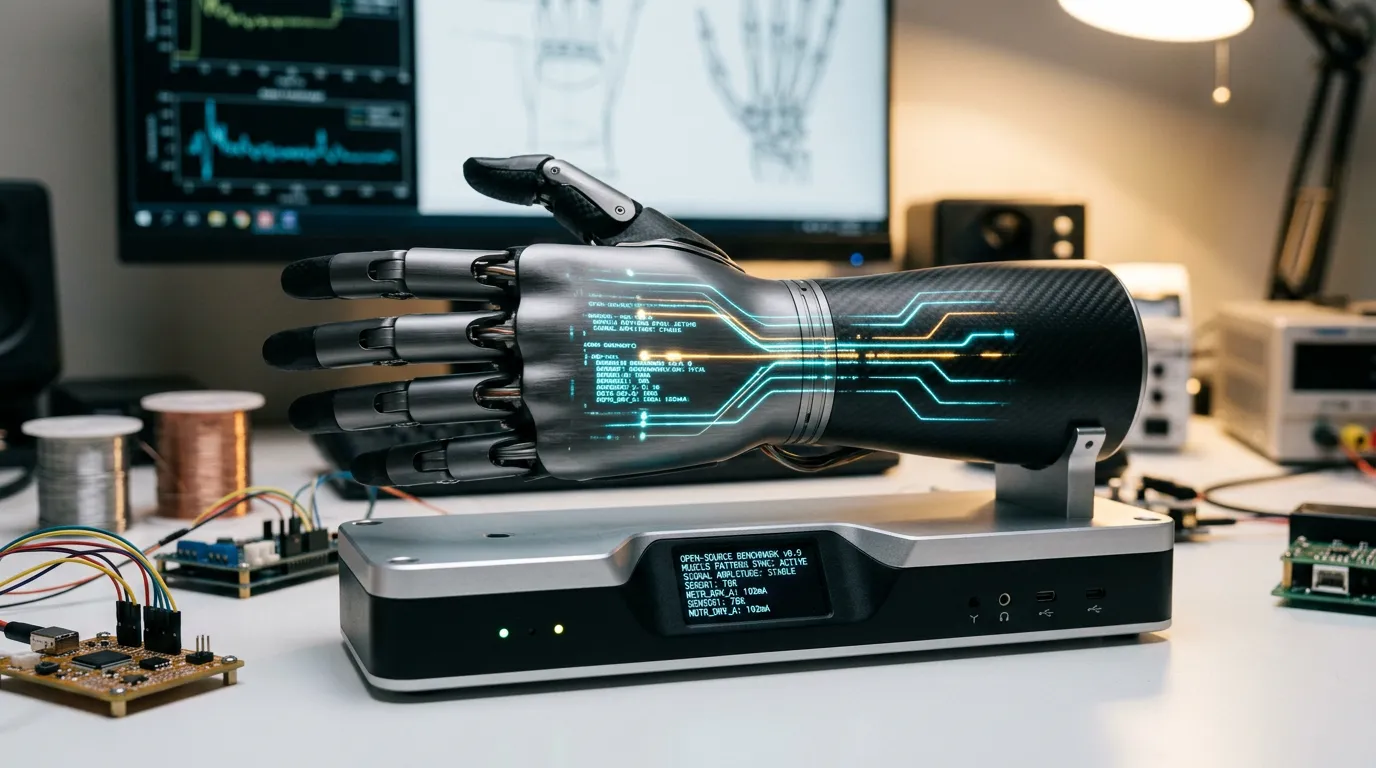
The MIPT benchmark introduces a unified protocol for evaluating these algorithms. In effect, it functions like a standard reference weight for neural networks. The researchers have released both the source code and model architectures, allowing developers to compare algorithms under identical conditions. That should improve the reproducibility of scientific results while shortening the path from laboratory research to commercial deployment.
From Bionic Prosthetics to "Silent Speech"
The most immediate application is next-generation bionic prosthetics. The more accurately an algorithm interprets muscle signals, the more naturally an artificial limb can move, making the technology especially valuable for rehabilitation. The potential applications, however, extend much further. EMG sensors can detect subtle muscle movements even through clothing and in darkness, conditions where optical cameras become ineffective. That opens opportunities for new interfaces for virtual reality, industrial training simulators, and remote robot control.
The technology could also restore a voice to people who have lost the ability to speak. By recognizing subtle movements of facial and neck muscles, AI systems may eventually translate "silent speech" into synthesized text. Looking ahead, researchers envision rapid calibration algorithms capable of adapting within seconds to each person's unique "muscle signature."
A Foundation for Sovereign Neurotechnology
The MIPT benchmark represents one component of a much broader technological ecosystem. In recent years, Russia has made rapid progress across this field, from implanting electrodes into peripheral nerves through work by Skoltech, Far Eastern Federal University, and Motorica, to developing prosthetic limbs with sensory feedback, mapping muscle activity at Bauman Moscow State Technical University, and creating rehabilitation orthoses at RTU MIREA.
Analysts estimate that Russia's human augmentation technology market could reach 188 billion rubles (approximately $2.4 billion) by 2030. Having an open domestic benchmark not only creates a foundation for Russian exoskeletons and medical robots but also establishes export potential. Russia could eventually offer integrated software platforms and open datasets to help other countries develop and calibrate neural interface technologies.
Infrastructure for the Future
The benchmark itself is not a finished prosthetic device. Instead, it serves as foundational infrastructure – a measuring stick for evaluating progress across the entire human-machine interface field. The central challenge over the coming years will be developing universal neural networks that can ignore noise while maintaining high accuracy under changing real-world conditions.
If that challenge can be solved, future machines may respond not to spoken commands or physical touch but to the intention to move itself. The MIPT benchmark lays an important foundation for that next stage in the evolution of human-machine interaction.