Yandex Go Brings Scooters and the Metro Together
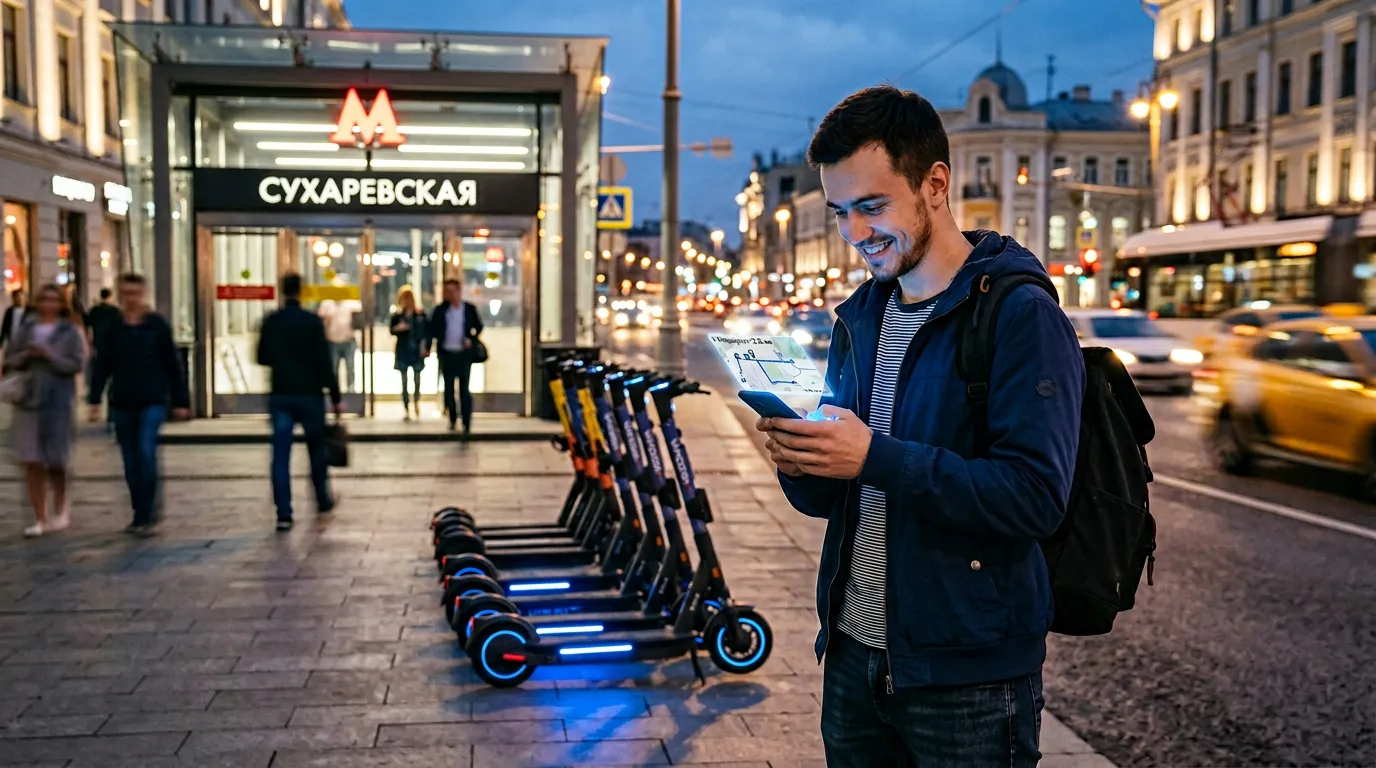
Getting around Moscow just became more seamless. Instead of switching between multiple apps, users can now rely on Yandex Go to automatically build the fastest route by combining a Metro trip with an electric scooter rental.
Yandex Go has introduced multimodal routes that combine electric scooter rentals with Metro travel. The service suggests this option whenever it shortens travel time, reduces the number of transfers, or gets users to a Metro station more efficiently. One practical advantage is that riders can rent and pay for a scooter, as well as top up their Troika transit card, directly while planning the route, without leaving the app.
Behind every route recommendation are machine learning algorithms that evaluate more than 100 variables, from traffic conditions and weather to battery levels of available scooters and individual user preferences. According to Yandex, about half of all scooter users in Moscow already rely on scooters primarily to reach Metro stations, making this integration a natural next step.
Where the Service Is Heading
The company's next goal is to expand multimodal routing by adding combinations that integrate the Metro with taxis and surface transit. Longer term, the platform is expected to incorporate commuter rail, suburban buses, car sharing, and bicycles. The new feature builds on Hub, introduced in 2025, which allowed users to compare travel options by time, cost, and other criteria. Now the algorithms go one step further by automatically assembling a complete multimodal trip instead of simply ranking alternatives.
For Russia, the technology has the greatest potential in large cities with extensive public transportation networks and established scooter-sharing services, including St. Petersburg, Kazan, Yekaterinburg, Nizhny Novgorod, and Novosibirsk.
Its export potential lies not in replicating Moscow's service as a finished product but in deploying the underlying platform technologies and routing algorithms, particularly across CIS countries and other markets where the Yandex ecosystem already operates.
At this stage, the company's priority remains the Russian market together with deeper integration into domestic transportation and payment systems. User behavior already demonstrates strong demand for this approach: in 2025, 94% of Yandex Go scooter-sharing customers used scooters as a transportation tool rather than simply for leisure rides.
The Road Toward Unified Mobility
The concept of bringing multiple transportation modes together within a single service has evolved step by step. In 2021, the MultiTransport pilot brought together the Moscow Metro, VTB, and Yandex Go to test a subscription model combining public transit and taxis, with plans to add car sharing, bicycles, and scooters.
By 2022, the Moscow Transport app already enabled users to build multimodal routes, receive live transit information, top up Troika cards, and access other digital services. By that autumn, users had planned about 30 million multimodal trips through the app, demonstrating strong demand for integrated mobility solutions.
By 2023, MultiTransport covered eight transportation modes, ranging from the Metro and the Moscow Central Circle to buses, trams, bicycles, taxis, and scooters. At that stage, however, integration focused primarily on a shared subscription model rather than automatically generating a specific end-to-end journey.
In 2025, Yandex Go introduced Hub, bringing together routes across public transportation, taxis, car sharing, and scooters while announcing plans to move toward combined journeys. By the end of that year, machine learning had been integrated into Hub, enabling algorithms to rank options using real-time information such as traffic congestion and weather. The launch of scooter-plus-Metro routing represents the next stage of that evolution.
From Recommendations to End-to-End Travel
The new capability marks a natural step in the transition from standalone transportation services to a model of unified urban mobility management. Its primary technological value lies in automatically combining data from public transit, scooter sharing, city infrastructure, weather conditions, and traffic into a single routing engine.
Over the next several years, multimodal routing is likely to become a standard feature of transportation apps across Russia. Competition will increasingly focus on travel-time accuracy, payment convenience, the number of participating mobility providers, and each platform's ability to recalculate routes in real time.
The greatest impact will come with the introduction of unified payment for an entire journey, allowing users to book and pay for a complete door-to-door trip that combines both public transportation and commercial mobility services. At that point, the platform will evolve beyond a recommendation tool into a comprehensive digital coordinator for urban travel.