Robots Take Over Dairy Farming in Russia’s Udmurtia Region
At the Rassvet agricultural enterprise in Russia’s Udmurtia Republic, a new robotic dairy farm has begun operations, marking a shift toward automated livestock management. The facility is designed for 140 head of cattle and reflects a broader move toward smart farming across the country.
Tireless and Precise
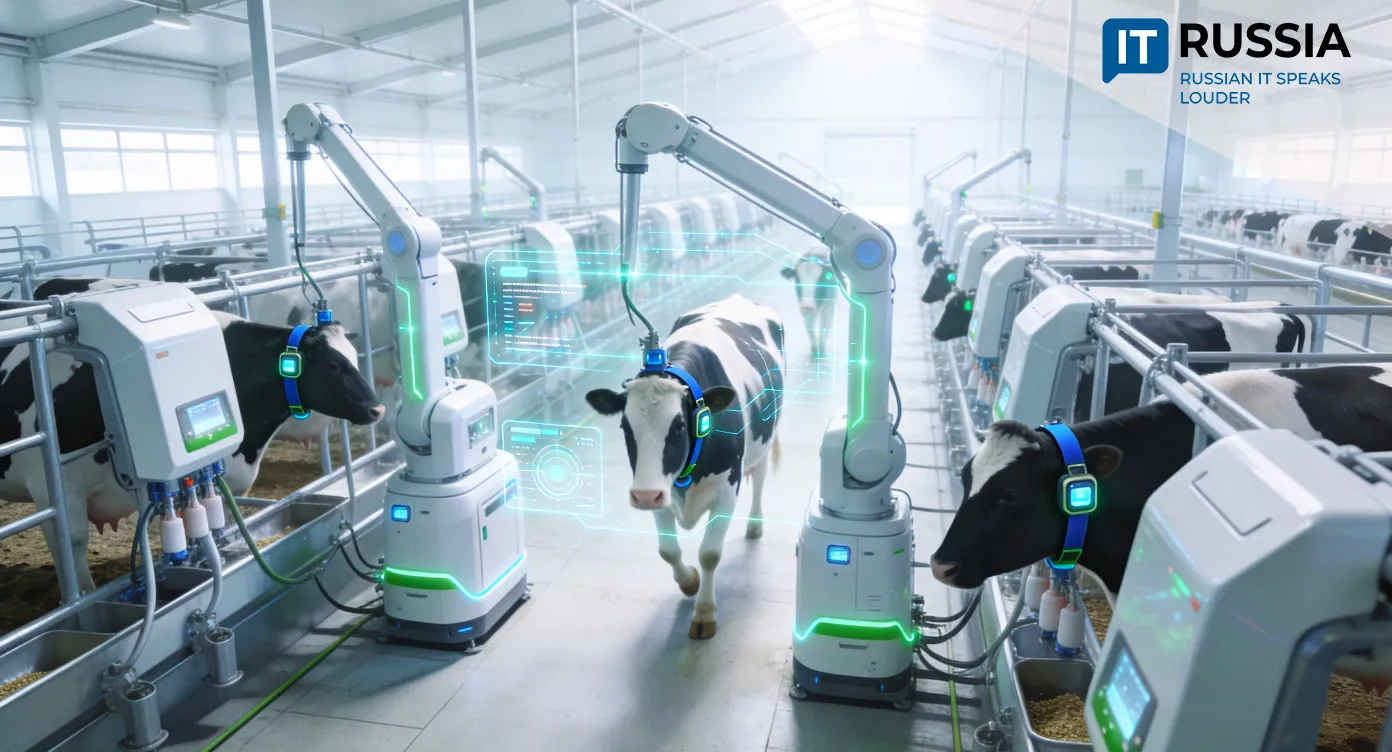
One of the key challenges in modern livestock farming is reducing the physical burden on workers. “Getting someone to work night shifts, especially when it involves physically pushing feed, is difficult. Cows eat around the clock: the more they eat, the more milk they produce,” said Danila Kozlov, deputy director of the Lenin State Farm in the Moscow region. In his operation, that problem has already been solved: eight milking robots are in service. It is the digitalization of farms and the automation of processes that are reshaping the livestock sector.
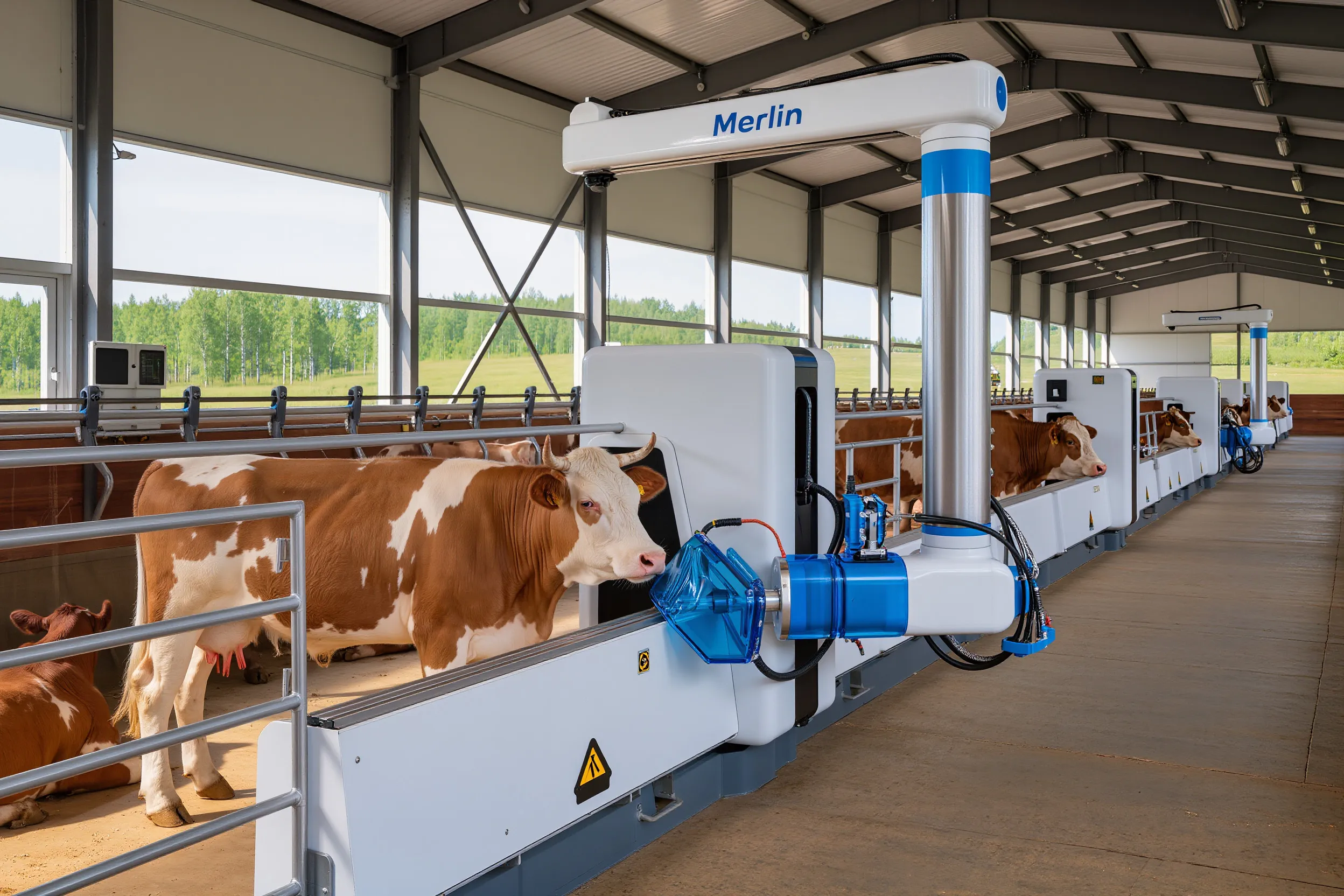
On December 18, the Rassvet enterprise opened a new robotic dairy farm in the Igrinsky District of Udmurtia. The automated barn can accommodate 140 head of cattle and is equipped with state-of-the-art technology. The milking area features Merlin robotic systems, while other advanced automation solutions have also been implemented, including autonomous feed delivery, automated watering, and an automatic manure removal system. Cattle are expected to move into the new digital farm in early 2026.
Overall, Rassvet manages more than 1,200 head of cattle, including 370 cows. All new farms at the enterprise are being built using digital technologies. Over the first 11 months of the current year, the farm produced 3,900 tons of milk, a 6.7% increase compared with the same period last year.
Smart Farms
Today, strong milk yields can be forecast in advance using digital tools. The development of robotic farms is part of a global trend toward smart farming that is now taking hold in Russia. The use of robots does more than reduce labor hours and ease physically demanding work.


Digital farms boost productivity through precise control of feeding regimes and housing conditions. At the same time, strict adherence to standards helps improve milk quality. Costs are reduced as processes are automated and the need for manual labor declines. Feed and other resources are used more efficiently, since digital systems allow precise dosing, minimizing waste.
Finally, robotic systems simplify animal care, reducing stress and further increasing milk yields. Digitalization also enables continuous monitoring of herd health, detecting deviations in behavior or feeding patterns and allowing for timely intervention.
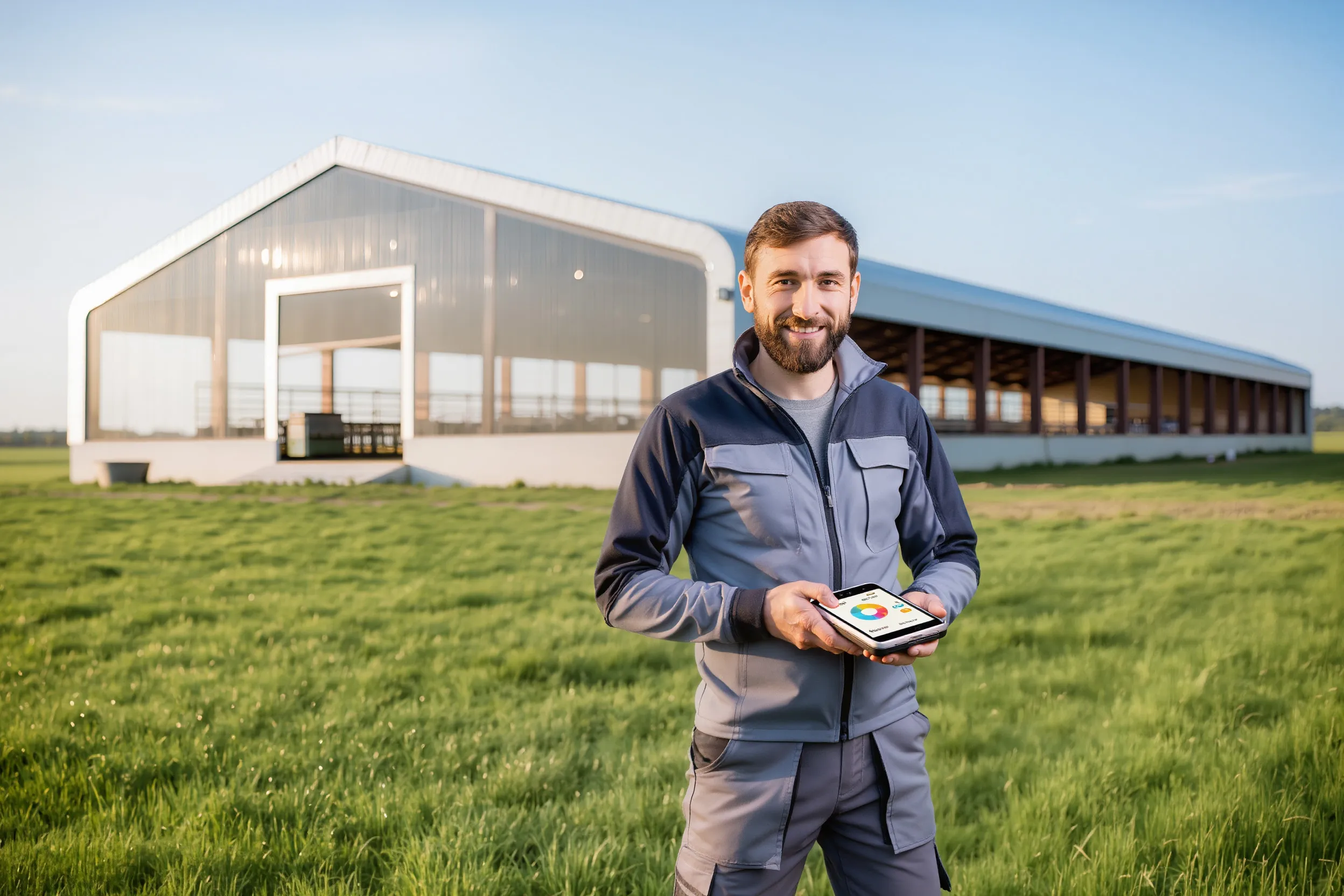
Taken together, these factors make it possible to increase milk production, which remains in demand in Russia. Given the country’s resource base, including feed supplies, water, and available land, Russian livestock producers are also likely to expand exports over time. At the same time, a shift from raw commodity exports to integrated solutions is inevitable. Exports will increasingly include not only dairy products, but also technological solutions, consulting services, and equipment.
Digitalizing Cattle Management
Udmurtia alone is now home to 24 robotic farms. The new facility is a significant milestone for the region’s agro-industrial complex, demonstrating the spread of robotics in dairy farming. More broadly, Russia is showing a steady trend toward automation across the sector.
A clear example is the Tritikum farm in the Omsk region. There, processes ranging from feed and water supply to manure removal have been automated. Cows wear sensor-equipped collars that track multiple health parameters. These data are analyzed using specialized algorithms, allowing operators to assess animal health and respond quickly if problems arise.
At farms operated by the EkoNiva group, a proprietary hardware and software platform known as Eko.Feed is used. The system controls animal feeding and coordinates interactions between the holding’s feeding department, livestock nutrition specialists, and operators.
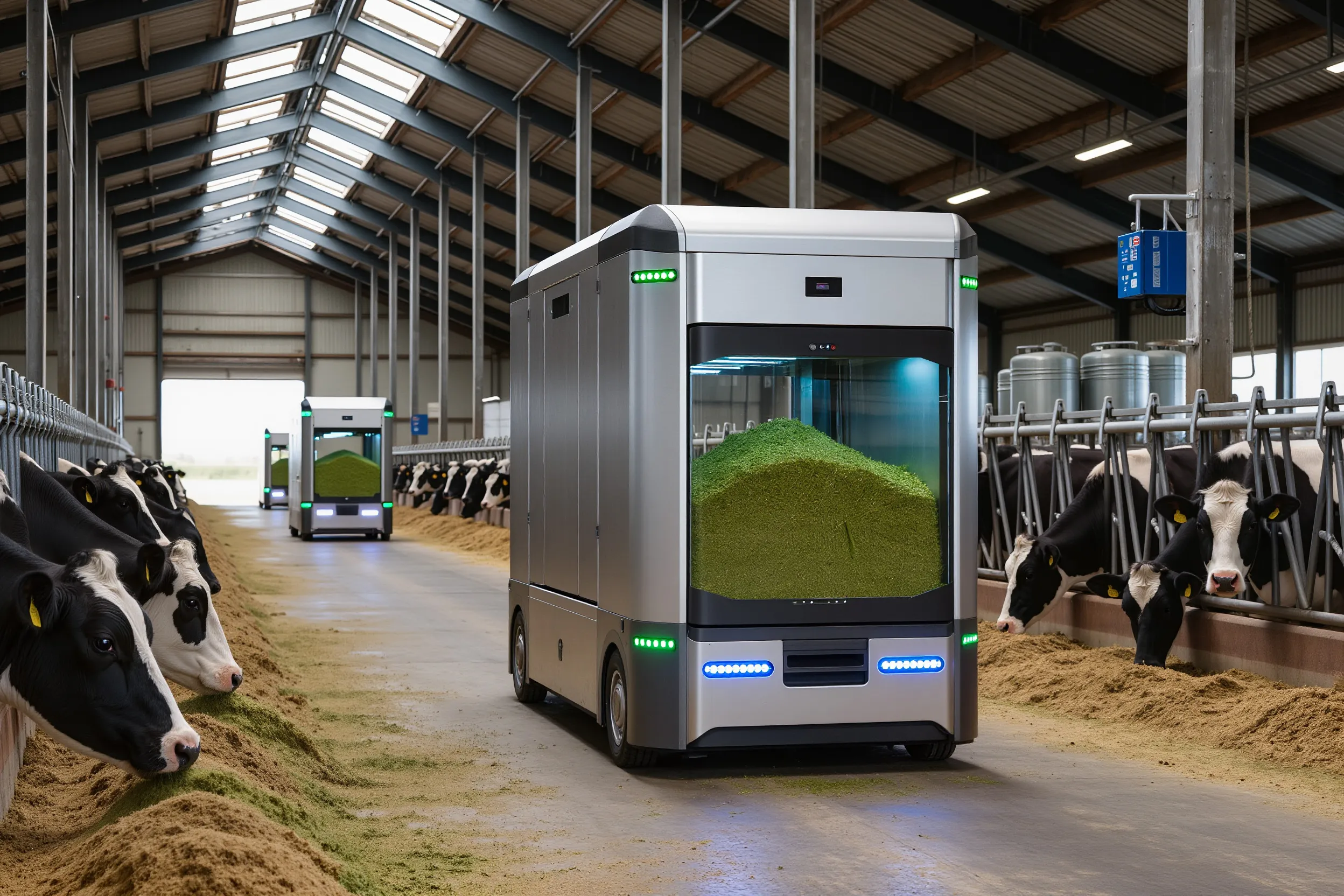
The next stage is already taking shape: Russian livestock producers are beginning to introduce digital twins of animals. Powered by AI, these models generate individualized feeding and care plans, fundamentally changing efficiency levels in dairy farming.