Tyumen Scientists Use Neural Networks to Optimize Oil Production
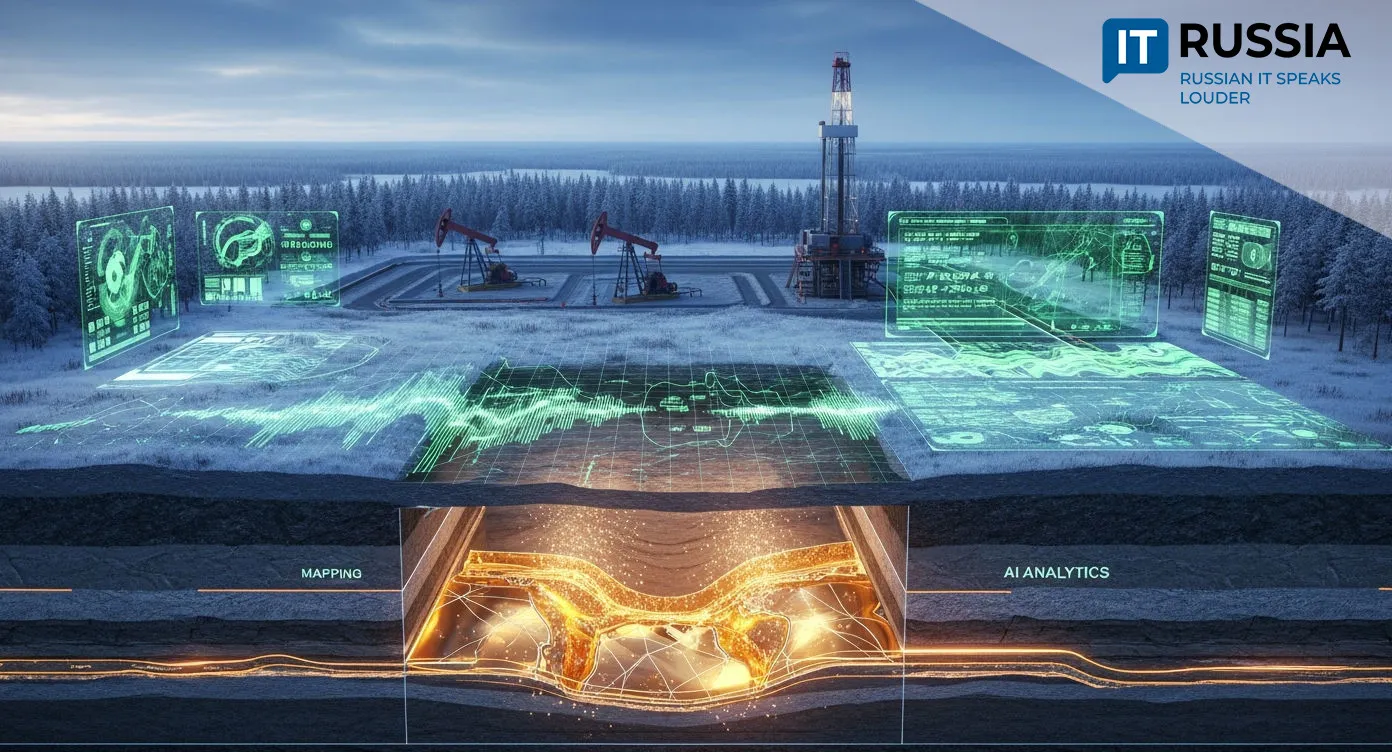
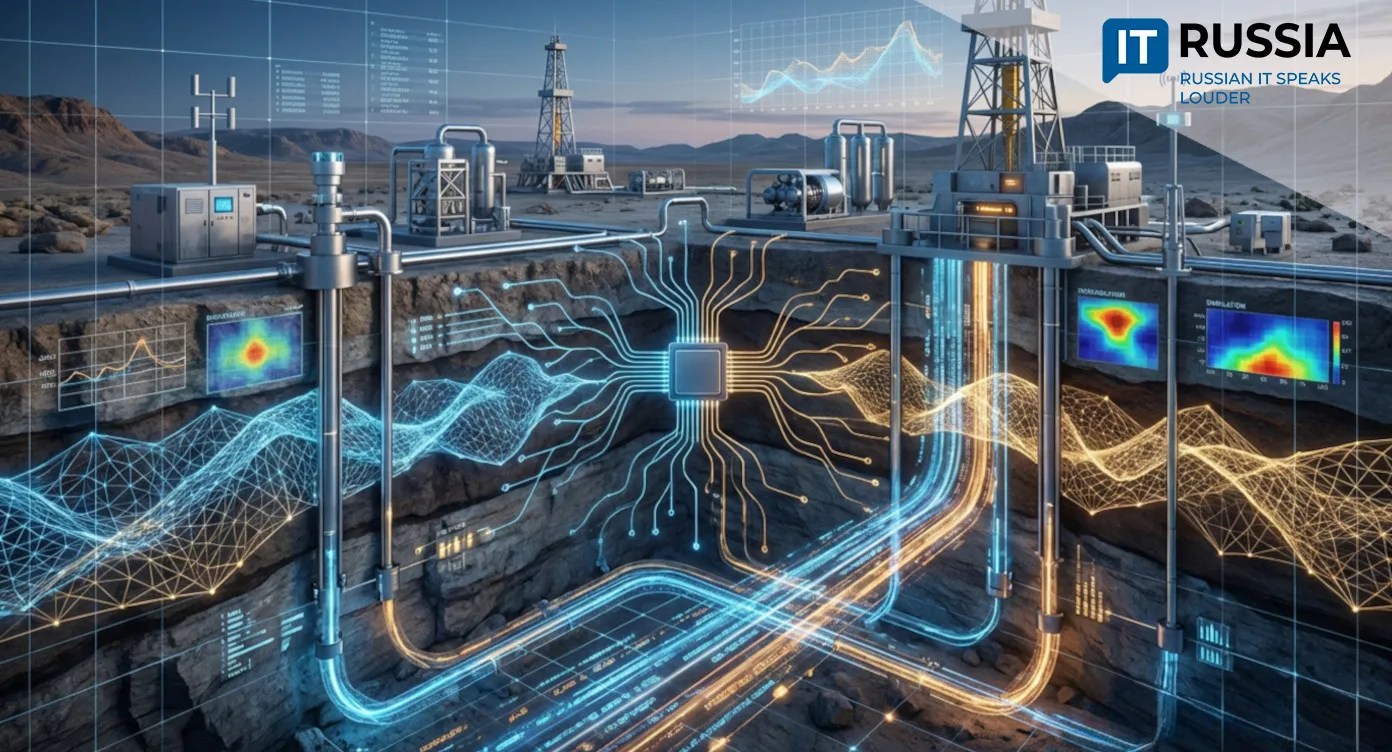
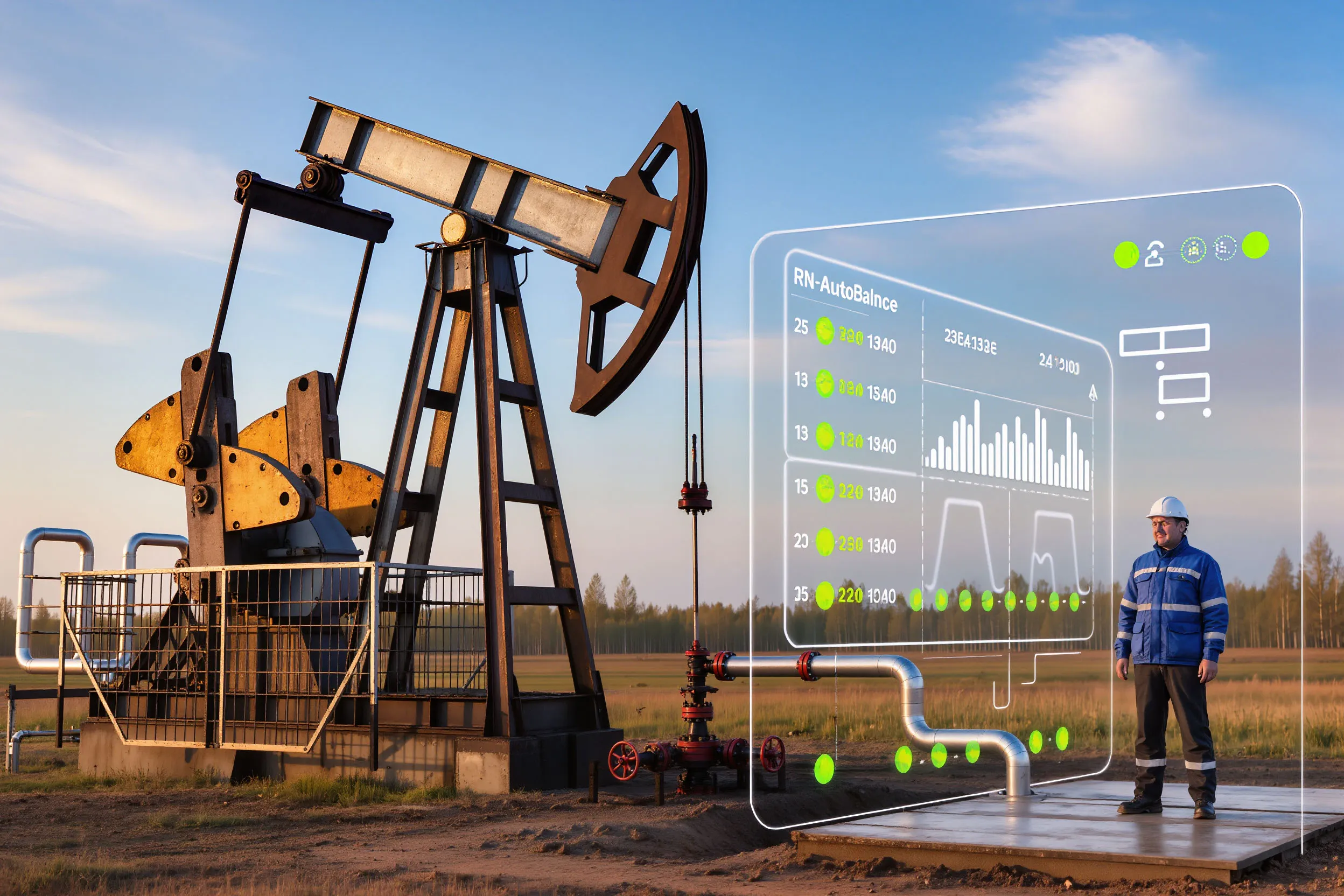
Researchers from RN-GIR, a research and development center within Rosneft, have developed RN-AutoBalance, a software system that uses neural networks to optimize oil production by analyzing well data and reservoir conditions. The technology enables more efficient production without major capital investment, while improving operational control and decision-making.
Operating in a Self-Directed Mode
The system operates in a largely autonomous mode, identifying optimal operating parameters for production equipment based on daily data streams. Previously, such calculations were performed using monthly averages. As a result, production performance improves without significant additional investment. At the same time, the accuracy of analyzing reservoir dynamics and operational parameters increases substantially. Routine engineering calculations are automated, enabling a transition toward intelligent, data-driven well management.
The software has been piloted at a field in the Uvat district of the Tyumen region. Practical results confirm the effect on production efficiency: water injection volumes were reduced by 222,000 cubic meters, while oil output increased by 4%.
RN-GIR specializes in the study of rock formations, reservoir fluids, and the development of digital tools aimed at improving production efficiency. The center focuses on translating new technologies directly into industrial workflows.
Lessons From the Jurassic
In 2020, Russian researchers at the Skolkovo Institute of Science and Technology developed algorithms for shale oil production. The AI-based system predicted the volume of potentially recoverable oil at a specific field using multi-stage hydraulic fracturing. It also provided engineers with recommendations on optimal parameter sets and narrower operating ranges.


For decades, geologists have documented large reserves of oil and other hydrocarbons whose extraction was either technically impossible or economically unviable. Hydraulic fracturing, developed around 50 years ago, addressed this challenge. The method involves drilling a specialized network of wells into oil-bearing rock formations and injecting a carefully selected viscous fluid with solid particles under high pressure. This process creates multiple fractures, enabling hydrocarbons to flow toward the wellbore.
In Russia, the technique is used to develop deposits formed at the end of the Jurassic period in what is now Western Siberia. According to experts at Gazprom Neft, these formations contain between 1 and 60 billion tons of oil, depending on the specific field.
Over time, and as reservoirs mature, hydraulic fracturing technology has become increasingly complex. Today, it requires detailed modeling of all reservoir properties using high-precision computer simulations. Even these tools do not always deliver optimal results. This gap has been addressed through machine learning systems designed to forecast multi-stage hydraulic fracturing performance. The underlying database was built over two years, drawing data from 6,000 wells across 20 oil fields in Western Siberia.

The Evolution of Neural Models
In 2025, scientists reported the development of neural operators for mathematical modeling of transient processes in reservoir systems. Reservoirs are complex dynamic systems with distributed parameters, described by systems of partial differential equations. While traditional numerical simulation methods offer high accuracy, they require substantial computation time, limiting their use in real-time control and decision support. Neural operators make it possible to approximate solutions in infinite-dimensional functional spaces.
The practical relevance of this approach has been demonstrated through computational experiments, including a case study in hydrodynamic modeling of an underground gas storage facility. In that application, computation speed increased by six orders of magnitude compared with conventional methods.
The Tyumen Advantage
In 2023, specialists from Tyumen State University, working with the Institute of Geophysics of the Ural Branch of the Russian Academy of Sciences and an industrial equipment manufacturer, developed a neuromorphic device designed to search for oil and gas targets using acoustic data. The system mimics aspects of human brain activity. Recognition is performed by a neural processor developed at the Laboratory of Micro- and Nanoelectronics within the Center for Nature-Like Technologies. The mechanism operates in a manner similar to biological neural networks, encoding information based on incoming signals. Such neural processors are already used in computer vision and machine learning systems.

Tyumen researchers have also developed a low-cost method for boosting production of ultra-high-viscosity oil based on in-situ combustion. According to expert estimates, such oil accounts for around 70% of Russia’s total hydrocarbon reserves.