Yamal to Launch Drone Mail Delivery to the Tundra
The governor of the Yamalo-Nenets Autonomous Okrug has instructed researchers to assess the feasibility of using drones to deliver goods to nomadic reindeer herder camps. If the project proves viable, residents of the Far North could order items from online marketplaces year-round rather than only during short seasonal windows.
A Region Where You Cannot Park a Car
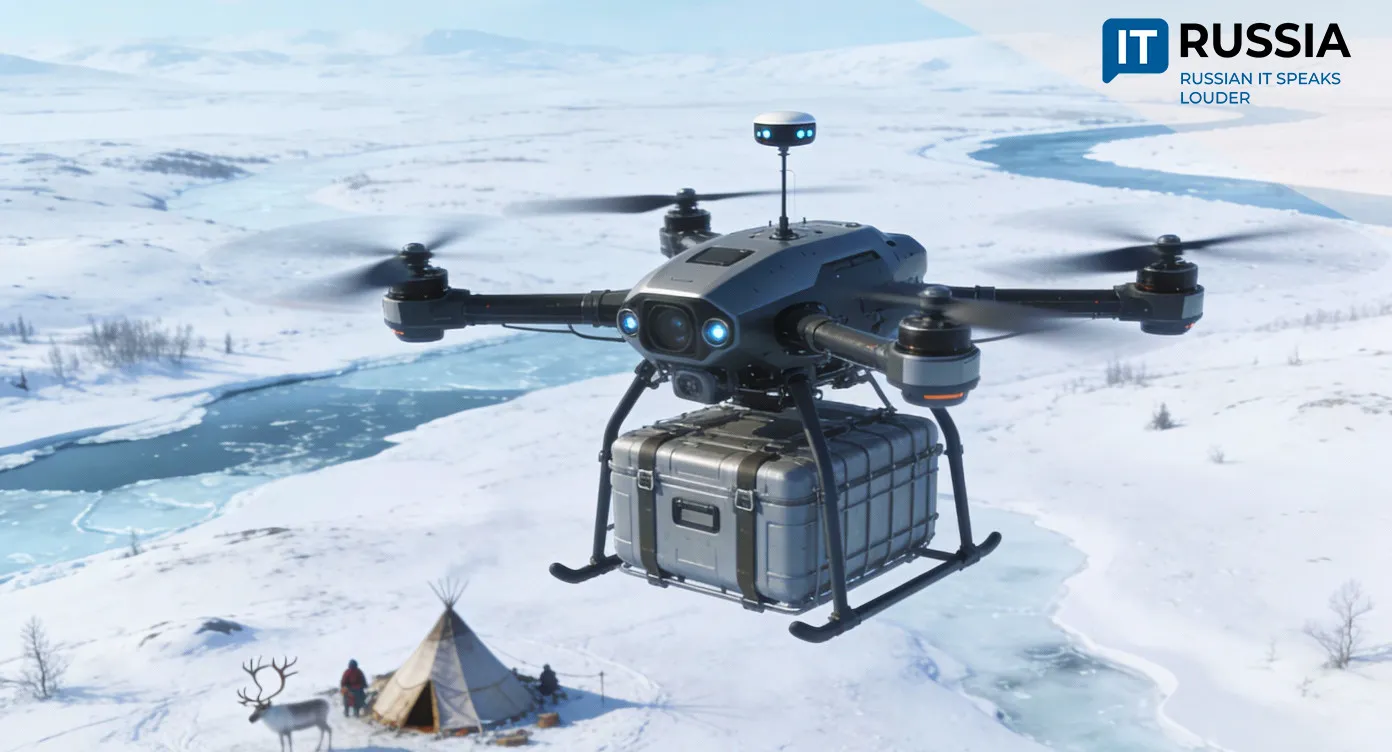
Dmitry Artyukhov, governor of the Yamalo-Nenets Autonomous Okrug, has tasked researchers at the Higher School of Economics with developing a technical and economic feasibility study for delivering goods by unmanned aerial vehicles to camps of Indigenous tundra communities. The study results are expected in April 2026. At present, this is the only officially mandated state project focused specifically on large-scale drone logistics designed to support the nomadic way of life of Indigenous peoples of the North.
The problem the initiative aims to address is both clear and severe. Traditional methods of delivering goods to the tundra – helicopters, all-terrain vehicles, and river transport – operate seasonally and are extremely costly. In winter, access relies on frozen rivers and lakes, in summer on waterways, while during the shoulder seasons communication with nomadic camps nearly stops altogether. Reindeer herder camps are located hundreds of kilometers from the nearest settlements, in areas with no ground infrastructure at all. As a result, residents can order goods from online marketplaces or receive parcels only during strictly limited periods of the year.
Drone delivery fundamentally changes this equation. UAVs are independent of ground conditions, do not require prepared landing sites, can operate at temperatures down to minus 40 degrees Celsius, and can cross rivers, lakes, and wetlands in minutes instead of hours spent traveling by water or ice. For tundra residents, this means year-round access to goods, medicines, mail, and other essential items, regardless of seasonal transport constraints.
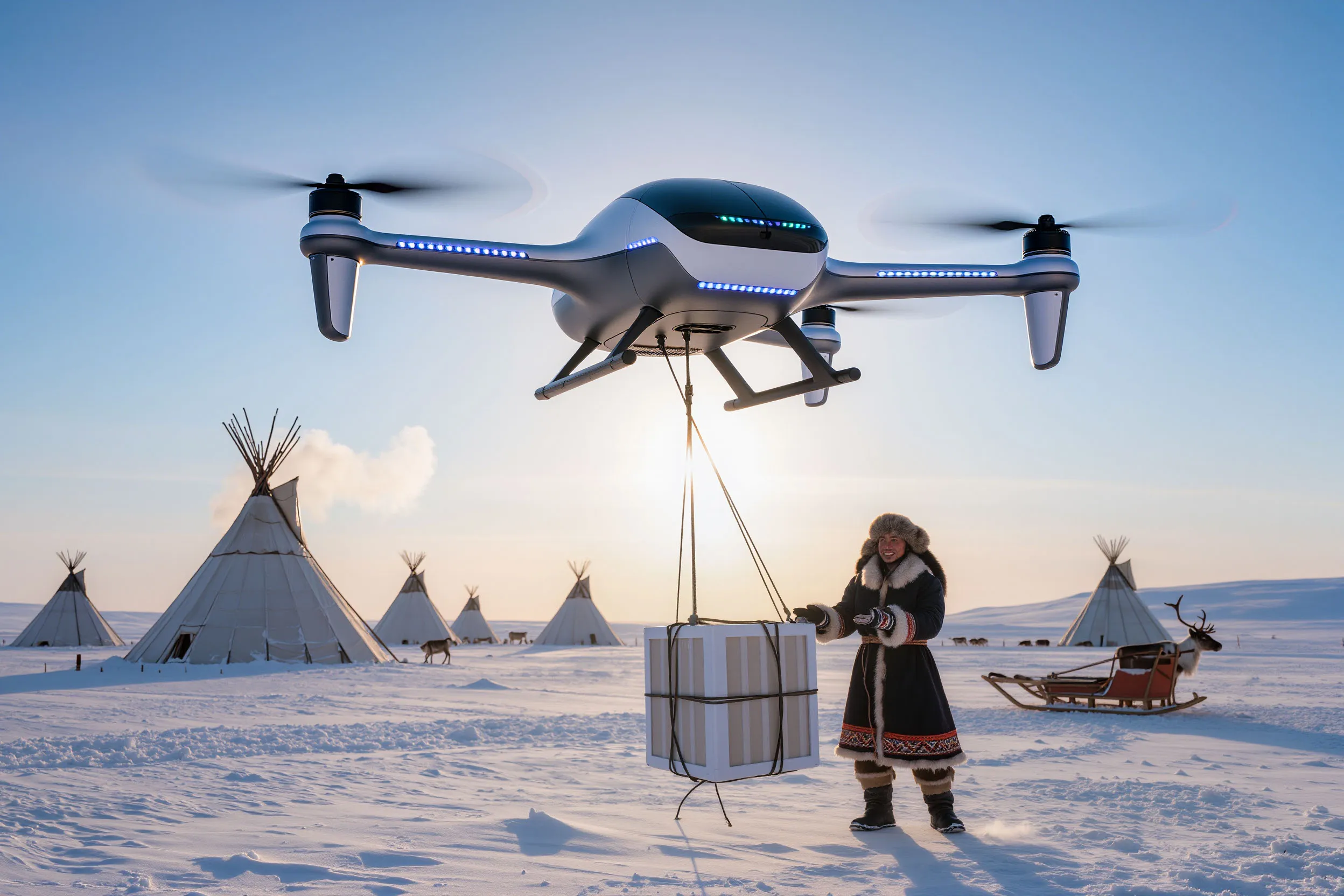
Indigenous small-numbered peoples of Russia’s North-West have historically lived in a state of logistical isolation. Drone delivery represents genuine integration of these communities into the digital economy, reducing the distance between tundra residents and the rest of the country – not physically, but functionally. It introduces a new element of Arctic logistics infrastructure capable of significantly improving quality of life in the region.
Assessing Potential and Challenges
If the Higher School of Economics’ assessments are positive, the project could become the foundation for deploying unmanned logistics across the Arctic. By 2030, the government plans to expand the network of drone corridors to 19,500 kilometers, creating conditions for integrating UAVs into regular supply chains. Yamal is positioned to serve as the cornerstone of this strategy.


The industry impact extends far beyond parcel delivery. Technologies refined in Yamal under permafrost and polar climate conditions can be applied in other remote Russian regions – Chukotka, Kamchatka, and Yakutia – where logistical challenges are similar. In addition, domestic drone manufacturers would gain a real-world reference case for exporting and deploying their solutions abroad, including in Scandinavia, Canada, and Alaska, where remote communities face comparable connectivity issues.
The Flight History Behind the Project
The Yamal initiative did not emerge in isolation. Over the past four years, Russia has accumulated substantial experience in unmanned logistics under harsh climatic conditions. In 2022, Russian Post launched initial drone delivery trials in four regions: Chukotka, Yamalo-Nenets, and Khanty-Mansi autonomous okrugs, as well as Kamchatka Krai. Around the same time, the VT-440m helicopter-type drone began operating at Yamal oil and gas fields, delivering loads of up to 100 kilograms for extractive companies.
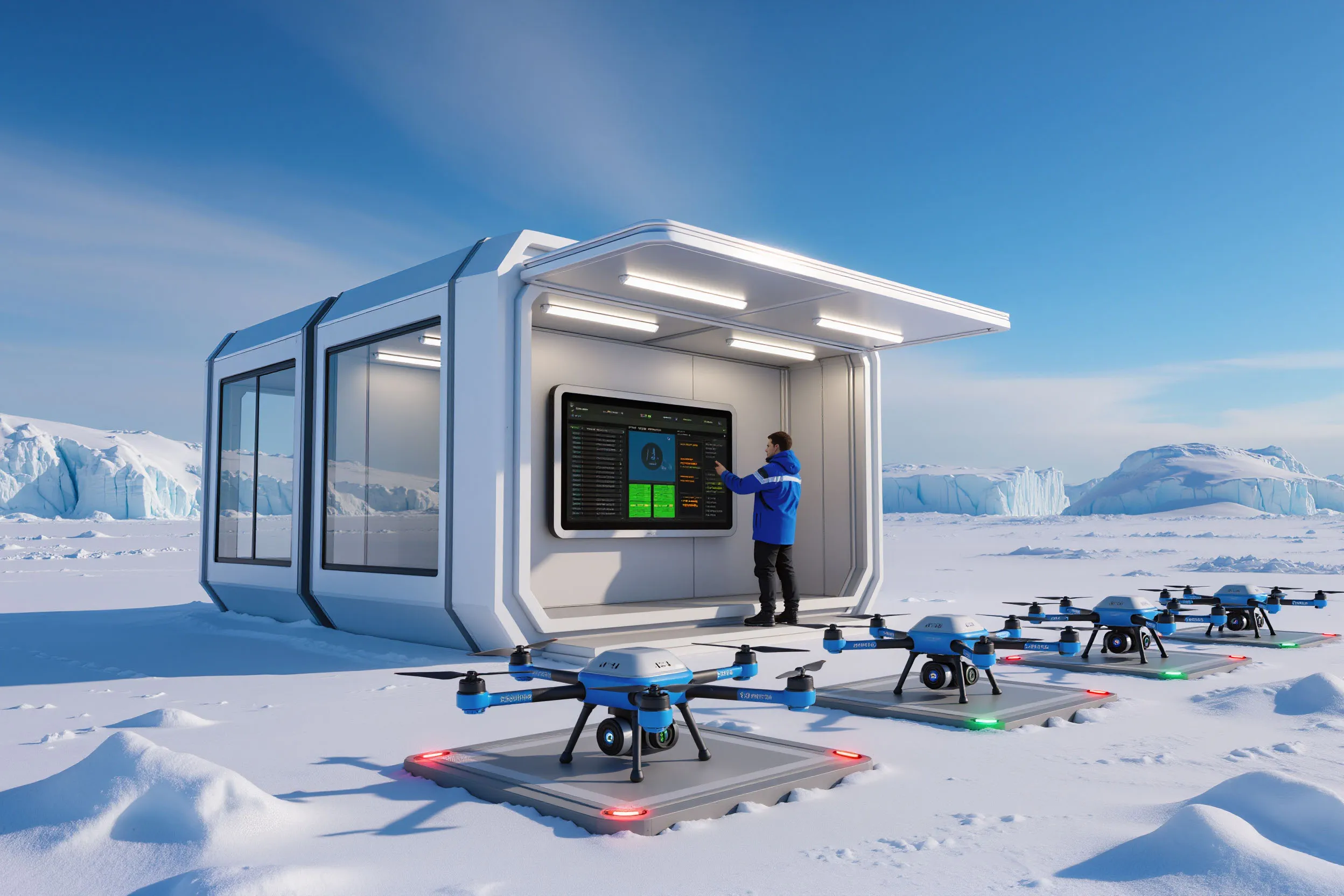
In 2024, trials in the Khanty-Mansi Autonomous Okrug reached a new level of maturity. During the first half of 2025, the number of unmanned flights increased by 30 percent. The system demonstrated that in swamps, strong winds, and extreme temperature swings, drones performed more reliably than expected. Moreover, delivering cargo weighing up to 1.5 metric tons proved cheaper than chartering a helicopter.
At the end of 2024, the geography of experiments expanded significantly. Yakutia launched the “Air Crossing” project, establishing regular UAV flights between Yakutsk and Nizhny Bestyakh. The service addresses isolation during the off-season, when river ice has broken up but ice roads have not yet formed. This marked the first case in Russia of unmanned flights operating on a permanent basis in extreme climatic conditions. For a fixed fee of 500 rubles (about $6), drones deliver cargo weighing up to 10 kilograms over distances of up to 15 kilometers.
At the international level, Russia still trails global leaders. DHL, FedEx, and Alibaba deploy cargo drones at a scale that Russia is only beginning to plan. However, in one area domestic developers hold a clear advantage – operations in extreme climates. No other country has comparable experience running drones year-round in permafrost conditions and polar temperatures.

From Vision to Operational Task
The Yamal drone delivery project could become a catalyst for transforming northern logistics. As early as 2027–2028, initial test operations with nomadic camps may begin. If results confirm the model’s viability, unmanned delivery could become the norm for remote northern communities by 2030.
The project’s main value lies not only in solving a local challenge, but in creating a template for scaling unmanned logistics across the Arctic. Data gathered during Yamal trials on drone performance, equipment behavior in extreme conditions, and delivery economics can be applied in Yakutia, Kamchatka, Chukotka, and other polar regions. In effect, Yamal would function as a laboratory for developing a federal program to digitize logistics across northern territories.
The social impact is measurable and significant. Millions of residents in remote regions would gain access to goods, services, and information that were historically out of reach. This would strengthen the Arctic’s integration into Russia’s broader economic space and improve quality of life in some of the country’s most challenging environments.