Russia Moves to Draft National AI Adoption Plan
The government is preparing a sweeping program to expand artificial intelligence and support high-tech industries.
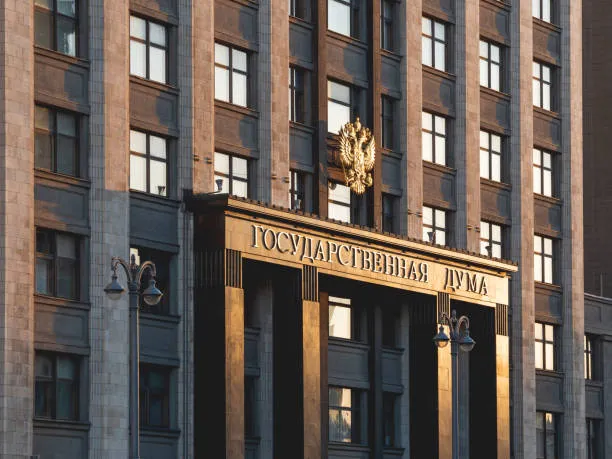
Prime Minister Mikhail Mishustin told the State Duma that the government is preparing a large-scale initiative to advance artificial intelligence and strengthen high-tech sectors.
Mishustin said the Cabinet is developing a national AI adoption plan intended to serve as a tool for digital optimization of public administration and to improve the efficiency of government agencies. The effort envisions systematic integration of AI technologies across the economy, industry, and the social sphere.
According to Mishustin, the push for technological leadership is embedded in the country’s national projects. The World Bank already classifies Russia among the leaders in digital government services. Digital performance indicators cited by the prime minister underscore the scale of online service deployment and the maturity of the country’s digital infrastructure.
Science for Industry
In his address, Mishustin highlighted several major projects. Construction has been completed on SKIF – Sibirsky Koltsevoy Istochnik Fotonov (Siberian Circular Photon Source), a megascience facility of a kind not built in the country since the late Soviet era. The first experiments are set to begin this year. Their results are expected to support advances in microelectronics, pharmaceuticals, and materials science.
Industrial initiatives are also expanding. The nuclear-powered icebreaker Stalingrad has been laid down, and the gas carrier Kosygin was launched at the Zvezda shipyard. In Kaliningrad, construction is underway on a lithium-ion battery plant. At the same time, production is starting for germanium-based materials used in fiber-optic communication lines.
Support for Technology Companies
The state is ramping up workforce training for high-tech industries. Currently, 56 percent of state-funded university and college places are allocated to technical specialties. Some 350,000 graduates have already entered the labor market through the Professionalitet program.
Large corporations are also investing in education. A total of 350 companies have invested 51 billion rubles (approximately $610 million) in the development of Peredovye Inzhenernye Shkoly (Advanced Engineering Schools), which now operate 89 joint programs.
The government has also simplified innovation processes for companies. Beginning in 2025, research and development expenses can be deducted at double value. High-tech enterprises have access to 20 support instruments, including concessional loans and expedited patent procedures. As a result, the number of small technology companies has grown by 51 percent to reach 6,500.
Officials say coordinated efforts among science, business, and government are expected to strengthen the country’s technological self-reliance and accelerate the deployment of advanced IT solutions in the real economy.