Russian Supercomputer for Scientific Research Is Boosted to Higher Performance
The system has received a new graphics subsystem for training large language models, pushing performance to 3.5 petaflops.
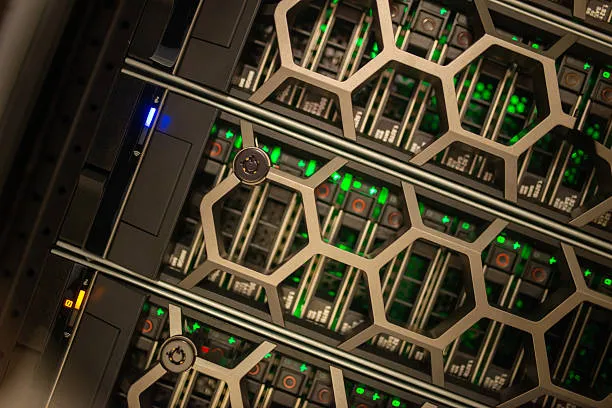
At the Moscow HSE University, another stage of modernization of the CHARISMA supercomputing cluster has been completed. The architectural upgrade increased the system’s peak performance to 3.5 petaflops and significantly expanded its capabilities for scientific research, primarily in artificial intelligence and machine learning.
A Computing Powerhouse
The core focus of the upgrade was the development of the graphics subsystem required for training large language models and generative AI workloads. The cluster was expanded with new compute servers equipped with NVIDIA H200 graphics accelerators, each featuring 141 GB of memory, as well as a management server with an array of 16 NVMe drives.
In addition, the InfiniBand network was upgraded with the installation of a 100 Gbit/s switch. The new nodes run Rocky Linux 9.7, ensuring full compatibility with current scientific software.
Twice the Power
Following the upgrade, peak computing performance increased from 2.24 to 3.5 petaflops, while AI performance rose from 51.1 to 91 AI petaflops. The number of compute nodes, GPUs, and CPU cores also grew, and GPU memory capacity was expanded to 141 GB. At the same time, the user base continued to expand: the number of active researchers has exceeded 700, and the volume of scientific publications produced using the cluster continues to rise.
The university notes that the latest upgrade represents not just a technical expansion, but a qualitative step forward that enables more complex problems to be tackled.
Senior Director Andrey Sokolov said: