Russia’s GigaChat AI Is Helping Astronauts Work More Efficiently on the ISS
Russia says its GigaChat neural network is already operating aboard the International Space Station, cutting the time required for routine procedures and scientific experiments by about 20 percent.
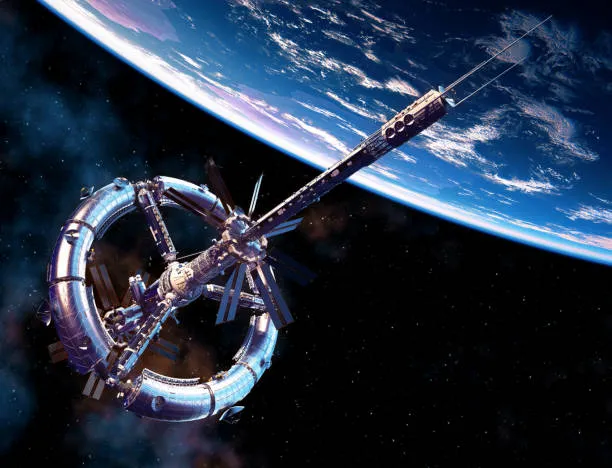
The Russian neural network GigaChat is now being used aboard the International Space Station to assist astronauts with daily tasks and scientific experiments. The system has simplified onboard research procedures by roughly 20 percent, according to Dmitry Bakanov, head of Roscosmos.
An AI Assistant, Not a Replacement
The deployment is not about replacing humans on the station. Instead, GigaChat functions as an intelligent assistant for astronauts working in a highly constrained, multitasking environment.
At any given time, ISS crews conduct dozens of parallel experiments. Each one is governed by detailed instructions, operational protocols, and reporting requirements. Previously, astronauts accessed these materials through onboard laptops and electronic databases, manually searching for documents and filling out reports—a time-consuming process that added cognitive load to an already demanding schedule.
With GigaChat onboard, astronauts can now use the neural network as a contextual assistant. The system helps quickly locate relevant information in technical documentation, suggests step-by-step procedures, and generates draft reports. In practice, it serves as an advanced reference and analytical tool optimized for orbital operations.
Upgrading AI for Orbit
Bakanov emphasized that the project is still evolving.
Earlier, the tech outlet IT-Russia reported that GigaChat was delivered to the ISS on Soyuz MS-28 on November 27, 2025, as part of a cooperation agreement between Roscosmos and Sber in the field of artificial intelligence.
As astronauts gain experience working with the system, developers expect GigaChat to take on a growing share of auxiliary tasks—freeing up crew time for research that still requires human judgment, dexterity, and decision-making.
In orbit, where every minute is scheduled and every action logged, even modest efficiency gains matter. If GigaChat continues to perform as claimed, it could become a blueprint for how AI assistants support human crews not just in low Earth orbit, but on longer and more distant missions yet to come.