Ural Couples Can Preview Marriage Registration Halls Online
Couples planning to marry now have a much easier and more convenient way to arrange where guests, photographers and videographers will be positioned during their ceremony.
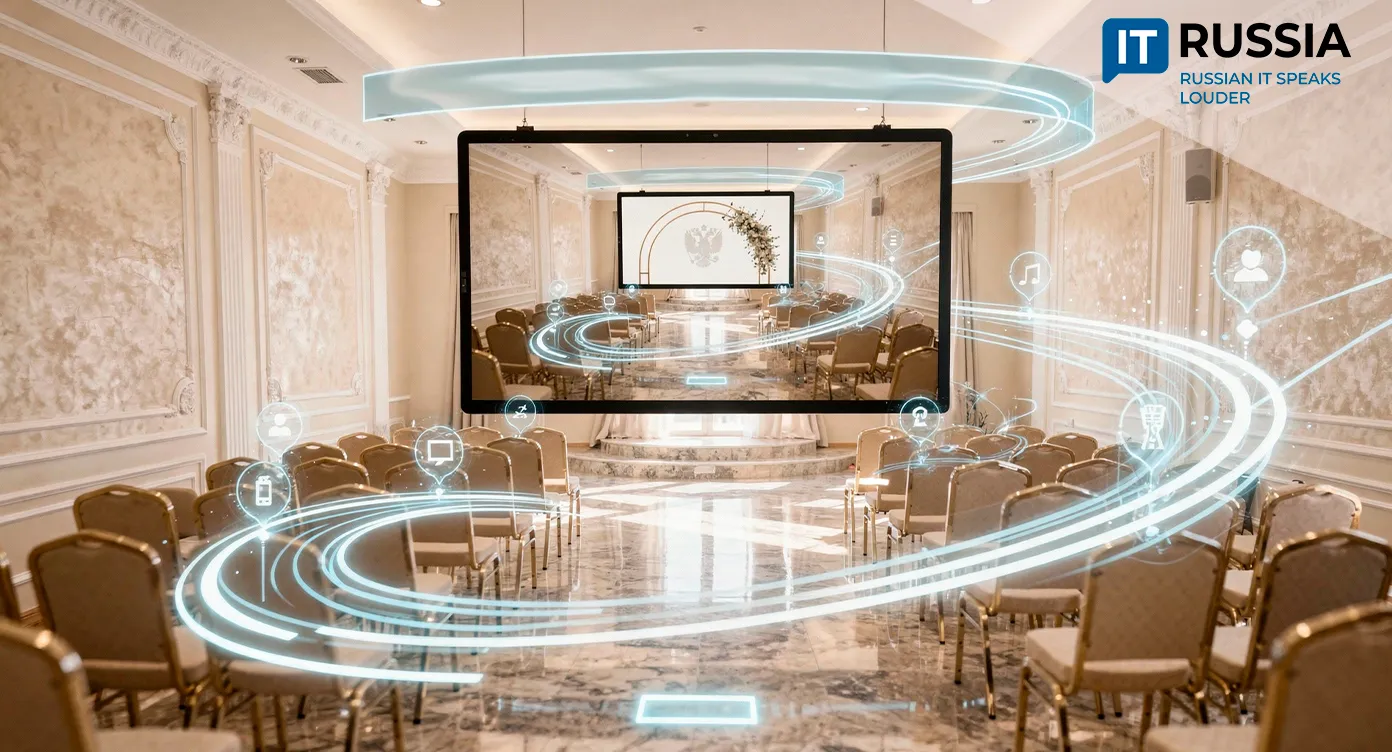
A digital service for couples preparing to register their marriage launched in Russia’s Sverdlovsk region Aug. 20, in what regional authorities call the first service of its kind in the country. The Sverdlovsk Region Civil Registry Office developed the service with Russia’s Federal Tax Service. After submitting an application through Gosuslugi (Public Services portal), couples receive a notification with a link to a video tour of the civil registry office they selected. They can preview the interior and layout of the ceremony hall, see areas for guests, assess the available space and choose angles for photography and video. The virtual tours will also be available on the regional Civil Registry Office website.
In technology terms, the new service digitizes more than the application itself: It extends the digital process into ceremony planning by giving couples remote access to information about the venue. The technological backbone is the Federal State Information System Yediny gosudarstvenny reyestr ZAGS (Unified State Civil Registry), or EGR ZAGS, operated by the Federal Tax Service. The convenience and practical value of the new service give it a strong chance of gaining widespread use. Couples will no longer need to make unnecessary trips to civil registry offices and will be able to make decisions about their marriage registration venue more quickly.

Virtual Civil Registry Tours
The new feature does not require a new digital infrastructure: The underlying online service – filing an application through Gosuslugi – has long been widely used. Instead, the addition creates a more complete digital journey for couples planning to marry. Other features could follow in the near future, including 360-degree online tours of civil registry offices, information about ceremony rules and other digital guidance.
That would be a logical extension of the Russian government’s experiment to improve public services through the end of 2027, launched in 2025. Its stated goals include reducing in-person visits to government offices, cutting the number of documents people must submit and expanding the range of services available online. More fully remote and proactive services are expected to emerge. Over time, Russia’s accumulated expertise in digital public services and e-government could also find demand in other countries.

Four Years of Digital Civil Registration
Online applications to civil registry offices became widely used in 2022. By March, about 3.5 million couples had already submitted applications through Gosuslugi. Users embraced the ability to choose a civil registry office and date remotely, complete the application and pay the government fee without leaving home. In 2024, the portal began expanding zhiznennyye situatsii (life-event services) – integrated services that spare users from having to find several related government procedures themselves. After getting married and changing a last name, users also gained the ability to update their documents directly through Gosuslugi.
In 2025 and 2026, Russia’s digital civil registry continues to evolve. The Federal Tax Service gives citizens electronic access to information in EGR ZAGS: Records of marriages, divorces and other civil-status acts are available through the Unified Portal of State and Municipal Services, or EPGU. For records created after Jan. 1, 2023, the information is automatically pulled from EGR ZAGS into the user’s personal Gosuslugi account.

Marriage as a Life Event
If the service proves popular, it is likely to be replicated in other Russian regions – particularly because doing so should be relatively straightforward, with the core federal digital infrastructure already in place, including the public services portal, EGR ZAGS and interagency electronic data exchange. Ultimately, all wedding-related information and services could be brought together on the portal as a single zhiznennaya situatsiya (life-event service). Millions of Russians already use this format: It speeds up access to services, reduces the paperwork people need to collect and keeps in-person visits to government agencies to a minimum.