In Russia, “IT Stoibishcha” Are Being Built for Indigenous Peoples of the North
Seven new internet access points were launched last year in Yugra, with six more planned by 2029.
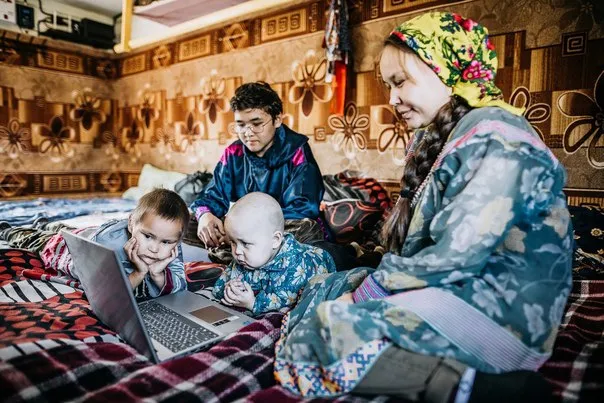
Seven new IT-Stoibishcha (digital nomadic camps) have been set up on ancestral lands of Indigenous peoples of the North, according to the Department of Information Technology and Digital Development of Yugra.
By 2029, authorities plan to launch about six additional access points, with two sites coming online each year. The initiative is designed to give nomadic communities internet access for government and municipal services, online education, and communication. IT-Stoibishcha have been established on ancestral lands in Yugra since 2018.
Health, Education, and Online Commerce
According to Pavel Tsiporin, deputy governor of Yugra and head of the regional Department of Information Technology and Digital Development, the region has also organized remote education for children from Indigenous communities.
The Stoibishchnaya Shkola-Sad (Nomadic School-Kindergarten) project enables 45 children from 32 Indigenous families to study the standard school curriculum remotely on ancestral lands. Children learn together with their parents in short-stay groups, taught by educators who are native speakers and carriers of local culture. In total, 16 nomadic preschool groups operate across eight educational institutions in three districts.
Online marketplaces for selling wild-harvested foods and other traditional products are also in high demand among Indigenous residents. Another initiative launched in Yugra in 2025 is Zdorovoye IT-Stoibishche v Arkticheskoy Zone (Healthy IT Stoibishche in the Arctic Zone), which enables remote health monitoring and access to telemedicine services.
By the end of 2025, four autonomous power systems had been installed in the region. As a result, communications equipment, refrigerators, and lighting can operate at nomadic camps for up to nine months a year, and residents can charge mobile phones. Gasoline generators are used only as a last resort during winter.