Simulating a Media Scandal: How Digital AtomSimula Trains Future PR Specialists to Handle Crises
At Nizhny Novgorod State Technical University named after R.E. Alekseev, an interactive simulator called Digital AtomSimula has been integrated into the curriculum for students studying Advertising and Public Relations.
Into the Heart of a Crisis
Experts often talk about the fourth industrial revolution and the way it is reshaping the world. “The time we live in is called the fourth industrial revolution. Like all previous industrial revolutions, it is transforming not only production, but our entire lives – the economy and relationships between people. Artificial intelligence and robotics, the Internet of Things (IoT) and 3D printing, virtual and augmented reality, bio- and neurotechnologies – these cutting-edge tools are visibly becoming part of everyday life,” Sergey Dmitriev, rector of Nizhny Novgorod State Technical University named after R.E. Alekseev, said recently in an interview.
One of the clearest digital mirrors of this shift in education has been the rise of interactive simulators. A standout example is Digital AtomSimula, a unique interactive training tool introduced within the Advertising and Public Relations program at Nizhny Novgorod State Technical University named after R.E. Alekseev. The simulator, developed by Konsist-Operator Svyazi with the participation of the Communications Department of the Rosenergoatom Concern, models real communication processes, including interaction with press offices, news media, and social networks. Its significance lies in the fact that it does not just teach theory, but immerses students in a realistic professional environment, complete with potential crisis situations.
Three Chats, Hundreds of Scenarios
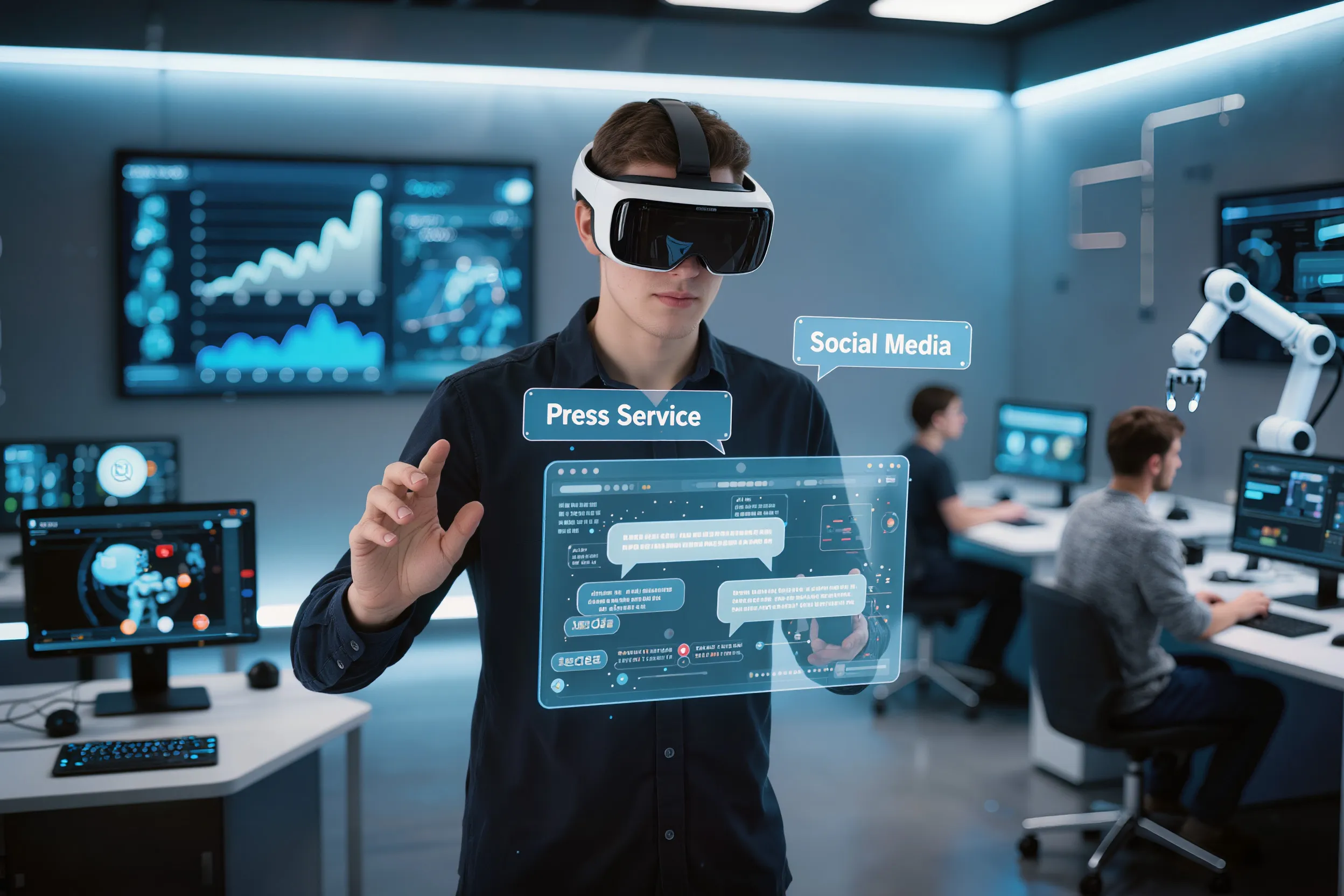
Digital AtomSimula is a web-based platform with an intuitive interface. Its architecture is built around simulating key communication channels and includes three main chats: Press Office, Media, and Social Networks. Students take on the roles of different participants in the information process, allowing them to practice not only theoretical knowledge but also hands-on skills using realistic scenarios.
This approach makes learning far more effective. Students can confront real-world crises, test communication strategies, and practice engaging with stakeholders in a virtual setting. As communications continue to undergo rapid digital transformation, the ability to work with such tools is becoming a valuable asset for future professionals.
Scaling this type of simulator to other universities and specialized programs is a logical next step. The ability to adapt the tool for courses in communications, marketing, and digital PR could significantly raise the quality of education in these fields.


Closer to the Profession
Russian universities are moving away from purely theoretical models toward more practice-oriented education. This shift is especially important for disciplines such as PR and marketing, where theory alone is often not enough to operate effectively in real-world conditions.

International experience shows that similar simulators have long been standard in many Western universities focused on media studies. The London School of Economics and Political Science offers a Media and Communications program, while the European Business School ESCP runs a Media Management program, where students study applied media management, information management, journalism, and film and television production.
Introducing tools like Digital AtomSimula at Nizhny Novgorod State Technical University helps make education more dynamic and closely aligned with real professional life.
Real-World Challenges
The introduction of Digital AtomSimula into the educational process at Nizhny Novgorod State Technical University named after R.E. Alekseev marks an important step in reshaping how advertising and PR specialists are trained. The tool strengthens the practical component of education and prepares students for the real challenges they are likely to face in their careers.

Forecasts suggest that digital simulators will be adopted by other Russian universities as well, enabling more practice-driven learning models. Such tools could also become part of corporate training programs, helping professionals develop key skills for working effectively in crisis situations. As demand for digital competencies continues to grow across industries, these skills are likely to make specialists more competitive in the job market.
Looking ahead, collaboration with IT companies to further develop the platform and expand its functionality is also possible. That could open new opportunities to integrate Digital AtomSimula into a wider range of communications-related fields.