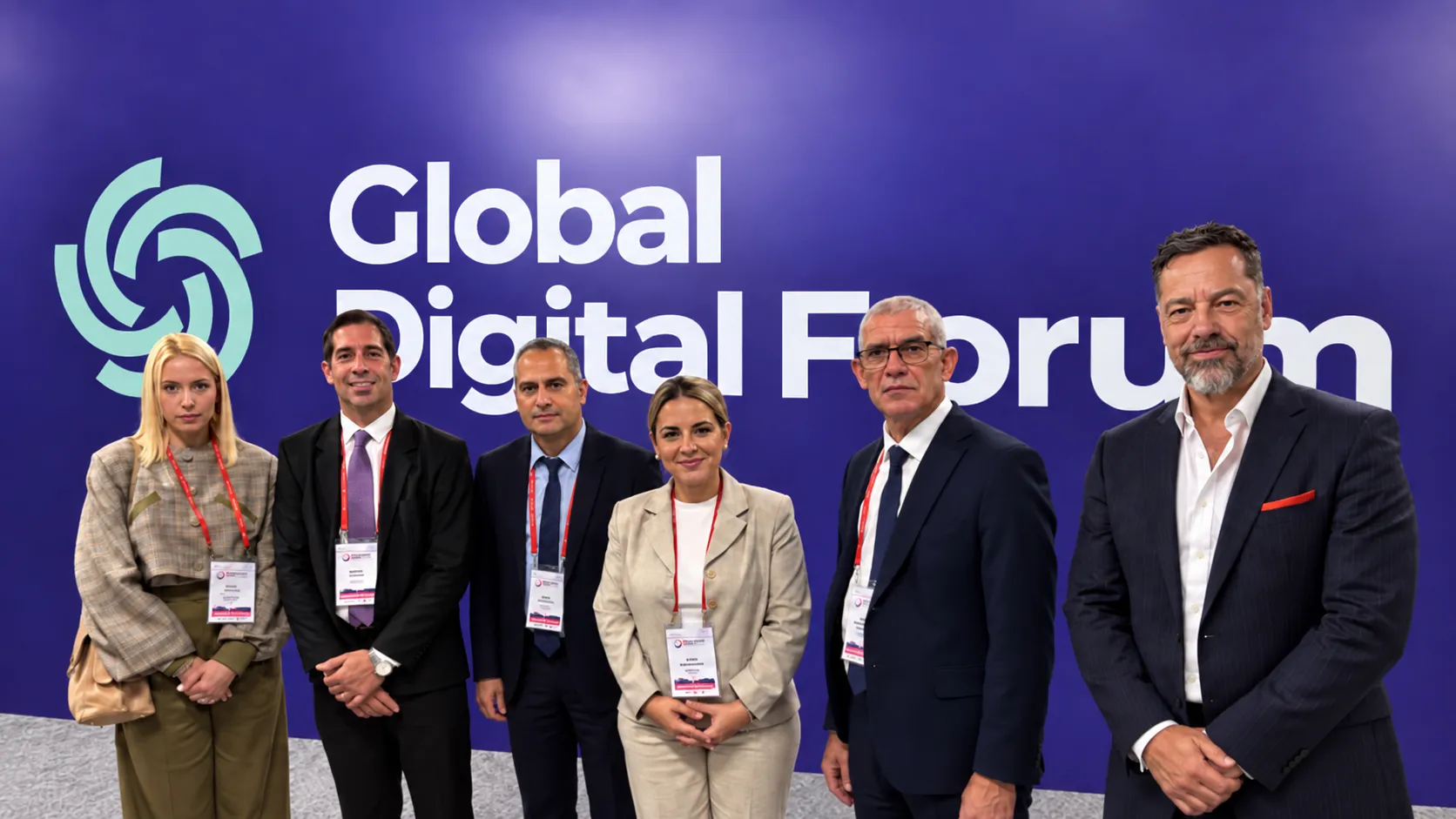
Arthur Latim: “As Technology Advances, Africa’s Future Belongs to Its Youth”
The 2nd Global Digital Forum will take place in Moscow on October 8–10.

The international forum will bring together government, business, and technology community representatives from different countries to discuss how to overcome the digital divide through joint efforts, foster innovation, and create conditions for the younger generation to become the main driving force behind digital transformation.
Arthur Latim, founder and CEO of Kawil Group Holding Limited and Latim Group (Uganda), shared his vision of Africa’s future in an era of technological development with IT Russia.
– The future is youth-driven, as you probably know, and it is young people who will make or break the gains made through technological discoveries and new ways of thinking. I have come from Uganda to the Global Digital Forum in Russia to work with our Russian partners to bridge the digital divide young people suffer from in Uganda and Africa.
All stakeholders in the technology industry need to understand that we must work together to continue bringing out the potential of our youth and promote inventions that will move the world forward for generations to come – for the next 500 years and beyond.
As a Ugandan engineer, I would point out that young people make up more than 75% of Uganda’s population, and that Africa’s youth are the engine that will take the continent forward, with more than 200 million young people aged 15 to 24 and more than 400 million above the age of 20. Africa has the youngest population in the world, a figure that is predicted to double by 2045.
It is worth pointing out that an estimated 10 to 12 million young Africans enter the labor market each year, while the continent is able to create only about 3 million jobs annually. This situation results in about 70,000 young Africans seeking greener pastures elsewhere in Europe, the Middle East and North America.
Meanwhile, young people who choose to stay are looking to technology to help change their lives. In many African countries, young people are developing apps and other technologies that give them opportunities to earn a living while changing the way we do things. However, funding avenues for developing and rolling out these innovations remain limited, making it difficult to keep up with the ideas generated by African youth. There are also challenges related to digital infrastructure, internet affordability, excessive legal restrictions on innovation, a shortage of mentorship, and many more.
More than 1,300 new Android apps are estimated to be developed each day, all of them by young people. Young people should understand this statistic and develop apps that are relevant to their communities and can also be scaled up. They should also recognize that what they develop today can be replicated in a matter of milliseconds. They should understand as well that the power of an app is reflected in the number of users it attracts.
Innovation has to be diverse. If it is limited to apps, your app may be bought cheaply and sold for more in areas with larger populations and a stronger need for your solution, or it may be replicated so quickly that you will not benefit from first-mover advantage. There are many avenues for innovation opening up through technology and innovative tools.
Whatever innovation you come up with and turn into a business, remember that governance structures need to be put in place. Seek guidance, mentorship and support. You do not want a good business to be destroyed by founder-member syndrome – a condition in which governance issues are ignored, resources are allocated according to the whims of the founders, and commitments are not honored.
Potential investors see investments in youth-led businesses as high-risk and may want a significant individual stake. This gives the investor greater operational control and, in particular, more influence over the way the firm is run. Support from professional services firms, mentors and others should be more accessible and affordable to help drive the youth agenda as we build a technological future for generations to come.
Africa's future lies in its youth. With over 400 million young people, Africa has the youngest population in the world. This, alongside increasing mobile phone penetration and internet usage, makes the continent fertile ground for digital innovations to thrive. Beyond their demographic power, their fresh perspectives, creativity, and resilience, along with many other factors, uniquely position African youth not just as contributors – often brought in as an afterthought – but as pivotal leaders and drivers of community-centered digital transformation. These include:
Tech Savviness and Influence:
Young people are likely to adopt new technologies faster than their older counterparts and influence others. This makes them key change agents who can be leveraged to introduce and normalize digital innovations within their communities. Where skepticism and distrust exist, they can help overcome user resistance by advocating for, teaching about, and demonstrating the benefits of digital tools to others.
Co-Design, Representation, and Feedback:
With a strong insider understanding of local dynamics, African youth can serve as intermediaries between their communities and digital creators and/or implementers. For instance, by facilitating community entry and stakeholder engagement and providing real-time feedback, they can help ensure that digital initiatives are culturally and contextually relevant, user-friendly, and effective in meeting the needs of their communities.
Sustainability:
Beyond the initial uptake, a community’s youth can be key drivers in embedding digital solutions into their local ecosystem and ensuring long-term success. This works especially well when they develop a sense of ownership and foster the same sense of ownership among their peers and within their communities.
Africa's future lies in its youth. It is young people who will make or break the gains from new discoveries, technologies, and ways of thinking. We need to continue our efforts to bring out the potential of our youth and promote interventions where necessary. We are here to help drive the youth agenda as we build a technological future for generations to come.