AI Is Choosing the Next Generation of Sturgeon
At the Adler Breeding Trout Farm in Sochi’s Adler district, a computer vision-based AI system is analyzing sturgeon roe. The technology identifies viable eggs, helping fish producers improve breeding efficiency.
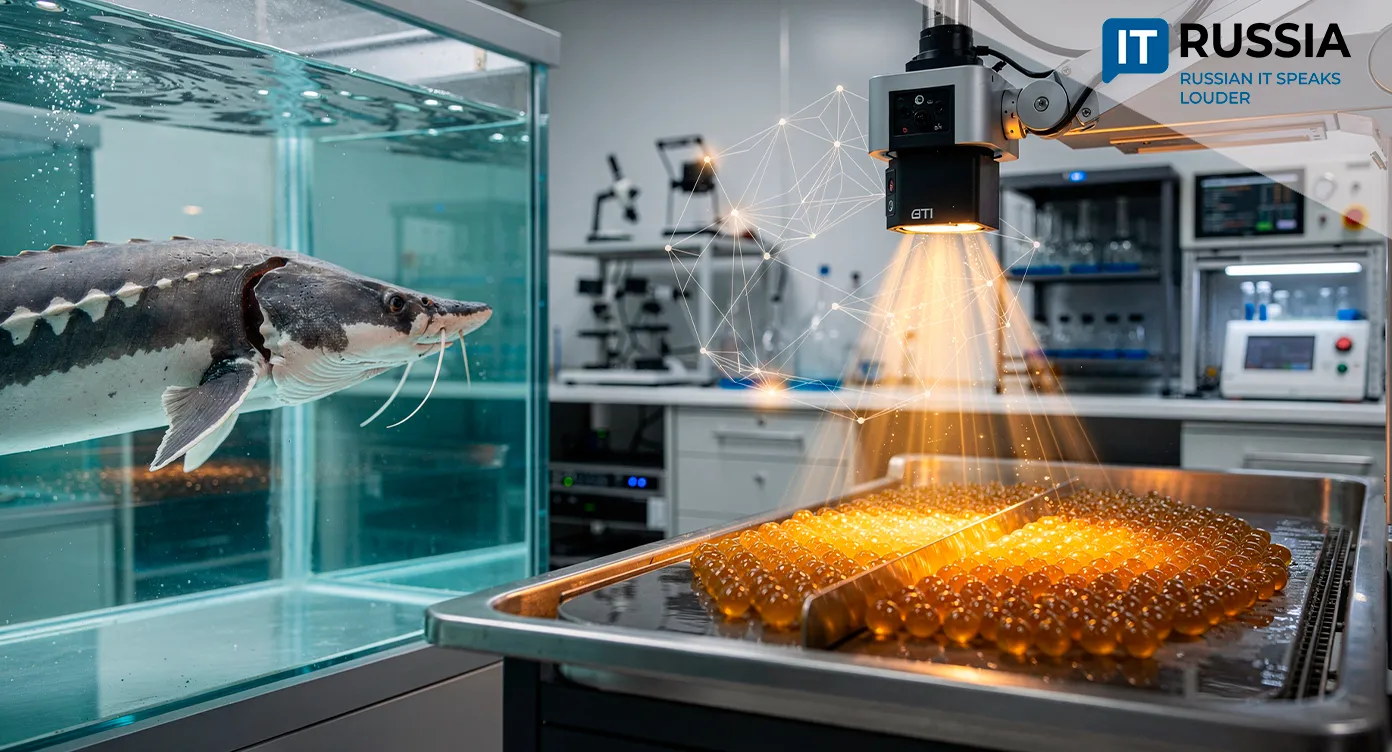
In sturgeon aquaculture, accurately determining when females are ready to spawn and assessing roe maturity is critically important. Doing so improves fertilization rates and roe quality, boosting the efficiency of artificial reproduction while reducing the risk of losses during fish farming operations.
Mistakes in determining roe maturity stages are extremely costly for fish breeders. Sturgeon take a very long time to reach spawning age – they can grow for up to 15 years and then spawn only once every four years. When assessments are inaccurate, fish farms accumulate immature roe, while the reproductive potential of females declines over time.
At Adler Breeding Trout Farm, digital analysis technologies are now being used to improve inspection efficiency.
Ultrasound Replaces Manual Probing
Until recently, sturgeon spawning readiness was determined mechanically, by hand, using probes. The process was both difficult and highly inaccurate. Many fish could not be evaluated this way at all – in large specimens weighing 90 kilograms or more, technicians simply could not manually assess the abdomen. The procedure also posed risks to the expensive fish itself, since physical probing could cause injury. Today, the process has shifted to digital diagnostics.
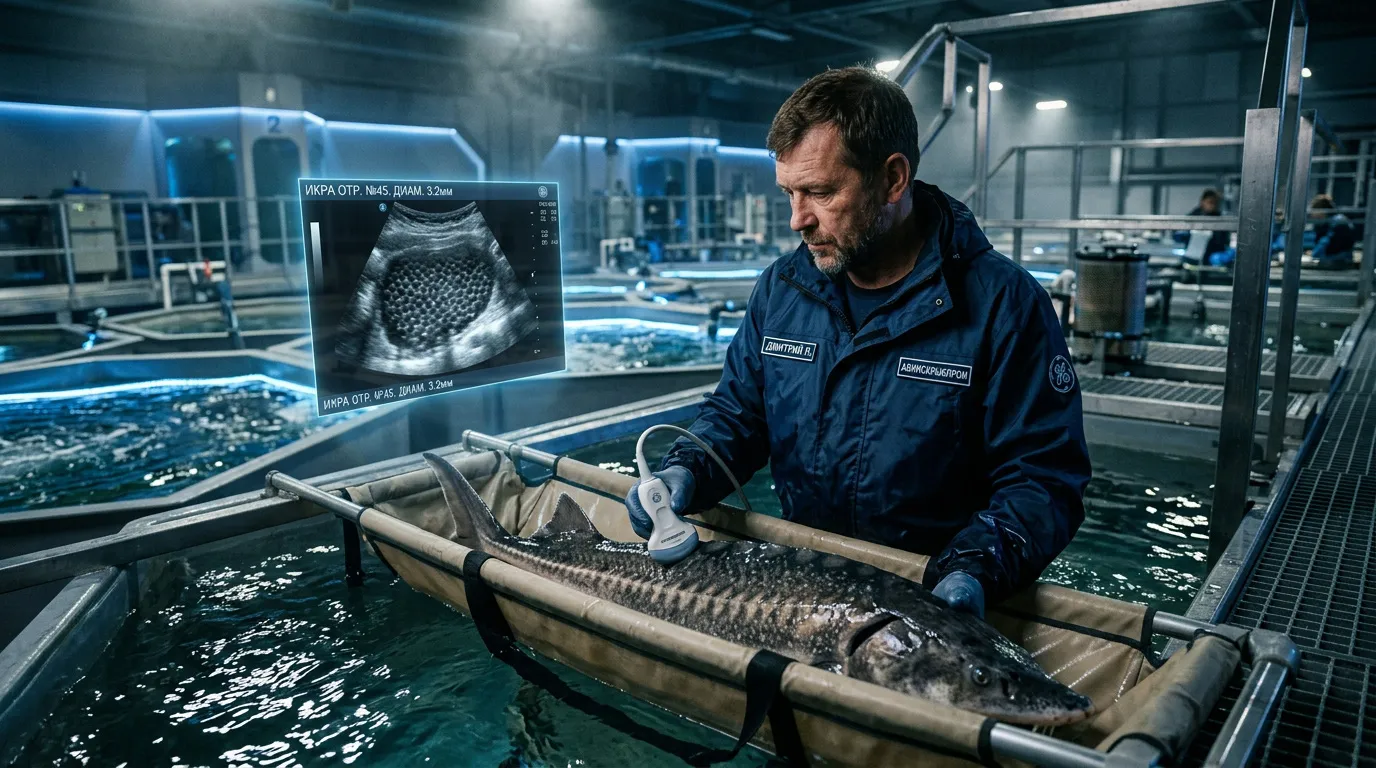
Fish readiness for spawning is now determined using ultrasound imaging. Specialists evaluate the color and size of roe on the ultrasound monitor to determine maturity levels. Typically, four stages are identified.
“The fourth stage means the fish is already mature and ready to spawn. The third stage means it will be ready next year. Our task is to select those already in the fourth stage,” said Anastasia Stepanova, deputy general director for production at Adler Breeding Trout Farm.
If the roe has matured, the female is transferred to a special spawning preparation pool, where its condition is regulated through water temperature and feeding. If the fish is not yet ready for egg extraction, it is returned to the general pool and reassessed the following year.
Computer Vision and AI Assess Viability
After egg extraction, the farm evaluates roe quality to determine how much of it is viable. That matters because nearly every healthy egg can eventually become one of the six trout breeds reproduced at the breeding facility.
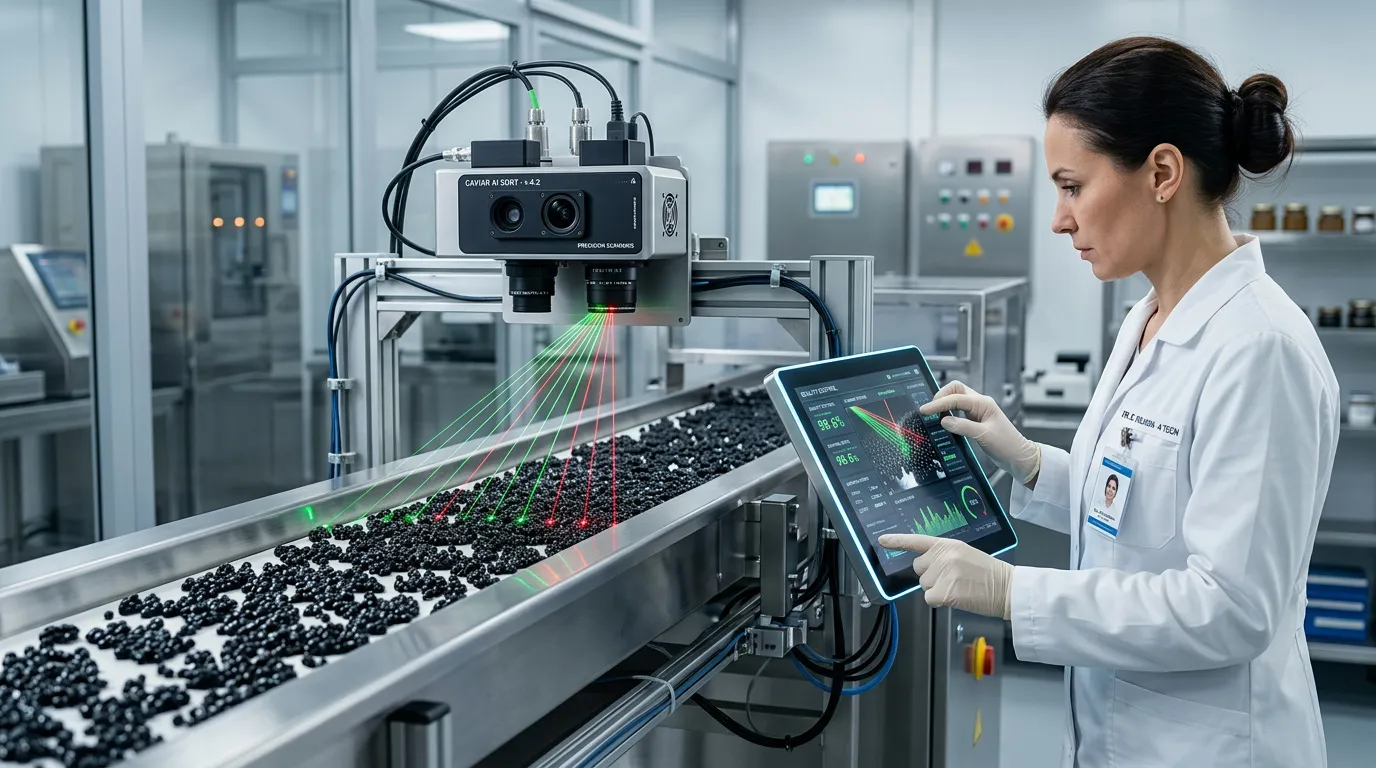
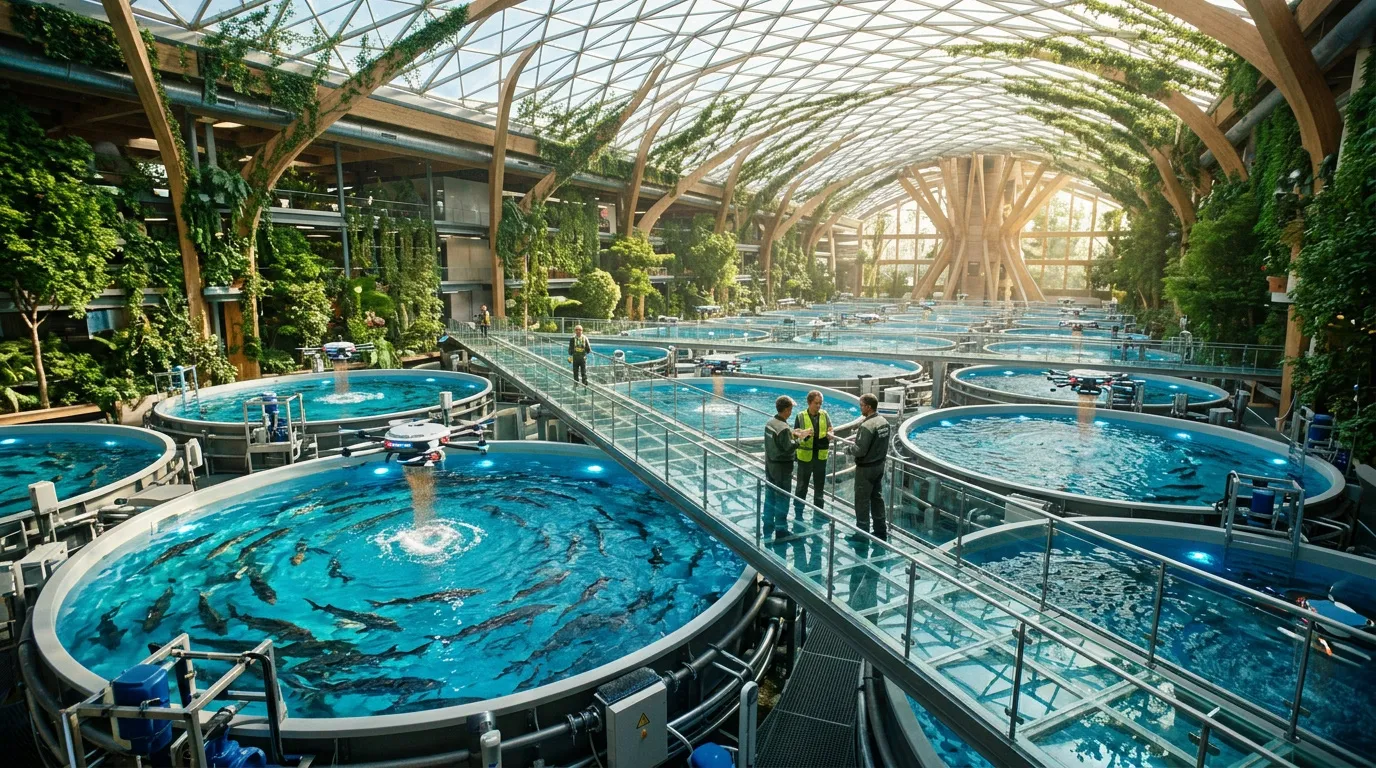
Previously, several employees visually inspected the roe by hand. Today, fertilized roe is sorted by a specialized machine. Using four cameras, computer vision technologies and AI, the system separates healthy eggs from defective ones.
Russia’s only breeding trout farm supplies selected live roe to fish farming operations in 61 Russian regions and four neighboring countries. That is where the roe ultimately becomes fish. Juvenile stocking material and fry are supplied to 11 Russian regions.
Thus, digital diagnostic systems are becoming a standard working tool at Russian fish farms and breeding facilities. Fish cultivation, including high-value species, is gradually turning into a more precise industrial process capable of supporting tightly managed production systems and, eventually, fully smart aquaculture operations.
Russian producers are improving operational efficiency – minimizing manual labor, increasing sorting accuracy and introducing digital quality control all help deliver higher fish survival rates. That is especially important for sturgeon species, which combine high market value with extremely long production cycles. In that environment, the cost of mistakes multiplies rapidly.
Production Growth Through Digital Technologies
New production methods are becoming essential as Russia scales up commercial aquaculture. Output continues to grow steadily – in 2025, Russia supplied 393,300 metric tons of aquaculture products to the market, up 3% from 2024, according to the Federal Agency for Fisheries of Russia. At the same time, the country’s fisheries development strategy through 2030 calls for annual production to reach 600,000 metric tons.
It is digital technologies that could play a decisive role in sharply increasing fish farming volumes. One key priority is reducing the interval between spawning cycles through more accurate diagnostics. According to experts, ultrasound scanning can shorten sturgeon interspawning intervals by roughly three times compared with older, less accurate methods.
The development of automated diagnostic tools is also improving the effectiveness of ultrasound technologies themselves. Machine learning and computer-based biological image analysis are making it possible to build systems capable of faster and more accurate automated diagnostics of sturgeon reproductive characteristics.
Further digitization of production processes could eventually lead to fully “smart” fish farms, where not only mechanical operations but also fish care and cultivation systems are largely automated. Integrating such facilities into Russia’s Unified Digital Platform for Agricultural and Fisheries Complexes would also help strengthen consumer trust in Russian fish products both domestically and in export markets.