Human or Machine: How AI Is Transforming the Modern Classroom
In Chelyabinsk, educators are confronting a question that until recently sounded like science fiction: does a classroom still need a teacher if every student carries an all-knowing digital assistant in their pocket?
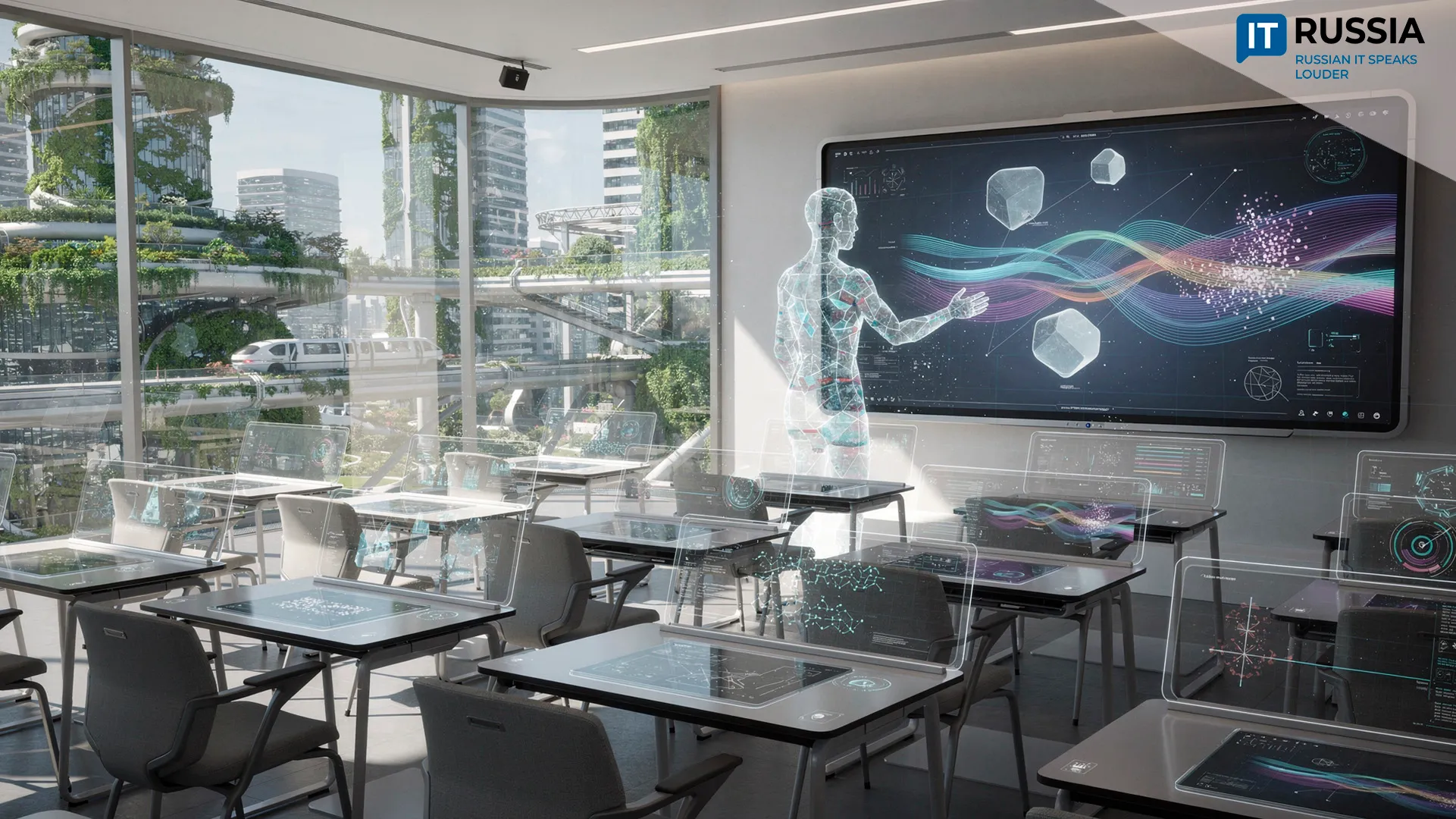
Artificial intelligence is no longer knocking on the door of the classroom, it is already sitting at the desk next to the student. This new reality is pushing educators to revisit a fundamental challenge: how to teach children to think rather than memorize, to interpret rather than generate, and to ask the right questions instead of searching for ready-made answers.
Debating the Inevitable
A roundtable focused on the ethics of AI in education was held in Chelyabinsk, bringing together policymakers, educators, and business leaders. Evgeniya Kulagina from the regional Ministry of Education and Science captured the tone of the discussion: the debate is inevitable. Digital transformation has already taken place, yet only a fraction of its potential is being used. Meanwhile, students are actively using neural networks to write essays.
Gleb Fomin, a finalist in the “Teacher of the Year – 2025” competition, said that traditional writing assignments have all but disappeared. When students are asked to reflect on a topic, they can produce a polished but impersonal text within minutes. Fomin’s response has been to ask students to explain what they have submitted. When they struggle to do so, it becomes clear that the format of teaching must evolve. Written reports are giving way to oral defenses and live discussions.
The Era of “New Authenticity”
The education system is facing what Maxim Usynin, rector of the International Institute of Design and Service, describes as a crisis of authority. In the past, knowledge delivered by teachers or parents was accepted without question. Today, a child’s first instructor may be a voice assistant such as Alisa or another chatbot. External motivation, grades, prestige, or future income, is losing its influence. Students expect logic, evidence, and meaningful answers. Dmitry Andreyev, co-founder of Innovatsii detyam (Innovations for Children), notes that this generation demands a “new authenticity.” They want to understand who they are, not just complete tasks.
In an information environment where data is generated faster than it can be processed, schools risk falling behind if they do not adapt. Alexey Bogatyrev, deputy director of the IT Lyceum Privilegiya in Chelyabinsk, points to homework as a key challenge, as students increasingly rely on AI to complete written assignments. Rather than banning technology, he argues, schools should teach students how to navigate it. The ability to critically filter information is becoming more important than memorizing facts.
Evgeny Makagonov, director of Rostelecom’s Chelyabinsk branch, highlights the risks. If students are allowed to delegate creative work to machines, the result could be a workforce unprepared for future employment. AI systems can already write code and generate content. Human value is shifting toward the ability to create original ideas and take responsibility for them.
AI in the Classroom: A Rapid Shift
Just a few years ago, AI in schools was seen as experimental or niche. A turning point came in 2023, when UNESCO released its first guidance on generative AI. The document served as a roadmap: technology should not be ignored, but its adoption must remain ethical and human-centered.
At the same time, new initiatives were launched globally. One example is Khanmigo, developed by Khan Academy. This AI tutor does not provide direct answers, but instead guides students through the learning process. Experience has shown that such tools are most effective when they augment, rather than replace, human teaching.
In Russia, a similar shift accelerated in 2025. A study found that 62% of school students were already using AI tools for learning, with 17% doing so regularly. The policy response followed quickly. In the same year, more than 7,000 computer science teachers were trained to work with AI tools.
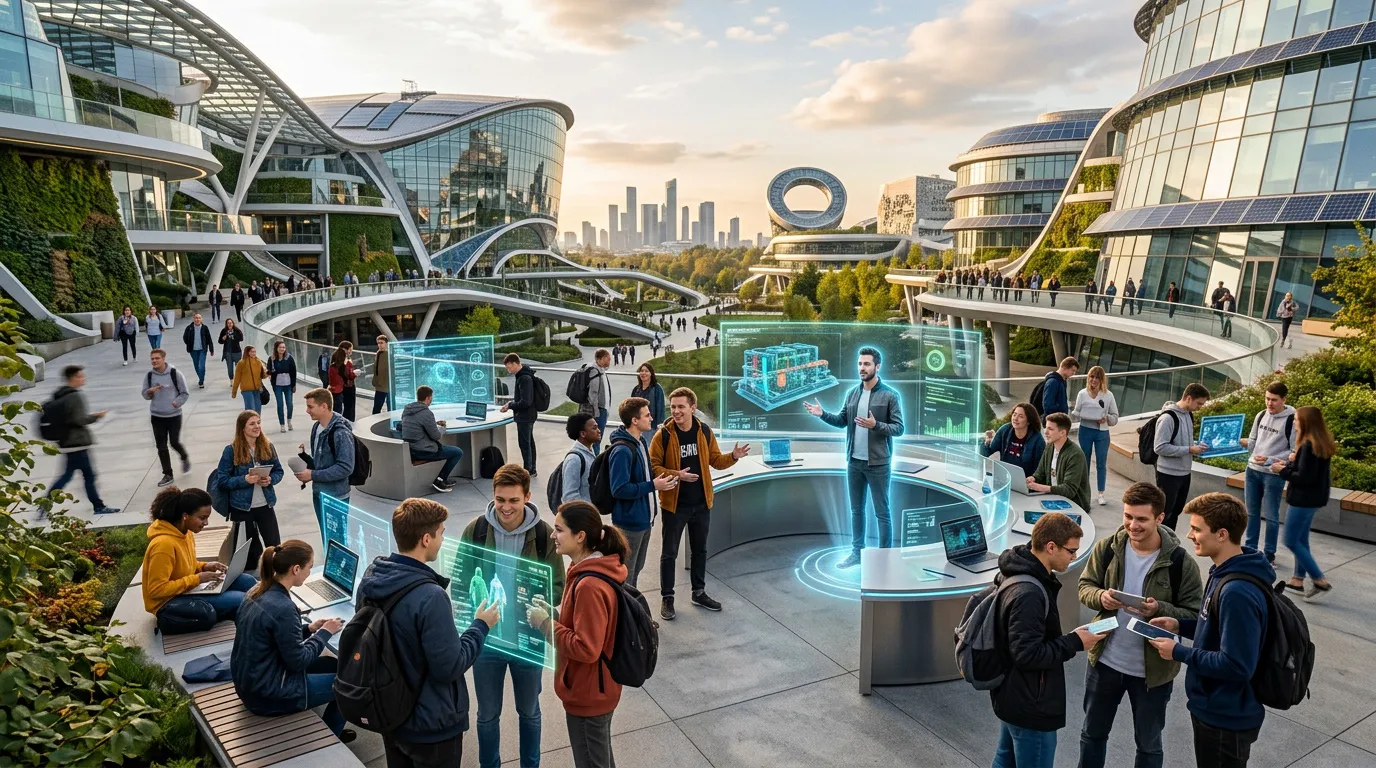
The momentum continued into 2026. In February, the textbook series Vvedenie v iskusstvennyy intellekt (Introduction to Artificial Intelligence) for grades 5–9 was officially added to the federal list of approved textbooks. Aleksandr Vedyakhin, chairman of the supervisory board of the AI Alliance, explained that the materials focus on practice: they teach students not only how to use AI tools, but also how to understand their principles, recognize their capabilities and limitations, and think critically.
A Return to Human Interaction
Paradoxically, the adoption of advanced technologies is bringing education back to human interaction. Maxim Usynin shared insights from the MIDiS-2036 strategy session, suggesting that by 2036 there will be a revival of in-person learning. Interest in literary clubs, music, and small informal gatherings is already growing. Even as young people actively use AI, they are seeking experiences that cannot be generated.