The House That a Printer Built
RVS 3D, a company based in the Moscow Region, is reshaping urban construction with large-scale 3D printing technology. Its concrete-printing systems combine speed, structural durability, and geometric flexibility, opening the door to faster and more adaptive manufacturing in construction.
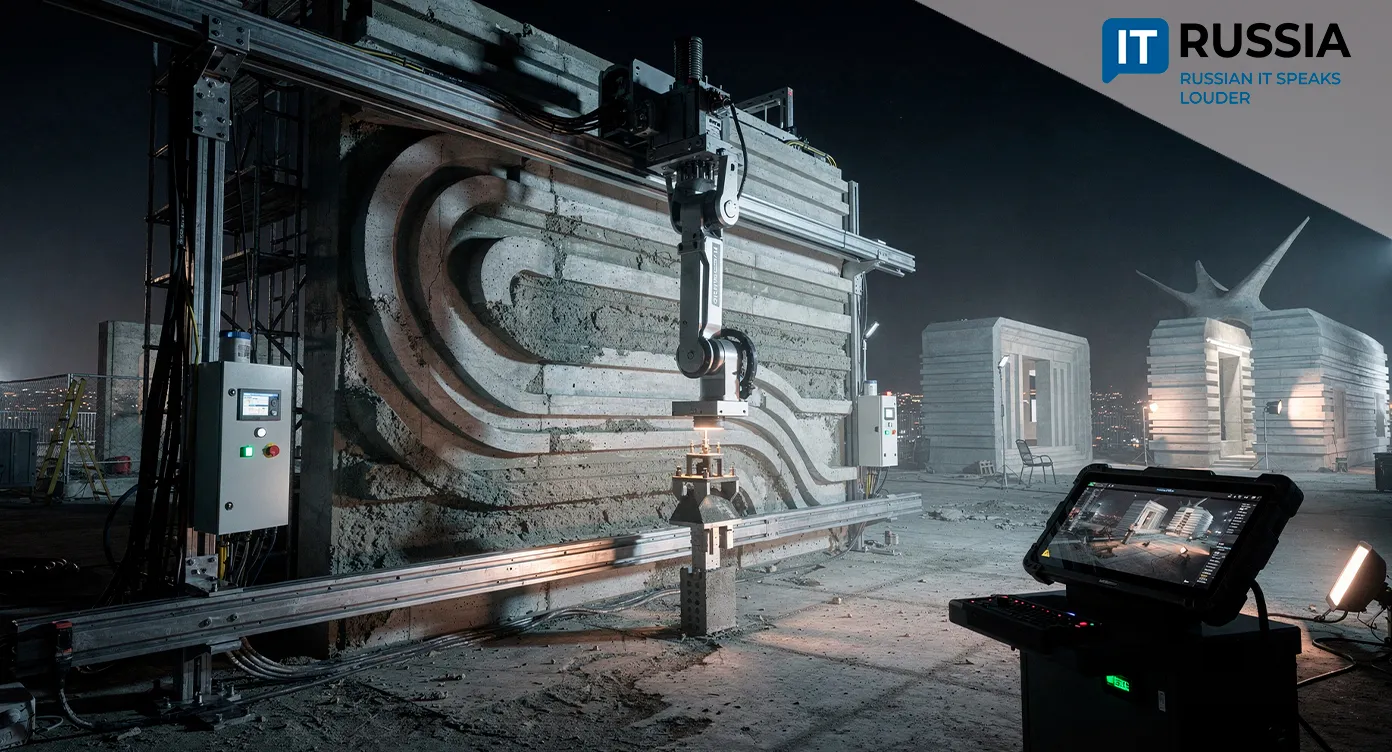
RVS 3D, headquartered in Khimki outside Moscow, develops advanced technologies for urban improvement projects and construction. The company’s engineers design both the hardware and software required for concrete printing. The technology is used on the company’s own production lines and supplied to other industrial customers. Maintaining a full in-house development cycle gives the systems high precision, operational reliability, and flexible configuration options.
The printing process is almost entirely automated. An engineer uploads a digital model into the system, after which the equipment builds the structure layer by layer. An integrated mixer prepares a cement-and-sand compound according to specified proportions, while operators monitor key parameters including print speed, material consumption, and geometric accuracy.
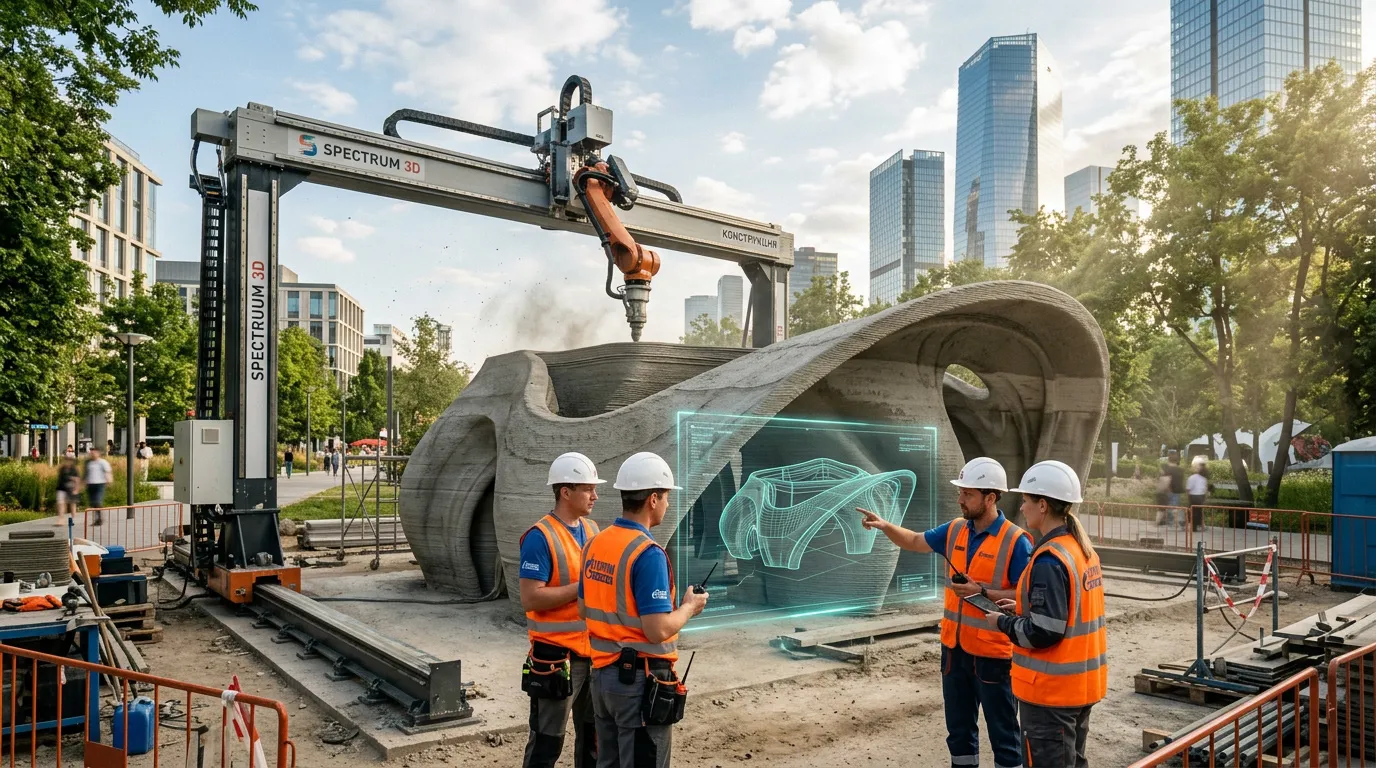
RVS 3D specializes primarily in manufacturing 3D printers for small architectural forms, or MAF, as well as producing the structures themselves. The company’s engineers create benches, planters, and complex sculptural installations. RVS 3D has participated in projects at Park Krasnodar in Krasnodar, the Moscow Zoo, and the Moscow Seasons urban improvement program run by the Moscow city government.
Smart Concrete
The potential applications of RVS 3D’s technology extend far beyond landscaping and public spaces. With sufficient investment, the approach could scale into residential construction, enabling rapid production of complex concrete structures. Small architectural forms can be printed in a matter of hours, a garage in roughly a week, and a full house in about a month.
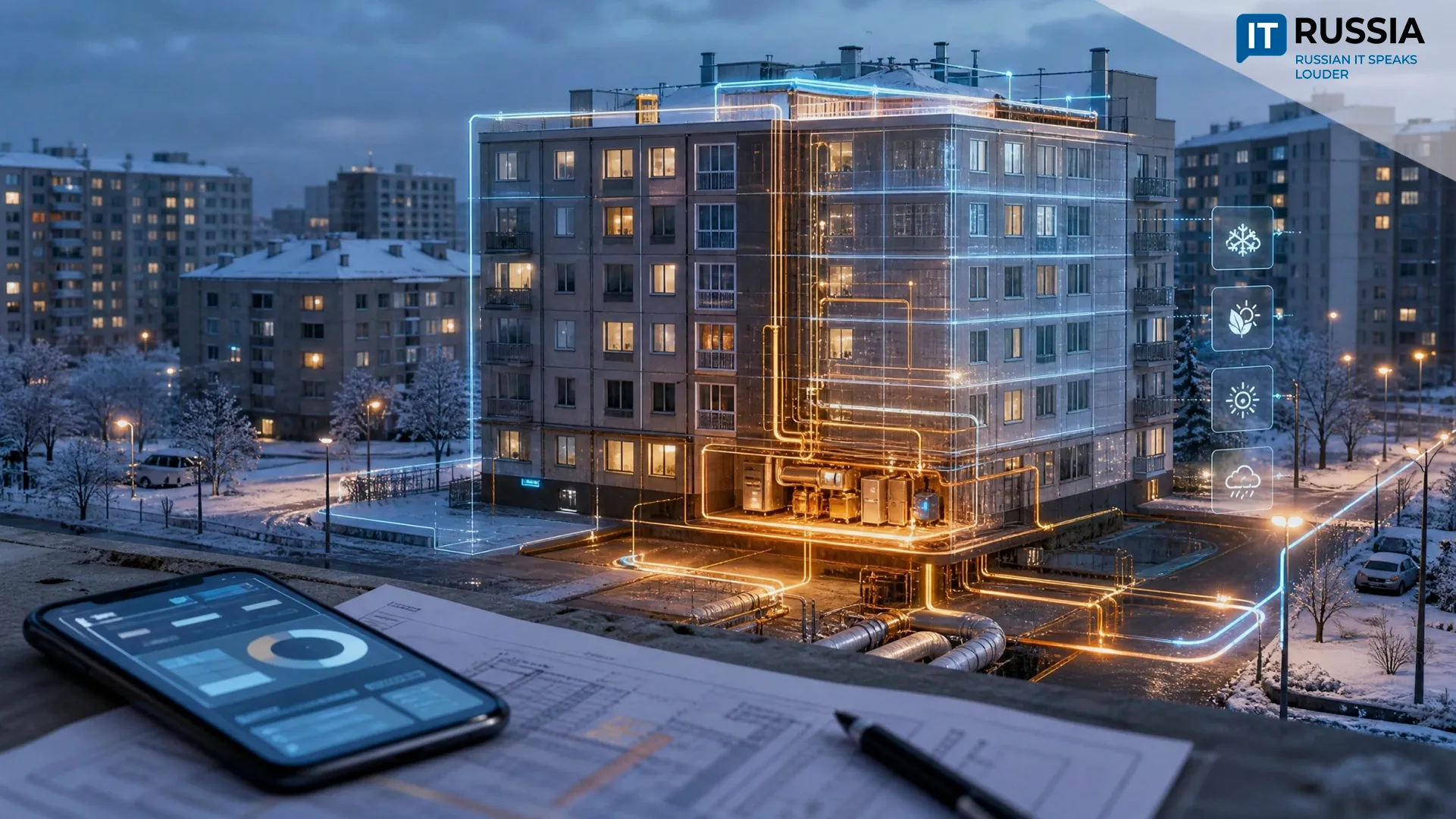
The workflow starts with a digital model uploaded into the system. The printer then creates a concrete shell that is later filled with insulation or additional concrete material. The process also allows projects to be adapted for local climate conditions by optimizing wall thickness and window placement to improve energy efficiency. Potential applications include private housing, small architectural forms, pavilions, tourism cabins, public infrastructure, and experimental civic buildings.
3D Printing Expands Across Russia’s Construction Sector
Several Russian regions have already completed projects using 3D printing technologies in real construction environments, including residential buildings, cultural centers, and hotel complexes. That growing number of deployments suggests the technology is moving beyond experimental demonstrations. At the same time, manufacturers of construction printers and developers of printable building materials are already operating commercially, signaling the emergence of practical industrial expertise.

Russia’s first residential building created with a 3D printer, a 300-square-meter home, was completed in Yaroslavl in 2017. The project was developed by the AMT-Spetsavia group of companies.
In 2019, the Melliya public and cultural center opened in the village of Malbagush in Tatarstan’s Aznakayevsky district. The 1,600-square-meter project was built using 3D printing technology by Tatneft. The multifunctional complex includes a library, a cinema and concert hall, a rural medical clinic, a gymnasium, administrative offices with a post office, and a fire station. The main structure rises nearly five meters high, while the concert hall walls reach 10 meters.
In 2022, students from Severo-Kavkazskiy federalnyy universitet (North Caucasus Federal University, NCFU), working alongside engineers from construction equipment manufacturer Smart Build, completed a one-story concrete house in Stavropol using a 3D printer. The 100-square-meter structure took approximately 36 hours to build.
In 2024, the company 3D-Stroy completed a two-story, 198-square-meter 3D-printed home in three months. Construction was carried out directly on-site using field-based concrete printing technology. That same year, the Yasno Pole ecopark in the Tula Region opened Russia’s first hotel built with 3D printing technology. Designed to accommodate eight guests, the project became the first in the Russian 3D-printing sector to use wood concrete, or arbolit, as wall insulation.
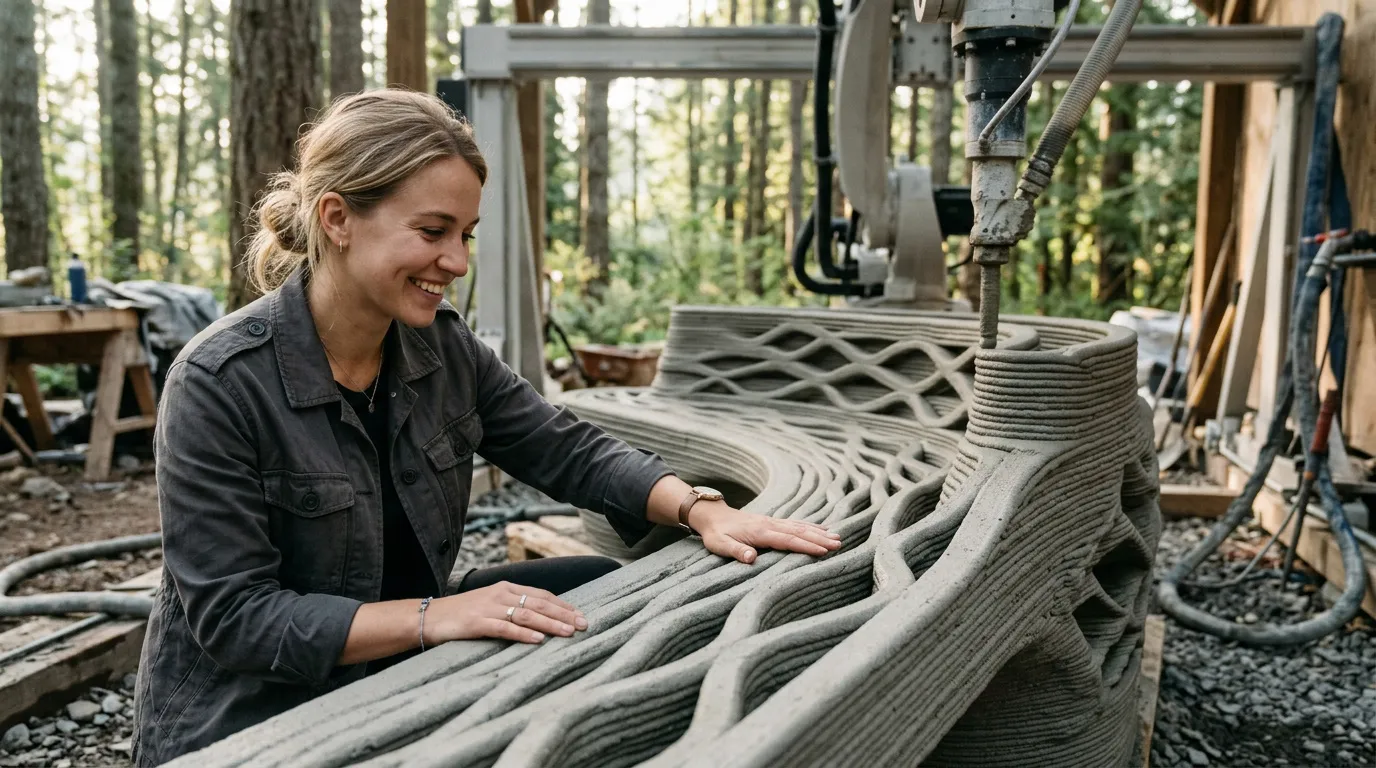
Meanwhile, Mosinzhproekt and the Moscow Innovation Cluster Foundation are testing the CemANT printer developed by RusEnergoProekt. The mobile extrusion system prepares concrete directly at the placement point, eliminating the need for large concrete mixers and pumps at the construction site. The system can deliver dry mix from remote distances and supports specialized additives. The tests are designed to evaluate construction timelines, production costs, logistics, and structural quality. The results will determine whether the technology can scale into transportation and civil infrastructure projects.
National Development Goals Meet 3D Innovation
The use of 3D printers in construction could fundamentally reshape urban development by enabling faster production of affordable and energy-efficient housing. That aligns directly with Russia’s national construction development goals through 2030. In February 2026, the State Duma Committee on Economic Policy proposed introducing an experimental legal framework to test 3D-printing technologies in construction projects. As a result, automated construction methods could become standard practice in private housing and infrastructure development over the next several years.