Robot Pumps Your Gas
The country’s first robotic gas station promises to make refueling a car as seamless as paying for groceries with a smartphone.
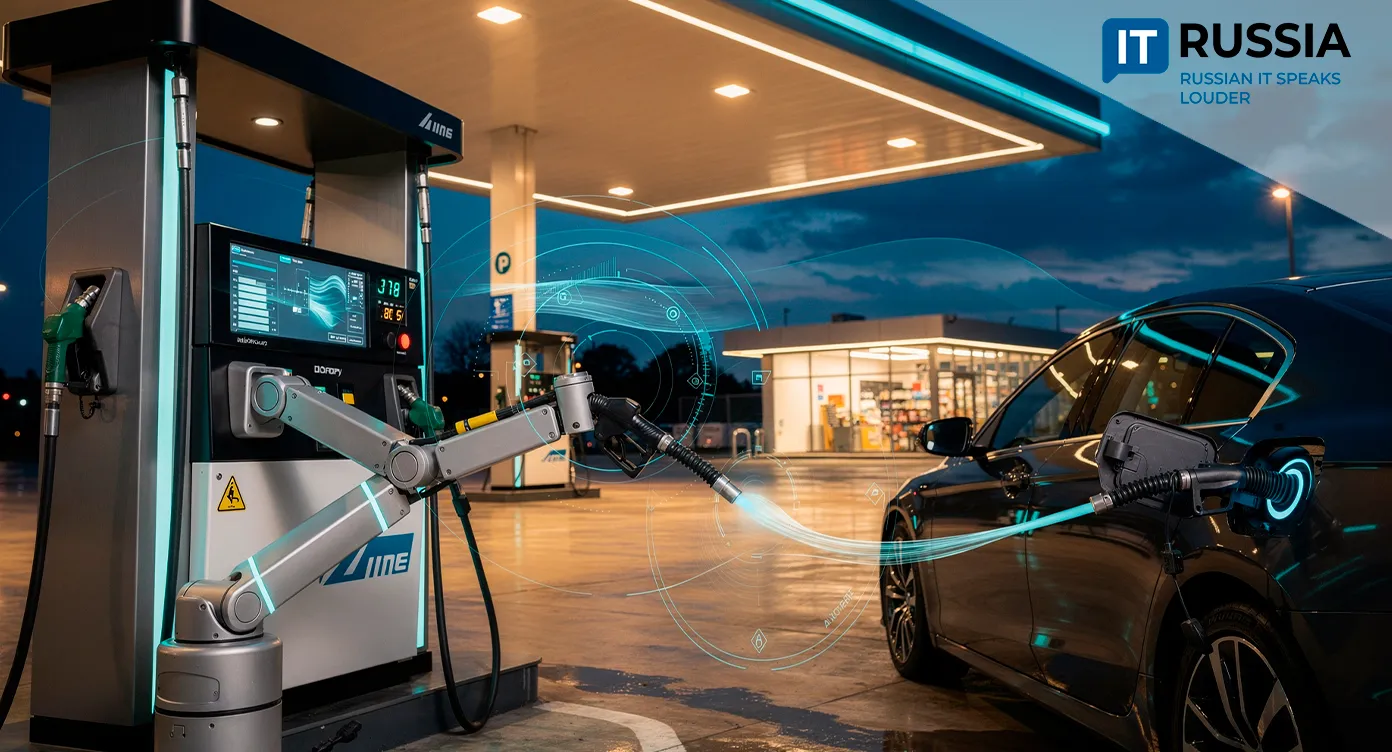
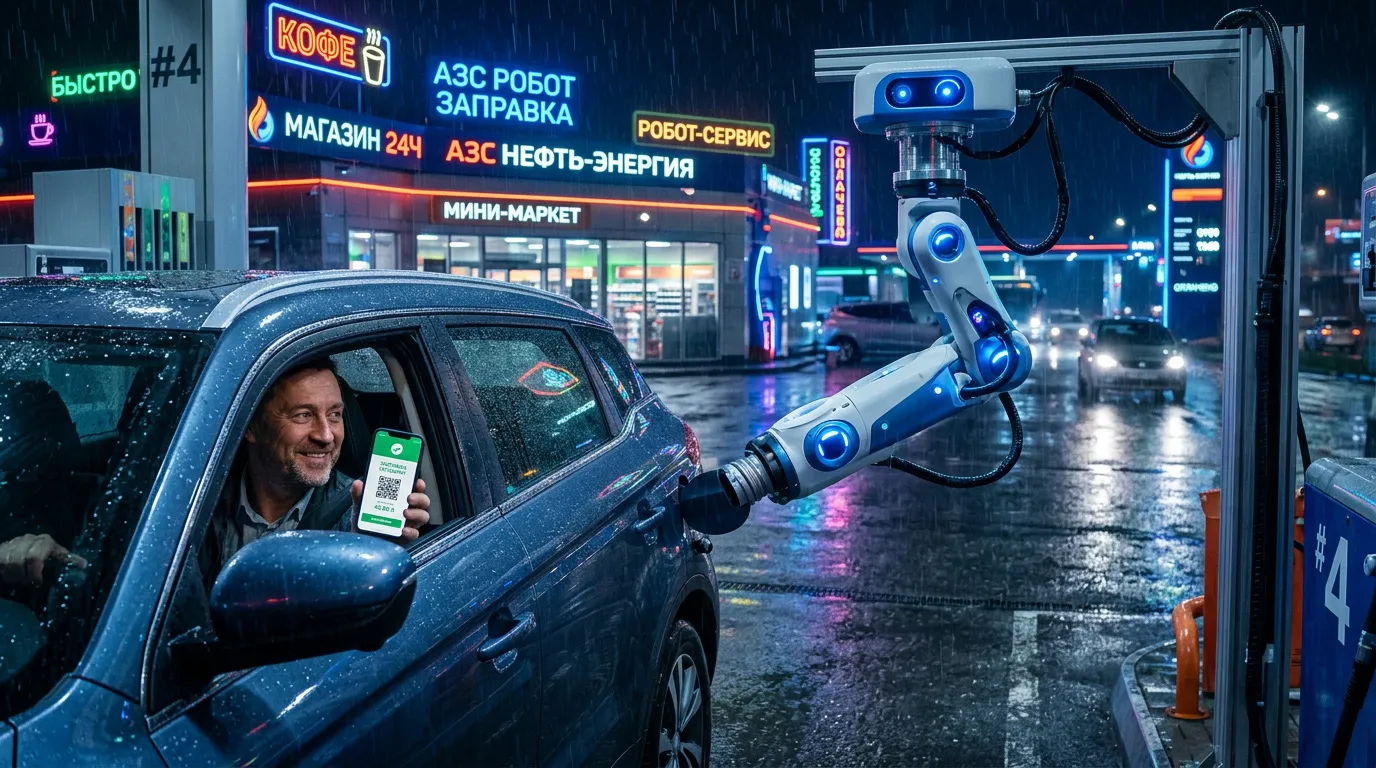
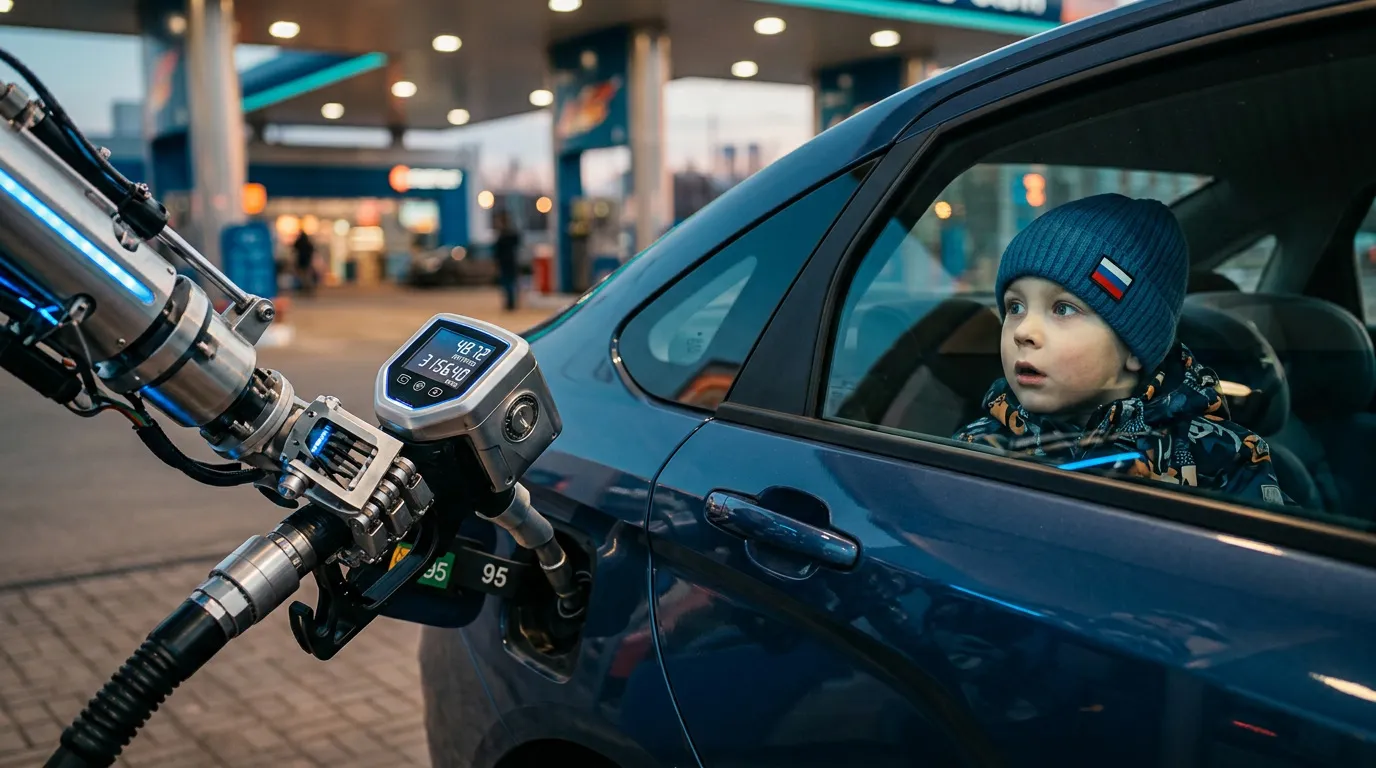
In Russia’s Ural region, the Oil-Lab RMK gas-station chain has unveiled a fully autonomous robotic fueling system. Here’s how it works: Drivers pull up to the pump, scan a QR code and pay digitally, then the robot takes over. Three cameras and computer-vision algorithms analyze the position of the fuel door, after which the machine unscrews the cap and carefully inserts the nozzle. There is still one technical limitation – the fuel tank must be located on the right side of the vehicle – but that detail does little to diminish the significance of the launch.
We have grown used to robots operating inside warehouses, factories and logistics hubs. But bringing service robotics to an everyday gas station marks a genuine shift in direction. Russia now has more than 460 companies working in this segment. Until recently, however, most of their technologies rarely interacted directly with ordinary consumers. That barrier is now beginning to disappear: Russian computer-vision systems and IoT infrastructure are proving they can operate alongside foreign counterparts, including in harsh real-world weather conditions.
From Smartphones to Artificial Intelligence
The Oil-Lab robot marks a bold but perfectly logical next step. Over the past several years, major gas-station networks have spent heavily on digital payment systems through apps such as Yandex Zapravki (Yandex Fueling). Now the actual fueling process itself can also be handed over to a machine.
Russian robots are unlikely to storm global markets in the next few months. Exporting a complete engineering package, however, is a far more realistic scenario. That package would combine hardware and software, including mechatronics, digital-vision systems and localization for regional safety standards. The most likely international markets are CIS countries and friendly states across the Middle East and Asia, where labor shortages are colliding with growing demand for smart-service infrastructure.
For now, though, the biggest opportunity remains inside Russia itself. Among the most promising applications are cashless gas stations for car-sharing fleets and taxis, where speed matters most, infrastructure for people with limited mobility, and fueling stations in extreme climate zones where stepping outside can quickly become unpleasant.
How Russia Learned to Automate Service
One of the defining trends of 2024 and 2025 has been the rapid expansion of contactless payment systems. At the same time, the number of companies operating in service robotics has surged: from roughly 290 players in 2021 to more than 460 today, representing growth of around 60%.
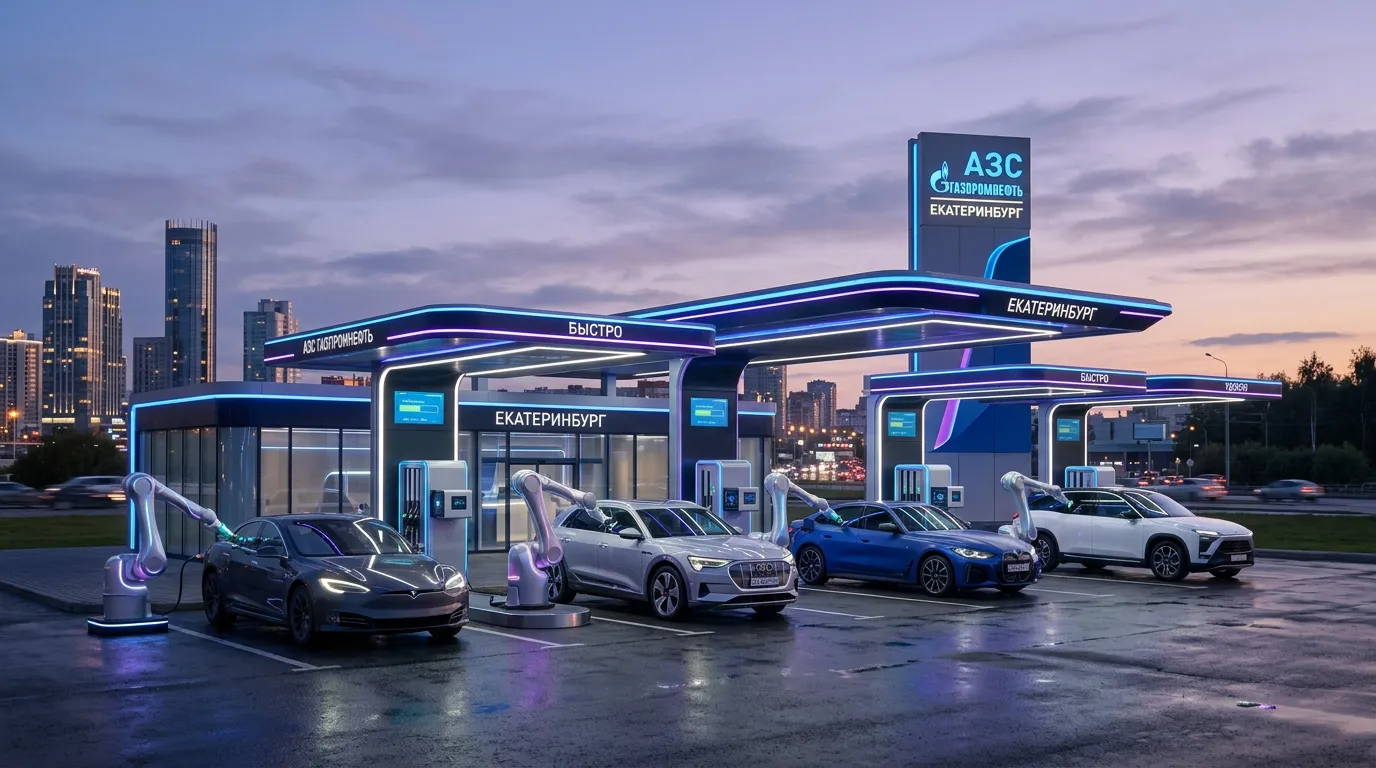
Regulation is evolving alongside the technology. In 2024 and 2025, Russia’s Ministry of Emergency Situations actively updated SP 156.13130.2014 safety standards for fueling stations, tightening fire-safety requirements. That is where the core challenge lies: the robot must not only be intelligent, but also completely spark-free and explosion-safe. Against that backdrop, the launch in Yekaterinburg looks less like a random pilot project and more like the planned arrival of automation in an industry where mistakes can cost lives.
When Will Robots Replace Gas-Station Attendants?
What we are seeing is not a revolution that will wipe out gas-station workers tomorrow, but rather a polished, high-profile pilot project. Even so, widespread adoption is still some distance away. The technology now faces a serious real-world stress test. Engineers still need to determine how the cameras will perform under icy conditions, whether the AI can recognize old or damaged fuel caps on Soviet-era cars, and whether the system can avoid gridlock during rush hour if the very first customer parks crookedly.
Gas stations are classified as high-risk facilities, meaning the rollout of robotic fueling systems will require not only approvals from emergency regulators but also proof that the economics make sense. Maintaining a high-precision robotic manipulator could still cost more than employing a nearby human attendant, especially in regions where wages remain relatively low.
The outlook for the next one to two years is cautiously optimistic. The most likely scenario is targeted deployment: robots appearing first at flagship stations in major metropolitan areas. Only after the industry builds enough operational experience across different vehicle models and climate conditions – and once developers succeed in lowering system costs – will robotic fueling move from novelty to routine. Still, the first step has already been taken, and it was a confident one: Russia has shown that it can automate even a part of the automotive experience many global industry pioneers have yet to touch.