Russian Scientists Speed Up Molecular Screening for Drug Discovery by More Than 30x
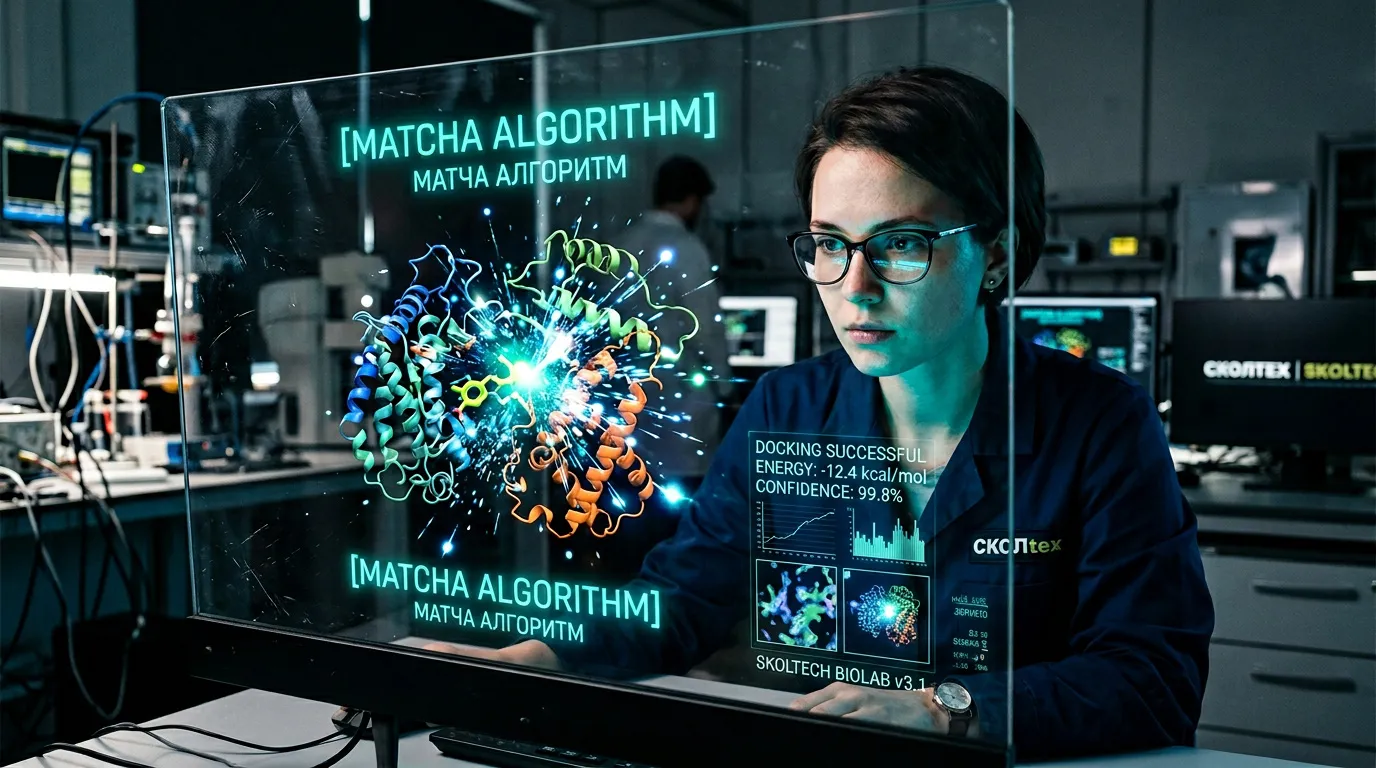
A team from Skoltech and the startup Ligand Pro has introduced an AI system, Matcha, capable of predicting interactions between small molecules and proteins in just 13 seconds. By comparison, the flagship AlphaFold 3 model takes about 6.5 minutes to solve a similar task. The difference is not just statistical – it reshapes the economics of early-stage drug discovery.
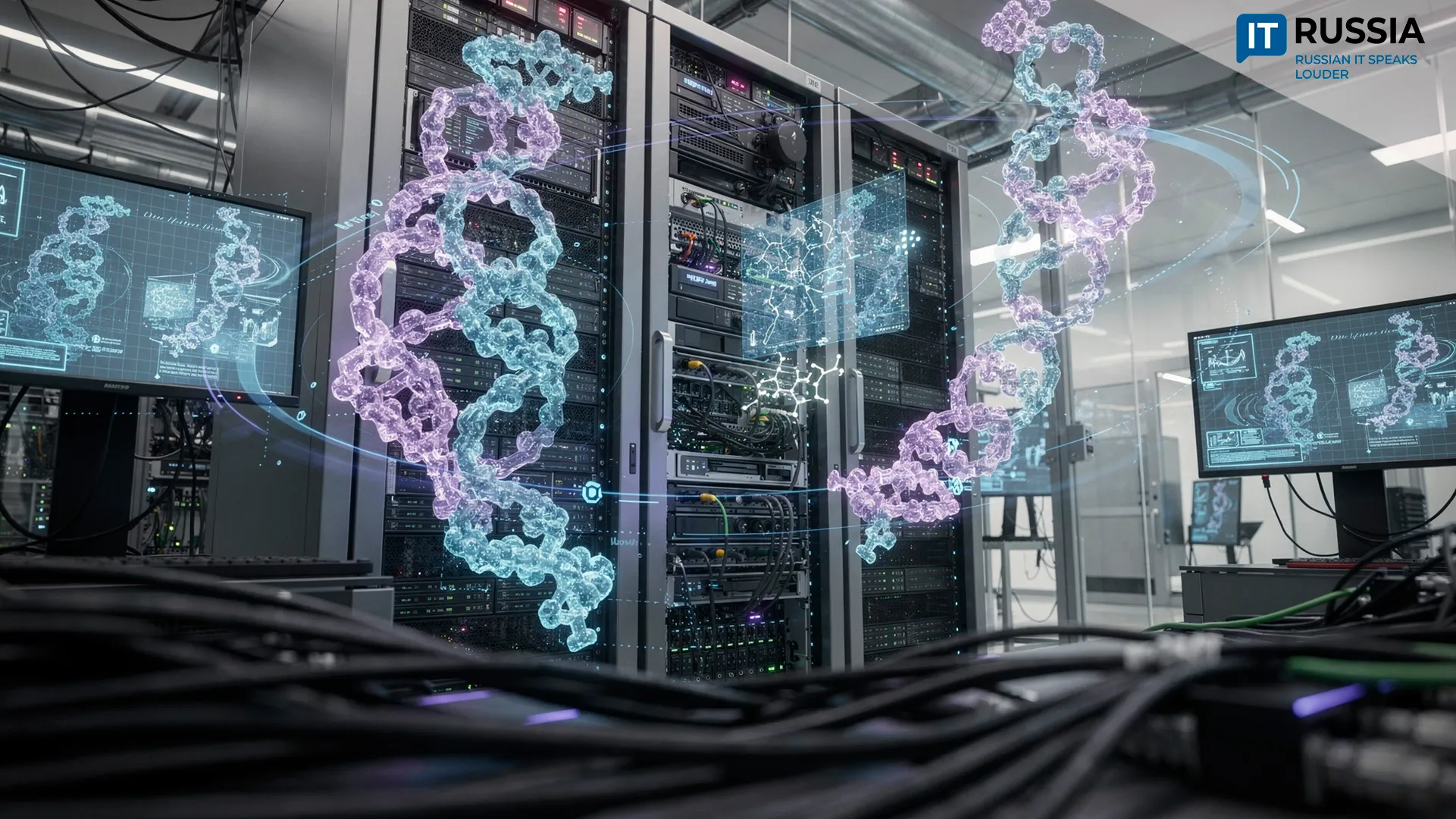
In computational biology, where each minute of modeling can cost thousands of dollars, Russian researchers have made a quiet but significant advance, developing the Matcha model as a multi-stage pipeline for molecular docking.
Docking has become a core component of virtual screening, a process that rapidly evaluates millions of compounds to identify promising drug candidates. In practice, this approach can save years of lab work and millions in costs, as potential molecules undergo “virtual testing” before entering the laboratory.
The technology expands the possibilities for early-stage virtual screening and drug discovery. Many diseases arise when one or more proteins in the body stop functioning correctly. In drug development, such a malfunctioning protein is treated as a therapeutic target, and the drug is designed to act on it.
The goal of a drug is to interact with that target in a way that modifies its activity, for example by inhibiting an overactive protein or activating one that is underperforming. This makes the selection of the right molecular candidate a critical step in the process.
New Approaches to Screening
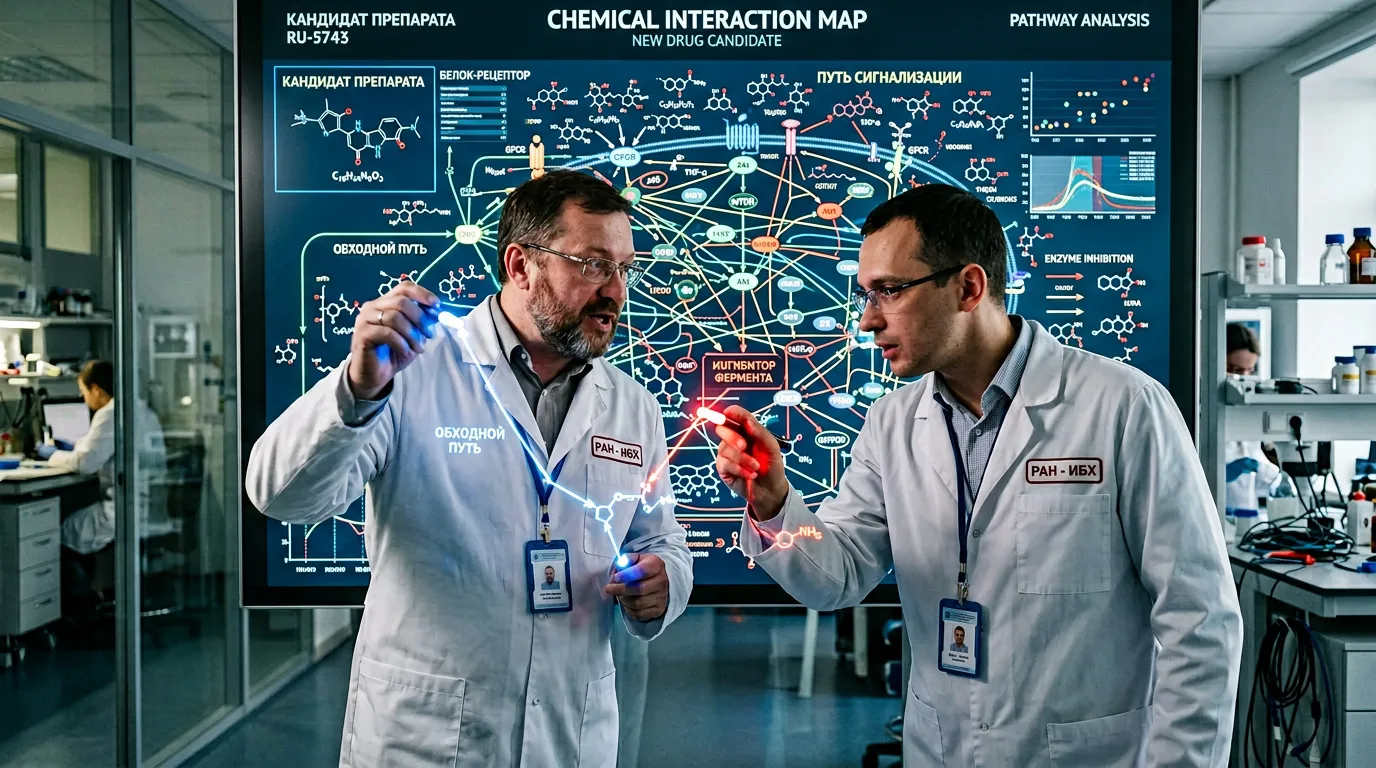
The key achievement of the new system is not only speed but the ability to maintain competitive prediction quality while improving performance by 25 to 31 times compared with large co-folding models such as AlphaFold 3, Chai-1, and Boltz-2. This positions Matcha as an infrastructure-level solution for large-scale molecular screening, where pharmaceutical companies filter thousands of candidates before laboratory testing, rather than as another experimental neural network. The authors have released both the manuscript and the source code in open access, simplifying independent validation and integration into existing R&D workflows.
It is important to note that the system has been developed entirely by Russian researchers. Skoltech, as a research and education hub, and Ligand Pro, as a specialized AI startup, have created a collaboration that is relatively rare even in global markets. Rather than adapting existing Western approaches, the team proposes an original architecture, published on arXiv and GitHub. Taken together, these elements suggest that Russia is capable of generating advanced scientific technologies at the intersection of AI, chemistry, and biology, not just adopting external solutions.
Strategic Implications
For Russia, this development extends beyond a scientific result. Digital pharmaceutical research is one of the most capital-intensive and strategically important sectors. Proprietary algorithms reduce reliance on external platforms and enable R&D to be conducted on domestic infrastructure, including mid-scale computing centers. That lowers the barrier to entry for university laboratories and biotech startups, helping to build an ecosystem of technological sovereignty in biomedicine.
The global market for AI-driven drug discovery is expanding rapidly. Deals such as the $2.75 billion expansion of the partnership between Eli Lilly and Insilico Medicine highlight strong demand for algorithmic solutions.
If Matcha proves effective in industrial settings, it could evolve into an exportable B2B tool. One likely path is co-development, where the Russian team provides the algorithmic layer while international pharmaceutical partners contribute experimental validation. The availability of the source code on GitHub significantly increases the system’s visibility within the scientific community.
Acceleration, Not a Cure
The new technology does not mean that a finished drug will appear immediately. Between faster computation and a real therapy lies a long chain of laboratory, preclinical, and clinical validation. Still, computational layers like this are likely to define the competitiveness of biomedical platforms in the coming years. For Russian citizens, this represents groundwork for faster and more accessible R&D, and over time, a broader portfolio of domestic therapeutic solutions.
In the near term, over the next one to three years, the most likely scenario involves pilot projects with research centers and pharmaceutical companies, followed by integration into larger Russian AI drug discovery platforms or commercialization through service-based models.
The segment is growing, and Russia has an opportunity to occupy not only a niche in domestic substitution but also in exporting deep-tech tools. As demonstrated by the 2024 Nobel Prize in Chemistry for protein structure prediction, the scientific community pays close attention to technologies that accelerate discovery.
Russian researchers have taken another step in that direction, showing that the country is developing not only applied AI services for document processing and government use but also advanced scientific models.