Stable Voltage, Russian-Style
Ruselectronics, a holding within the Rostec State Corporation, has launched serial production of DC/DC converters – components that step down and stabilize voltage in electrical circuits.
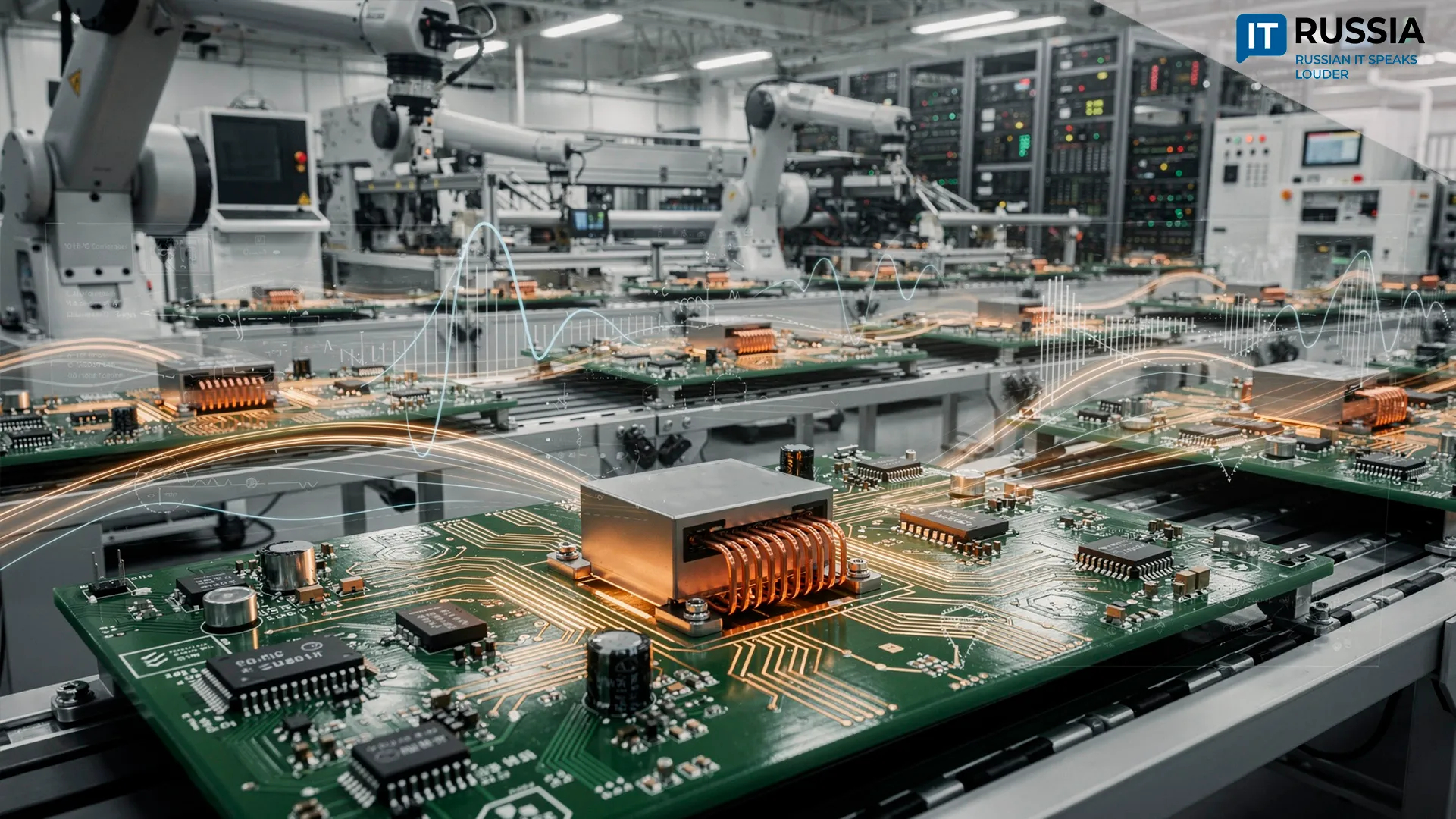
DC/DC converters are among the most widely used classes of electronic components: they are present in virtually every complex electronic device where multiple voltage levels are required simultaneously – from LEDs and processors to USB outputs and communication modules. These devices ensure stable operation of telecommunications equipment, including radios, secure communication phones, onboard electronics, as well as computing systems and civilian radio-electronic equipment.
Previously, Russian manufacturers of radio-electronic equipment were forced to rely on imported alternatives. Domestic serial production of DC/DC converters allows Russia to close one of the critical gaps in its electronic component base.
Seamless Transition to Russian Electronics
Ruselectronics converters match imported counterparts in performance, delivering high reliability and stable operation across a wide range of conditions.
Input voltage range: 9–36 V (nominal – 18–36 V). Output voltage: 3.3 V (single-channel). Output power: from 5 to 200 W (series); 15 W – base model. Operating temperature range: from −60 to +125 °C.
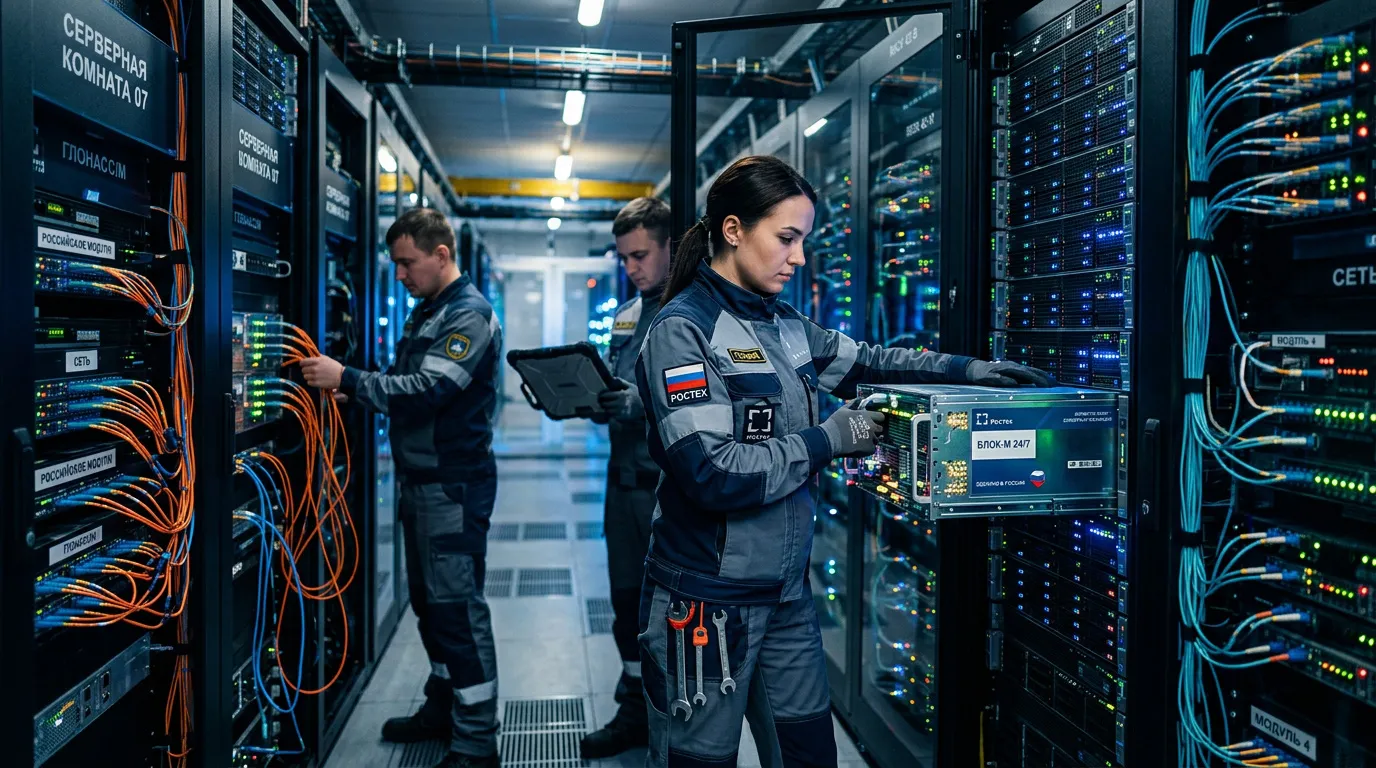
Ruselectronics DC/DC converters are functional pin-to-pin equivalents of products made by Swiss company TRACO POWER, one of the world’s leading manufacturers of power components. The new Russian devices are fully compatible in both pin configuration and performance with the components they replace, enabling engineers and equipment manufacturers to switch from imported parts to domestic ones without redesigning circuit boards or power modules. This is critical in an import substitution environment, where continuity of production chains becomes a priority. Transitioning to Russian components ensures uninterrupted supply of products that meet all national quality standards.
From Quantum Technologies to Space
Ruselectronics is the largest holding within Rostec and brings together key enterprises in Russia’s radio-electronics industry, which are actively deploying advanced technologies, including the industrial internet of things, nanotechnology, photolithographic processes, and quantum technologies.
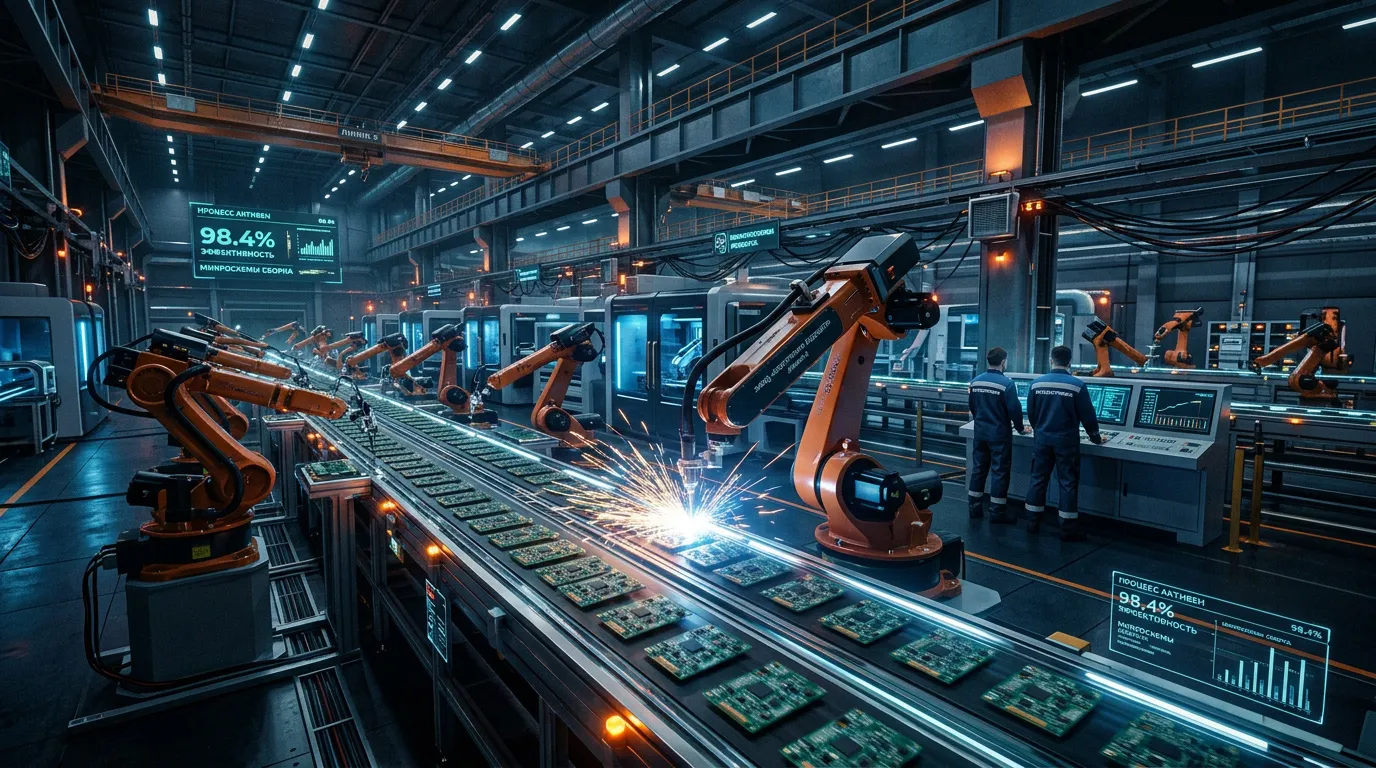
Its manufacturing capabilities cover the full production cycle of radio-electronic products, including assembly, equipment calibration, automated surface-mount and SMD assembly, electroplating, and the use of polymer composite materials.

Major projects include software-defined radio and satellite communications, software platforms incorporating AI elements, active phased array antennas, electronic warfare systems, optoelectronic systems, and more.
In electronics and microelectronics, the holding develops multiple product lines, including hermetically sealed reed switches used in security systems, telecommunications equipment, and medical devices. Within the group operates Russia’s only manufacturer of OLED microdisplays in VP and OTC categories – a technology in demand in civilian electronics such as medical imaging, optics, and virtual reality. A key advantage is full production localization, including the synthesis of organic semiconductor materials, which reduces dependence on imports.
The holding has also mastered production of equipment for energy-efficient IoT networks based on the LoRaWAN standard, as well as innovative nanfoil used for connecting electronic components.
For the space sector, it has developed traveling-wave tubes with a record service life of 150,000 hours and highly efficient microwave switches that amplify signals in orbit. In the energy sector, the company supplies reliable vacuum circuit breakers and capacitors for high-voltage systems.
From Import Dependence to Leadership
The launch of domestic serial production of DC/DC converters is a key step in implementing Russia’s Strategy for the Development of the Electronics Industry through 2030.
By January 1, 2028, the share of Russian radio-electronics in the public sector is expected to reach 60%, with annual growth of no less than 15%. The strategy is already delivering results: in 2024, Russia’s electronic component market grew by 20% year-over-year to reach 370 billion rubles ($4.9 billion). Analysts forecast annual growth of 14–20% through 2030, with total market volume potentially reaching 0.8–1 trillion rubles (approximately $9.6–12 billion).
Advances in the radio-electronics industry underpin the effective development of all other sectors of the Russian economy. Import substitution remains a key objective for Ruselectronics, which continues to expand its product line each year by thousands of types of domestically produced electronic components and higher-value assemblies.
In the coming years, Ruselectronics will prioritize developments in microelectronics – the “eyes” and “ears” of all high-tech payloads across applications ranging from space to artificial intelligence.
As a result, Ruselectronics products are expected to meet the needs of Russian industry and the public sector, reducing dependence on imports and strengthening the country’s digital sovereignty.