Titanium Joints Built to Fit: Russia Begins Printing Custom Implants for Worn-Out Artificial Joints
Trauma surgeons in Russia have begun replacing worn-out artificial joints with custom implants printed from 3D models for a precise fit to damaged bone structures. The procedures are now being performed locally, without requiring patients to travel to Moscow or St. Petersburg.
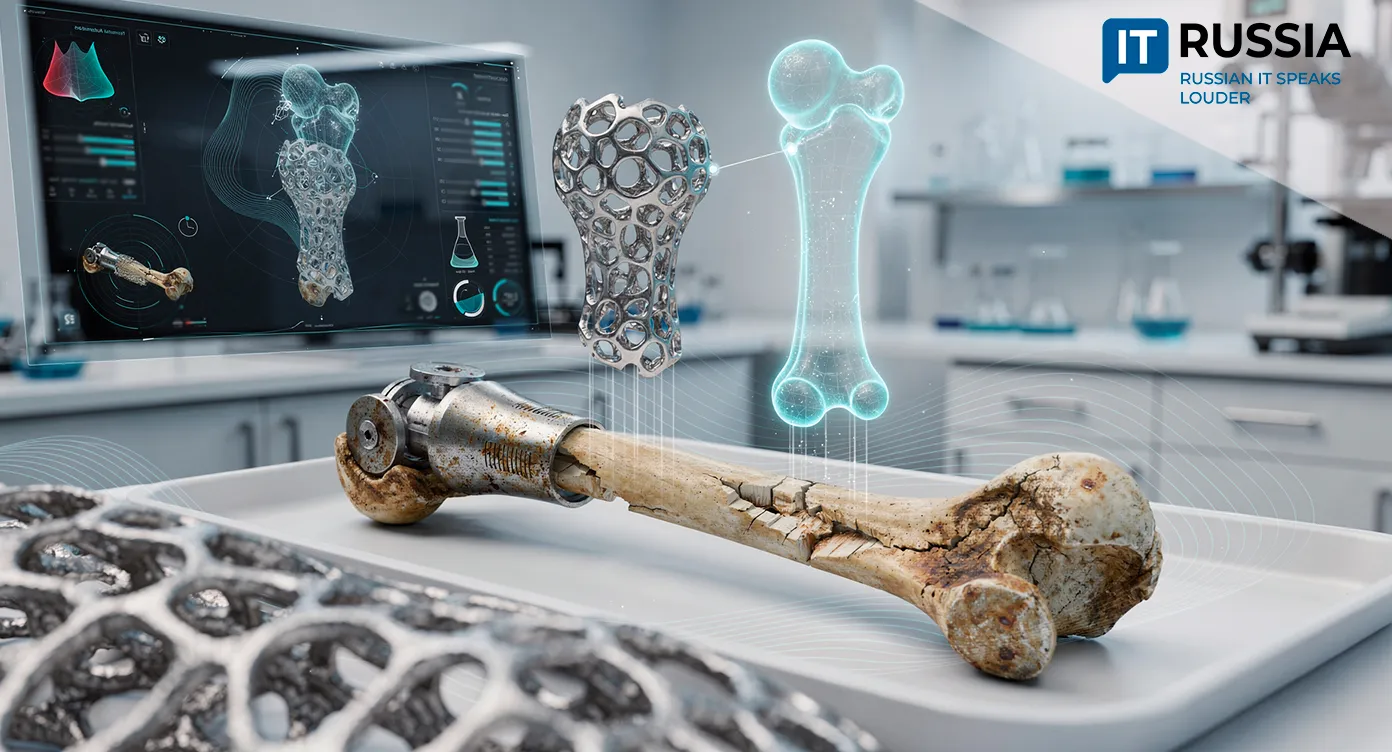
Doctors at Rostov State Medical University (RostGMU) have taken on a problem that hung like a sword of Damocles over patients living with artificial joints. A standard prosthetic joint typically lasts no more than 20 to 25 years. After that, the implant wears down, the surrounding bone begins to deteriorate, and the patient once again faces pain, limping and constant use of painkillers. The joint must then be replaced, forcing the patient through another cycle of anxiety, anesthesia and rehabilitation. The challenge becomes even greater because conventional replacement implants often no longer fit properly: the old implant may have destroyed part of the surrounding bone, leaving little stable tissue to anchor a new prosthesis.
The situation has traditionally been difficult. Patients were often referred to major federal centers in Moscow or St. Petersburg. Others were told to purchase a custom implant at their own expense, an option so costly that many simply could not afford it. The RostGMU approach is now changing that equation in a significant way.
Individual Precision
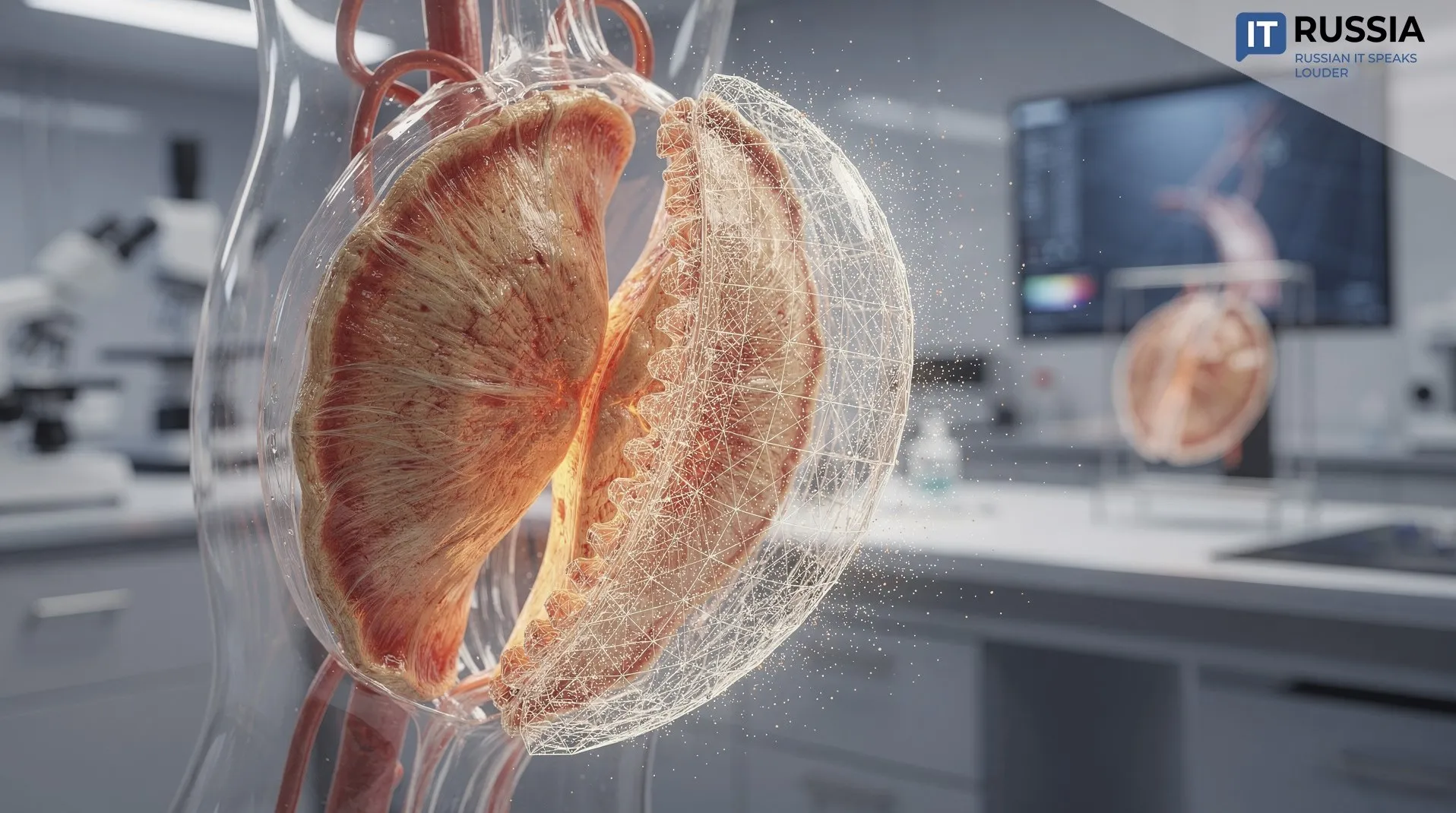
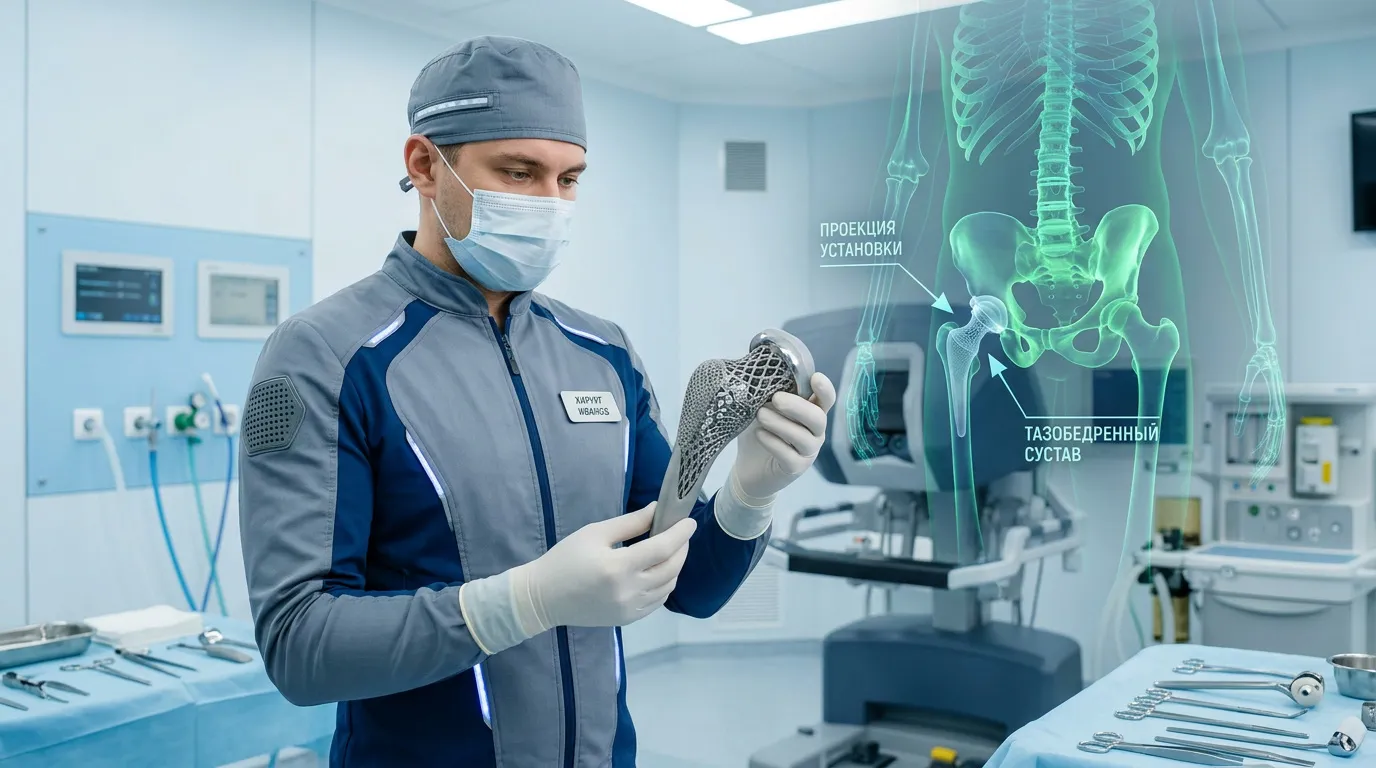
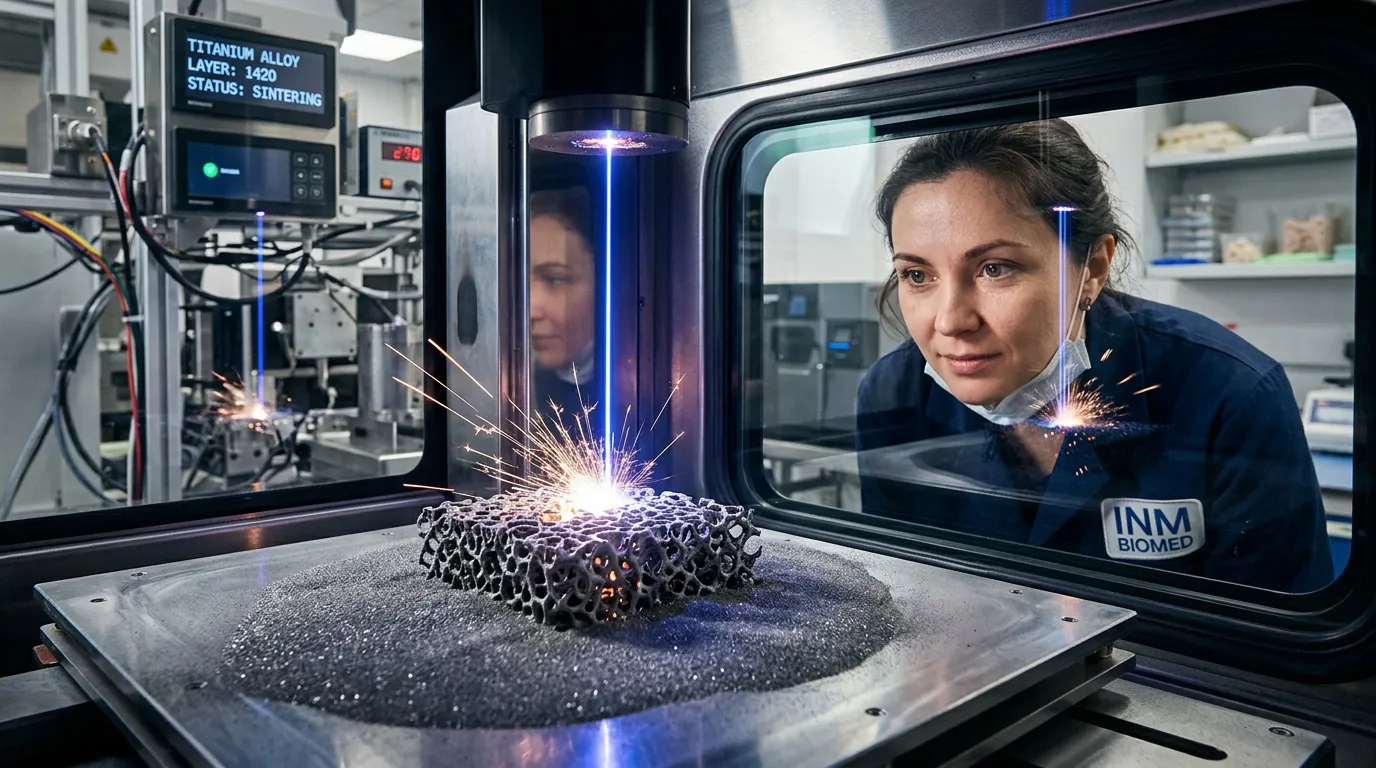
At the RostGMU clinic, patients now undergo CT imaging before surgery. Doctors use the scans to build an exact 3D model of the damaged bone, including every cavity, defect and irregularity. Engineers then print a porous titanium implant on a 3D printer. The implant mirrors the patient’s anatomy exactly. Surgeons do not need to hammer it into place or reshape it during the operation because it already fits like a natural extension of the bone.
One of the procedures involved a woman who had spent years moving with the help of crutches. Her old hip implant had loosened, and the surrounding bone tissue had deteriorated. She relied heavily on pain medication, slept poorly and rarely left her home. Surgeons removed the failed implant, filled the defect with printed titanium and inserted a new joint. After rehabilitation, she was able to walk independently again without crutches.
That level of care is now available in southern Russia through the country’s high-tech medical assistance system. Patients no longer need to save money for airfare, temporary housing and treatment in distant federal centers. A physician referral is enough.
Beyond Joint Replacement
In addition to replacing worn-out prosthetic joints, RostGMU specialists have developed new approaches for treating infections around artificial implants. Bacteria can survive for years on implant surfaces while remaining resistant to conventional drug therapy. Doctors now use a temporary antibiotic-loaded structure known as a spacer. The medication acts locally rather than through the gastrointestinal system, gradually eliminating the infection. Several months later, the patient receives a new sterile joint implant.
The clinic has also adopted a minimally invasive technique for patients with knee osteoarthritis. Through a thin catheter, physicians deliver medication directly into blood vessels supplying the damaged area. The treatment blocks blood flow to inflamed tissue, relieving pain for months at a time. Patients can either wait comfortably for a future surgery or postpone it altogether.
What It Means for Patients
For patients living with severe joint damage, one of the hardest things to hear is that treatment requires travel to another city. Another city means an unfamiliar hospital, temporary housing, transportation costs and separation from family support. It also means uncertainty over whether government funding will be approved and fear that private treatment may be financially impossible.
When surgery becomes available locally, an entire layer of stress disappears. Family members can visit regularly, and doctors remain accessible for follow-up consultations whenever needed.
Custom printed implants also give patients greater confidence in long-term outcomes. Because the implant is designed for a specific bone structure, it is less likely to shift, rub or loosen over time. Patients leave the hospital and gradually stop thinking about the fact that a foreign object is inside their body. The joint begins to feel like their own again.

What It Means for Russia
The Rostov experience demonstrates that advanced medical technologies do not have to remain concentrated in capital cities. What is required is a capable medical university, experienced physicians, engineering expertise and high-tech equipment.
As regional centers gain access to advanced medical care, pressure on federal hospitals decreases. Patients can be distributed more evenly across the healthcare system, wait times become shorter, and public funding goes toward treatment itself rather than transportation and relocation costs.
The project also strengthens Russia’s independence from imported medical technologies. A custom titanium implant cannot simply be purchased from a warehouse in Germany. It has to be designed and printed in a laboratory. If the printer is located in Rostov, hospitals are less vulnerable to supply disruptions or sudden price increases.
Global Potential and Export Opportunities
Titanium 3D-printing technology is already used in countries such as the United States, Germany and South Korea. But in many cases, it remains expensive and concentrated in large specialized centers. Russia could offer something different: a complete operational system that includes printers, physician training, software and clinical methodologies.
For countries without highly developed medical manufacturing sectors, that kind of package could become critically important. India, Brazil, African nations and Central Asian states would not need to build entire implant-production industries from scratch. Instead, they could adopt Russian expertise and begin performing advanced procedures locally.
Rostov itself is geographically well positioned for medical tourism. Patients from Kazakhstan, Uzbekistan, Armenia and Azerbaijan are already accustomed to Russian-language healthcare environments. For many of them, traveling to Rostov is simpler and less expensive than flying to Turkey or Israel. If RostGMU develops a dedicated specialty center, it could attract patients from across the post-Soviet region, bringing both revenue and international visibility to Russian medicine.