A Robot Steward From Russia: How Students Are Shaping the Future of Service
A team of students from the Moscow Aviation Institute and STANKIN is developing a universal robotic platform designed to partially or fully replace service staff in shops, cafés, passenger trains, and public events.
Technology Designed for Everyday Demands
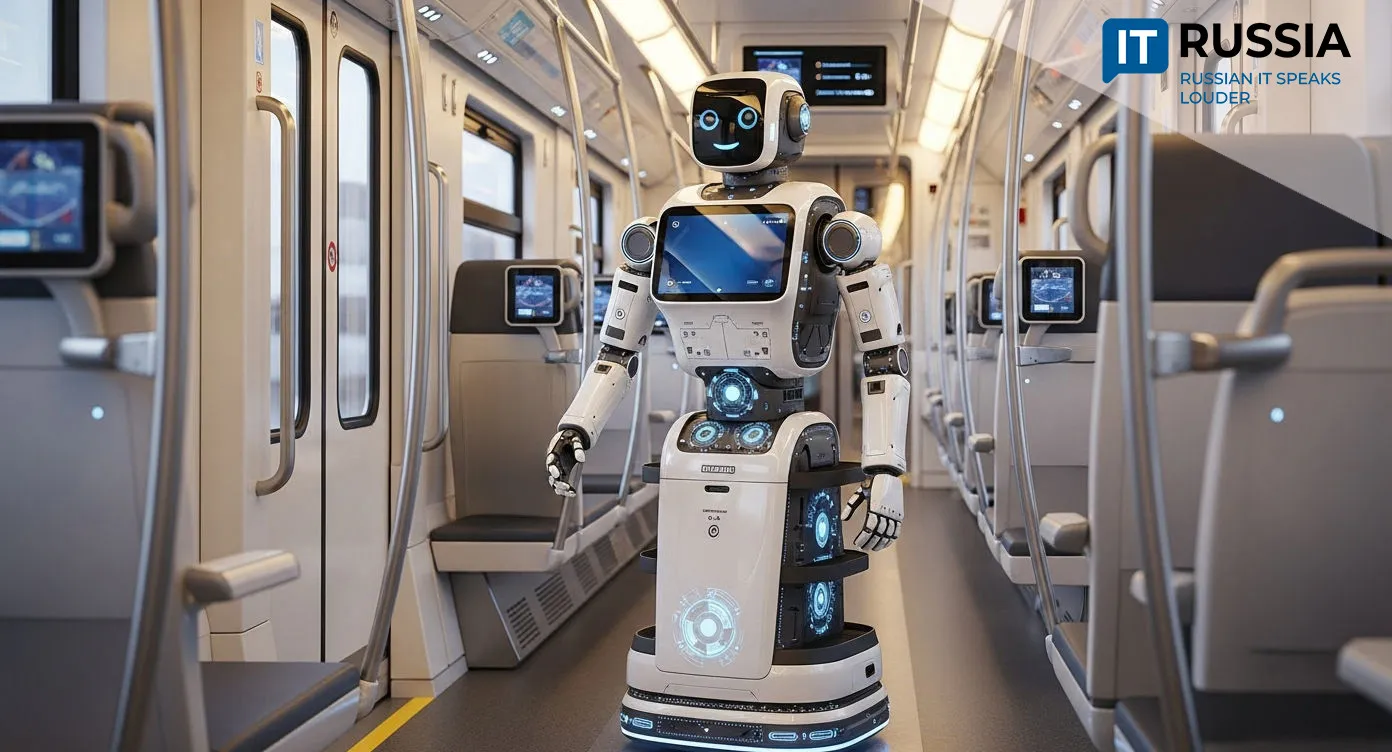
A student team from the Moscow Aviation Institute and STANKIN has achieved a notable technological breakthrough by creating a universal robotic platform for the service sector. The project originally began in response to a request from Russian Railways, which sought a robot steward for passenger trains. The idea quickly expanded beyond rail transport. Today, the prototype has successfully completed trials aboard a real train, received expert approval from Russian Railways, and demonstrated functionality that makes it suitable for cafés, retail spaces, exhibitions, and other customer-facing environments.
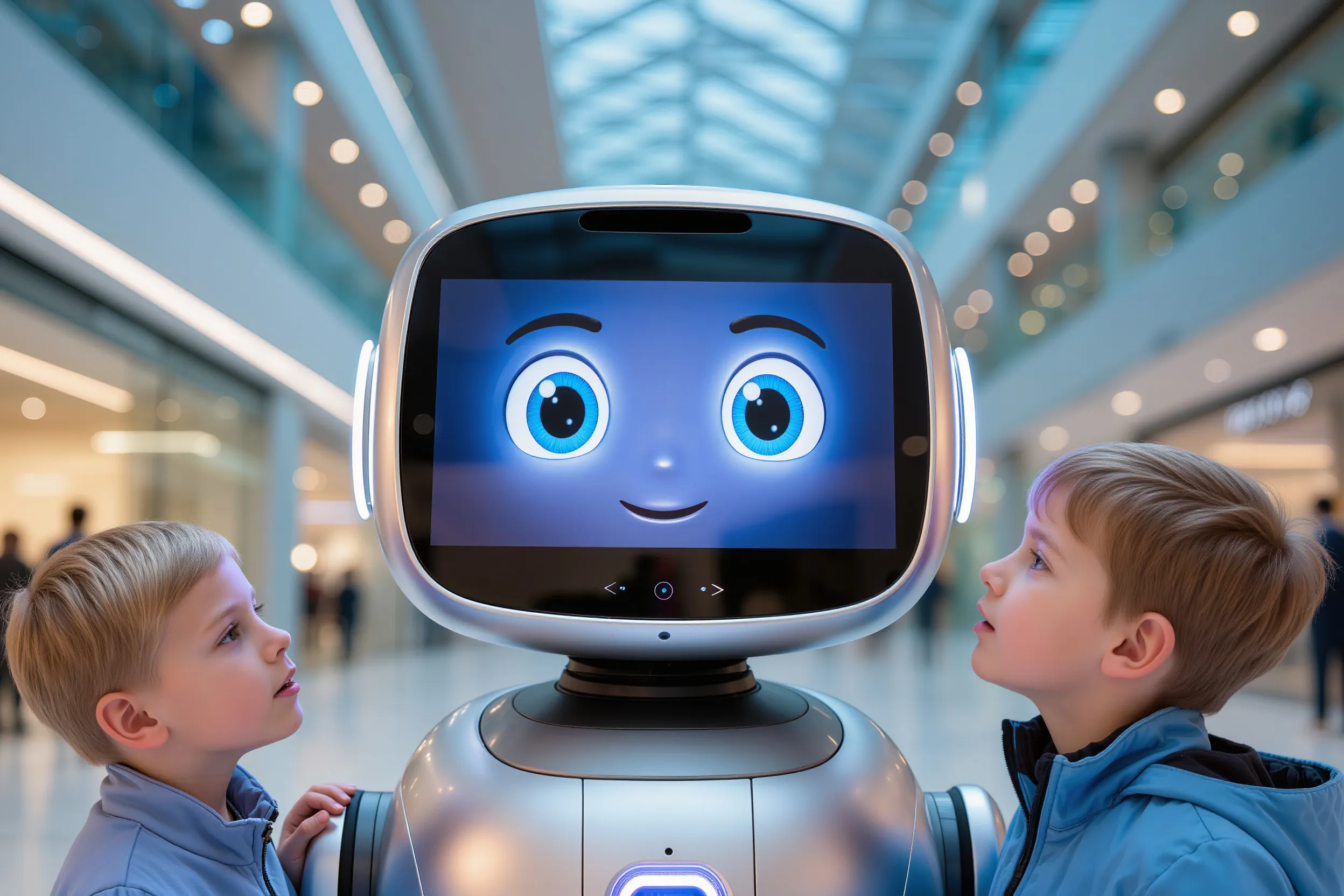
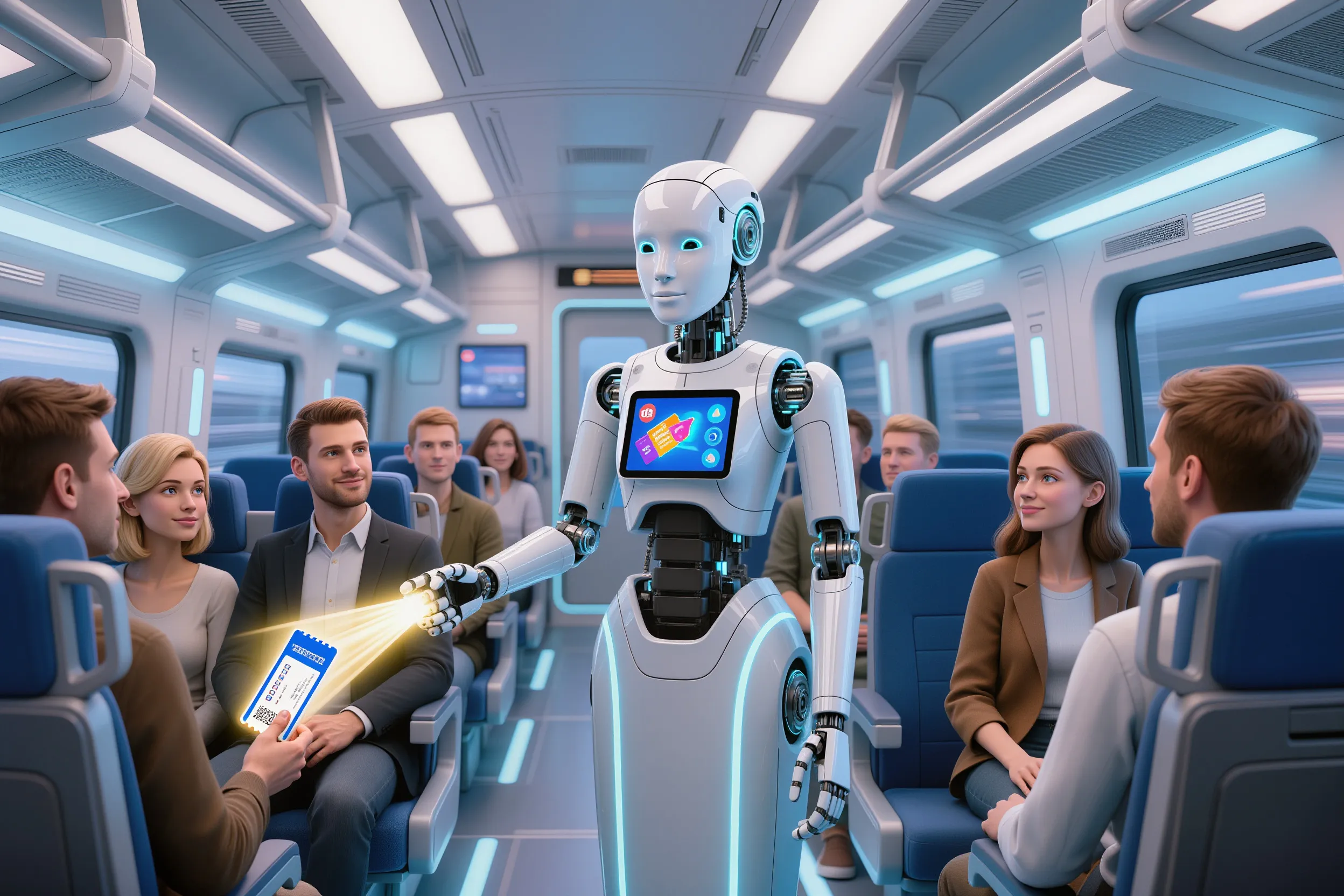
The robot features a narrow chassis and a modular architecture, enabling confident navigation even in tight train corridors or crowded retail aisles. Instead of relying on expensive lidar systems, the developers implemented an advanced visual navigation approach, reducing overall costs and increasing the share of locally sourced components to more than 50 percent. An integrated AI-based conversational system answers questions, checks tickets, offers services, and can even deliver small items. A built-in multimedia interface supports natural and approachable interaction, a critical requirement for hospitality and retail environments.
Responding to Market Pressures
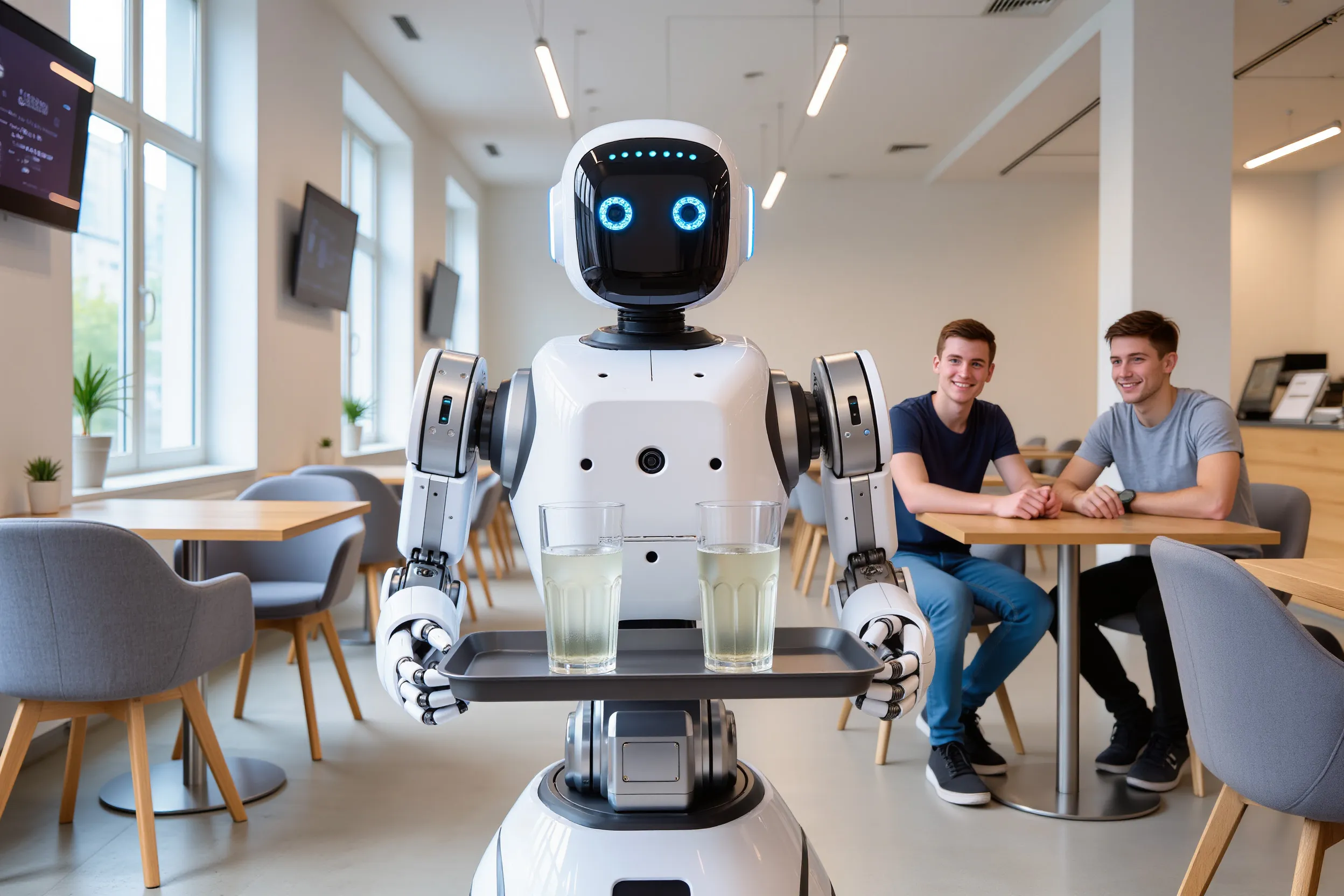
The timing of the project is significant. Russia is experiencing an acute labor shortage in the service sector, particularly amid the growth of domestic tourism and expanding infrastructure. Automation through affordable solutions adapted to local conditions is no longer a trend but a necessity. Meanwhile, most service robots currently available on the market originate from China. A domestically developed alternative opens the door to import substitution and strengthens technological independence in the field of human-centered robotics.


From the Lab to Global Markets
While the current focus remains on the domestic market, the platform’s versatility makes it attractive for export. Countries in Latin America and Southeast Asia, where service infrastructure is rapidly expanding, could become early international partners.
By 2026–2027, the developers plan to implement Semantic VSLAM, an advanced visual localization technology, and further refine the AI engine to enable more natural dialogue. A transition to small-batch production is possible by 2028, followed by pilot deployments around 2030.
Global Trend, Local Solution
The global market for service robots is growing rapidly. Forecasts suggest that by 2030 it will reach $2 billion in the hospitality segment alone. Companies such as Pudu Robotics and Starship Technologies have already established niches for robotic waiters and delivery systems.
Russia also has successful examples, including Promobot, which exports its solutions to 42 countries. The new student-led project stands out through its emphasis on operating in confined spaces and its deep localization. These characteristics provide a competitive advantage in the domestic market and in regions with similar operating conditions.
Technology Built by People, for People
The robot developed by students from the Moscow Aviation Institute and STANKIN is more than a technical artifact. It represents a response to concrete social and economic challenges, combining engineering ingenuity, artificial intelligence, and a clear understanding of business needs. If the team succeeds in navigating the commercialization stage, their platform could become a benchmark for domestic service robotics that is efficient, affordable, and tailored to real-world conditions.