Biology Inspires Engineering: How Russian Scientists Are Shaping the Future of Autonomous Flight
Researchers at the Laboratory of Neurobiomorphic Technologies at the Moscow Institute of Physics and Technology have developed a drone control system that mimics the central pattern generator of birds’ nervous systems, pointing toward a new generation of truly autonomous aircraft.
Flying Like Living Birds
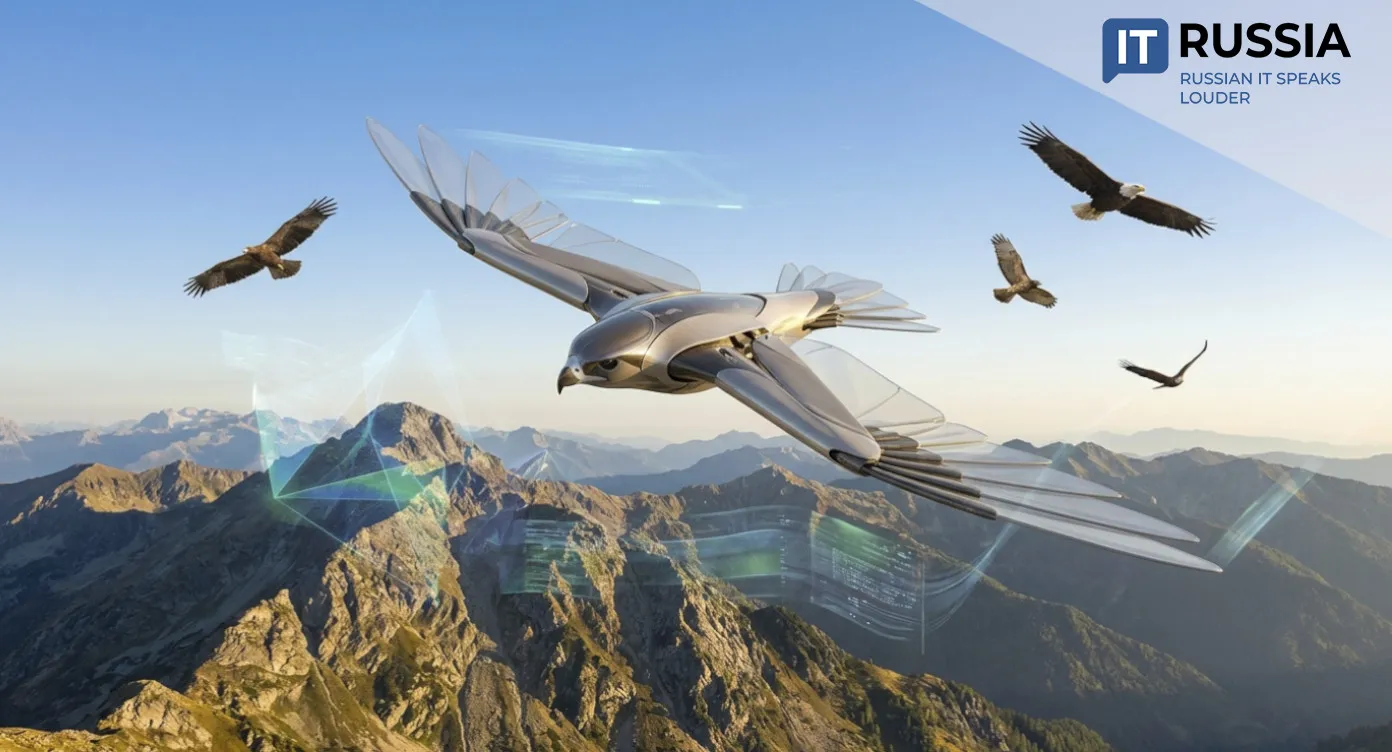
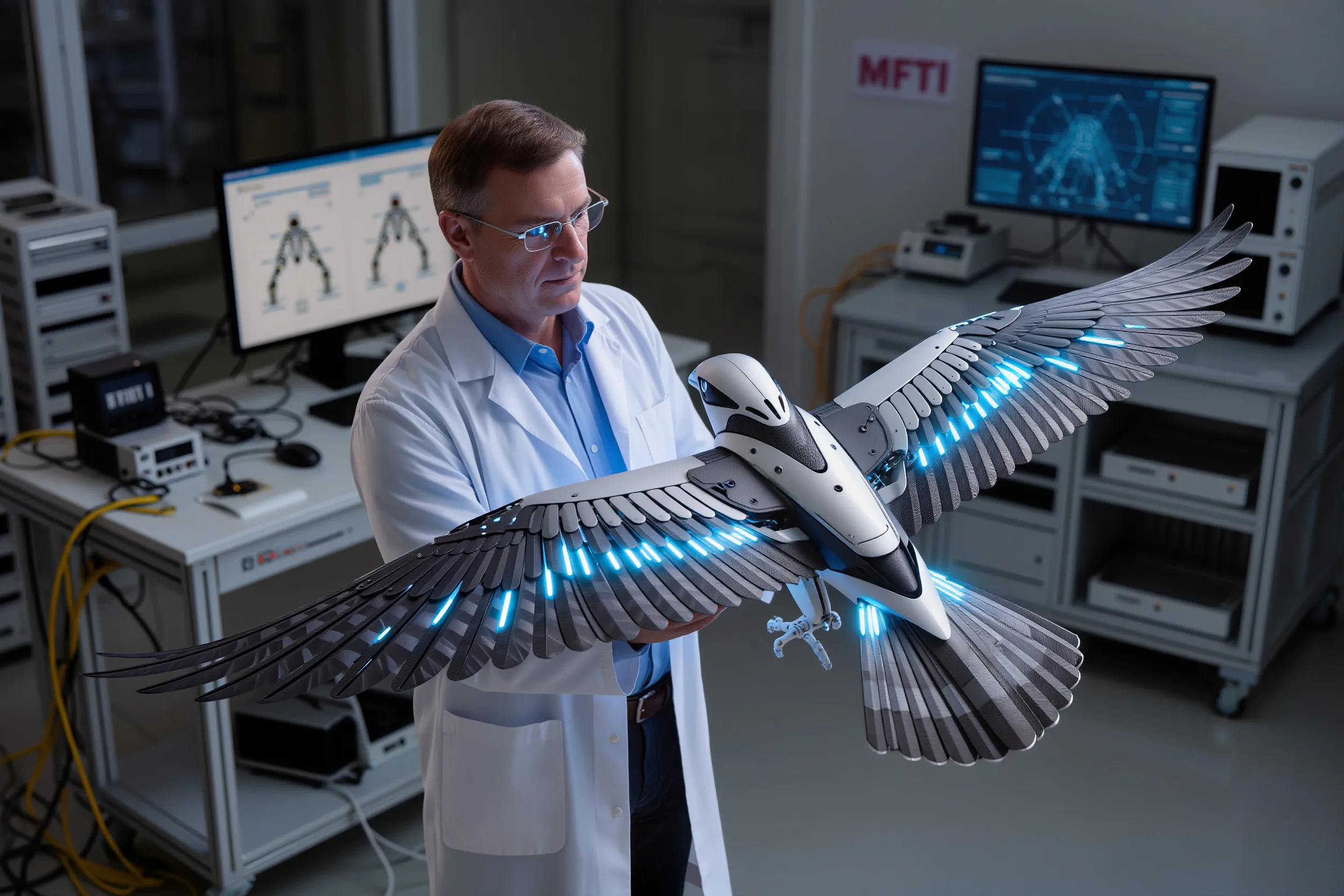
In December 2025, scientists from the Laboratory of Neurobiomorphic Technologies at the Moscow Institute of Physics and Technology unveiled a breakthrough in unmanned aerial vehicle design: a control system modeled on the central pattern generator, a neural structure responsible for rhythmic motion in birds.
Unlike conventional drones, which depend on external commands and computationally intensive AI algorithms, the new system enables an aircraft to maintain stable flight autonomously, adapt to wind and turbulence, and even recover its trajectory after collisions, much as living birds do. This represents more than an incremental upgrade. It signals a shift toward a new paradigm of nature-inspired autonomy.
Why This Matters More Than It Seems
Biomimetics, the practice of borrowing solutions from nature, has long influenced robotics. What sets this Russian project apart is its depth: rather than copying external form, it reproduces the operating principle of a biological nervous system. In birds, central pattern generators produce rhythmic signals that drive wing motion without constant external correction.
Applied to drones, this approach reduces energy consumption, lowers computational load, and allows instantaneous responses to environmental changes. The system’s architecture incorporates sensor-based feedback, making it flexible and resilient. In environments where GPS is unavailable or obstacles are dense, such drones could prove indispensable.


From the Lab to the Real World
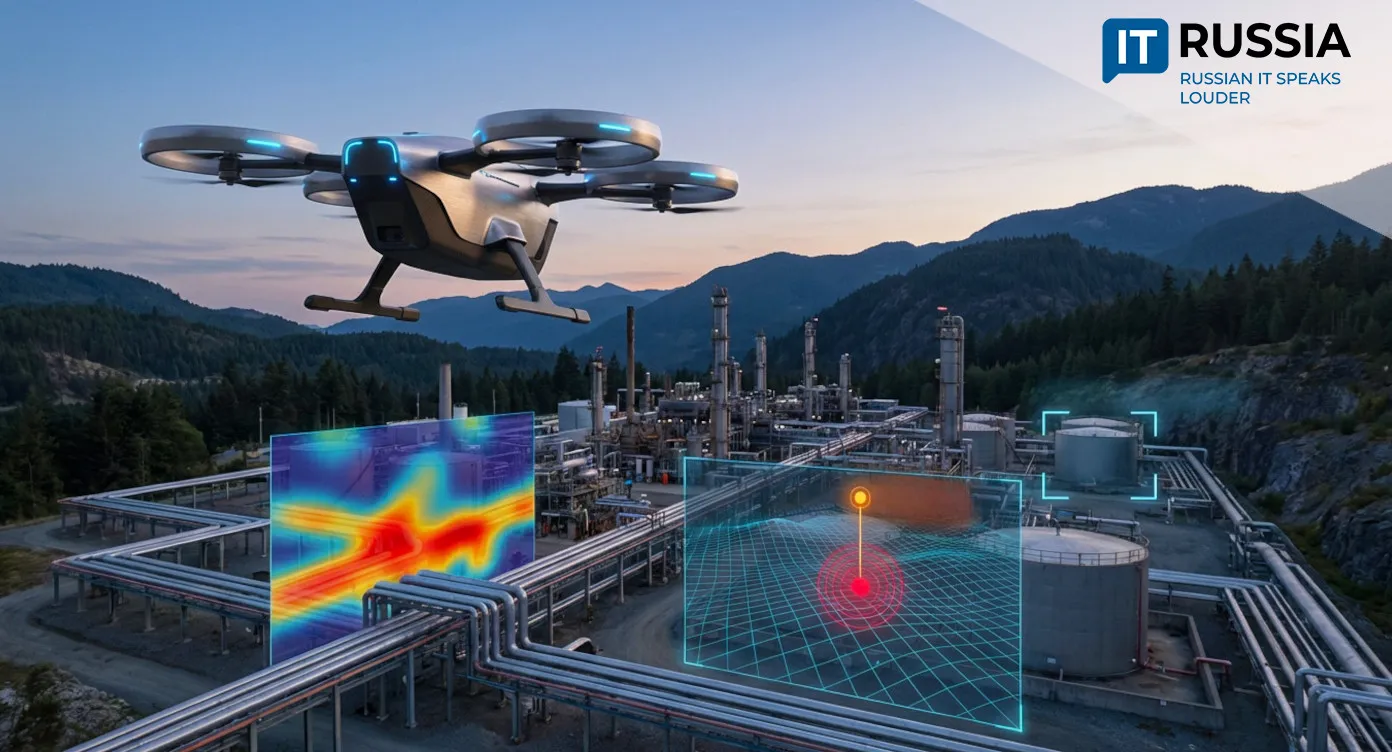
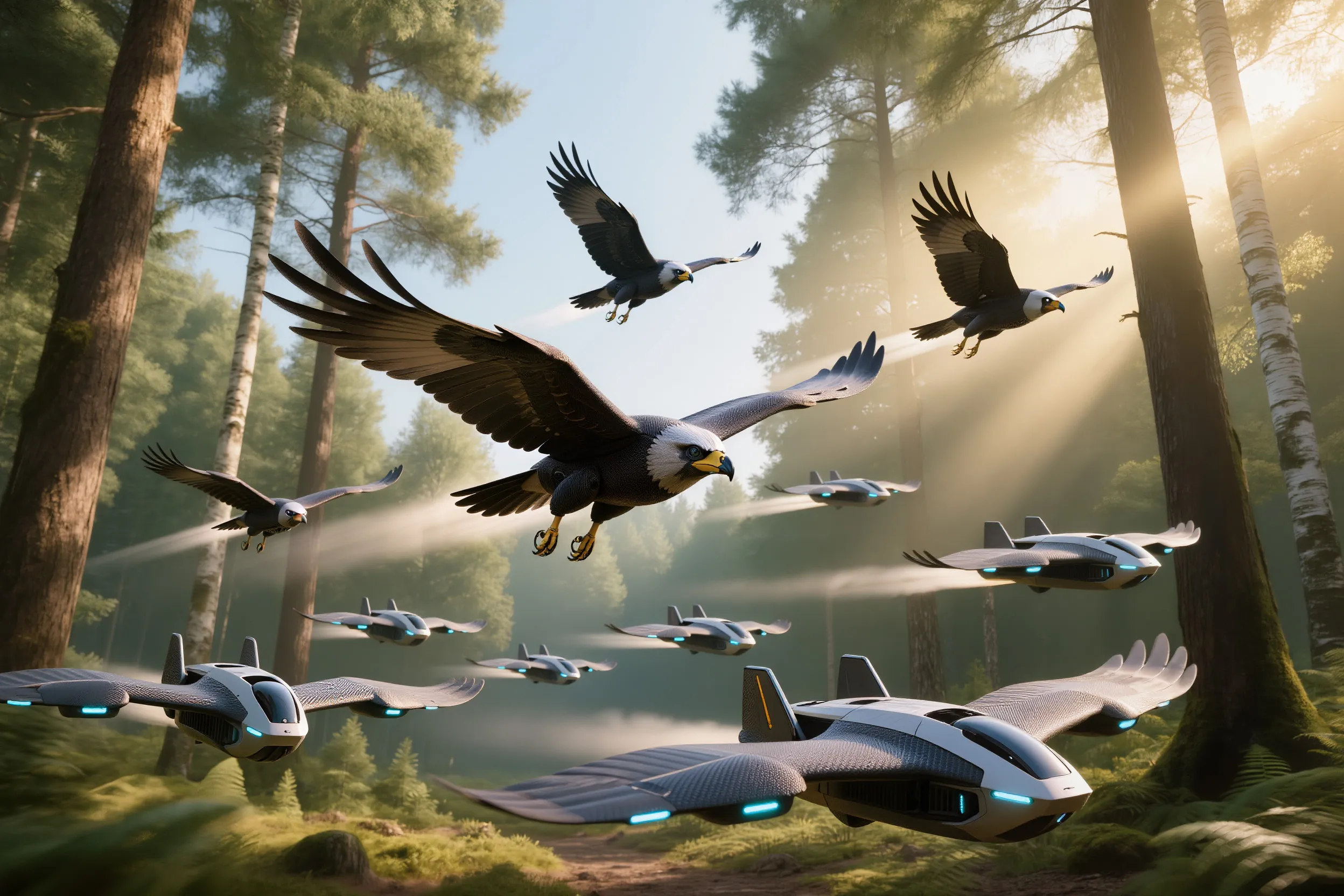
The potential applications are broad. In agriculture, these drones could fly between crop rows without damaging plants. In forestry, they could maneuver through dense canopies to monitor wildfires or illegal logging. In search-and-rescue missions, they could operate in smoke-filled or debris-cluttered areas where conventional drones often lose orientation.
Within Russia, the technology could be integrated into national programs for unmanned aviation and digital infrastructure transformation. Globally, it has export potential in the autonomous robotics segment, especially for countries investing in green technologies and sustainable development.
Five Years of Evolution: Teaching Machines to Fly Like Birds
The Russian development did not emerge in isolation. Over the past five years, the field has seen numerous biomimetic UAVs. German engineers created ornithopters that replicate seagull flight. In the United States, compact hummingbird-like drones demonstrated hovering and indoor maneuverability. Swiss and American researchers introduced hybrid systems capable of flying, hopping, and walking.
Russian researchers had previously built flying robots with independently controlled wings and tails. What distinguishes the current system is its focus on function rather than form. It does not merely resemble a bird. It recreates the neural mechanism underlying flight itself.

The Future Belongs to Nature-Inspired Autonomy
This development is more than another drone. It demonstrates how the convergence of neurobiology, robotics, and neuromorphic computing can yield systems that outperform both biological models and traditional engineering solutions. Unlike machine-learning algorithms that require massive datasets and computational resources, the neurobiomorphic approach achieves efficiency through simplicity and innate adaptability.
Outlooks are optimistic. In the coming years, entire generations of intelligent flying robots may emerge, capable of operating in the most demanding environments, from city streets to remote taiga regions. This will reshape logistics, monitoring, and the very concept of autonomy in robotics. Nature, it turns out, solved many of these problems long ago. Engineers are only now learning how to listen.