In Novosibirsk, AI-Powered Cameras Helped Detain 2,800 Suspects in 2025
Behind the headline number are thousands of prevented crimes and dozens of rescued children. In Novosibirsk, artificial intelligence is no longer a pilot experiment but a core layer of urban security infrastructure.
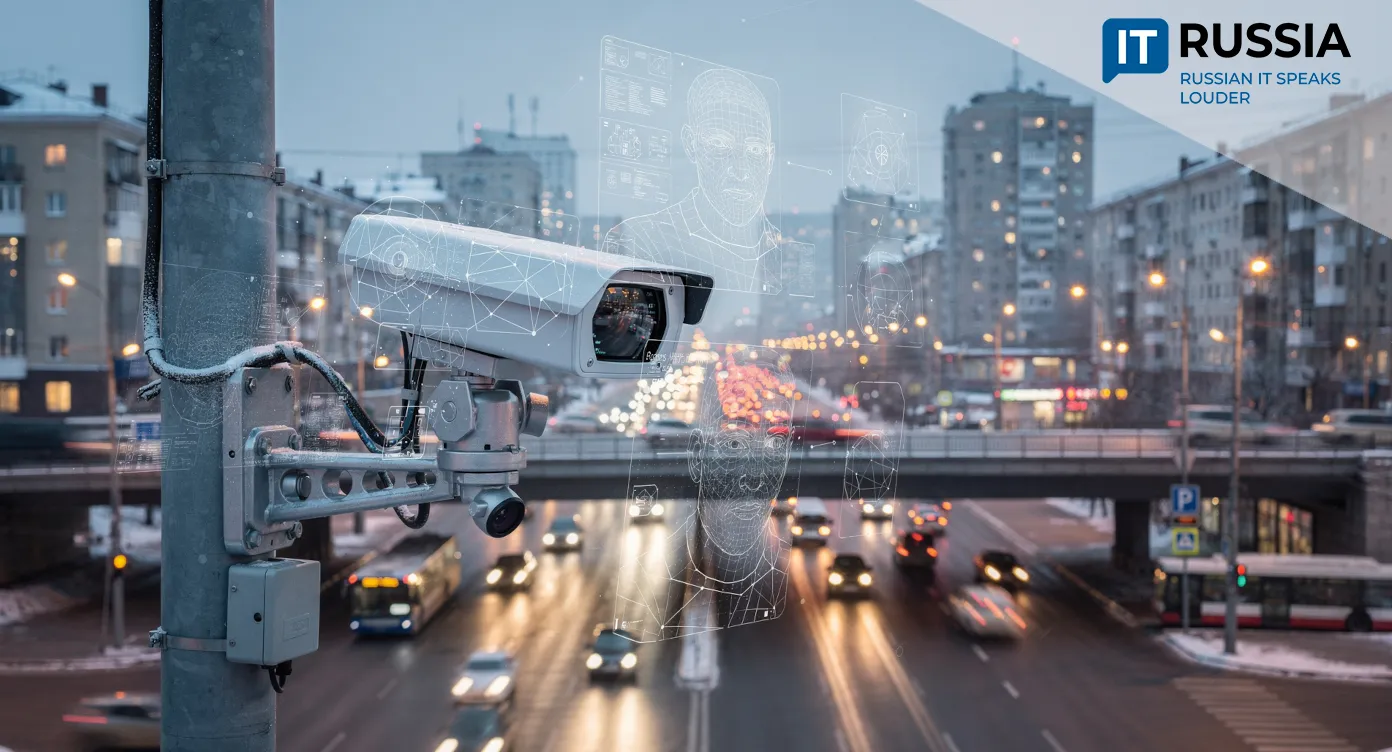
Smart Optics for Public Safety
The foundation of Novosibirsk’s results lies in the development of the aparatno-programmny kompleks Bezopasny gorod, or hardware-software complex “Safe City.” Today, the system is more than a network of cameras mounted on poles. It operates as a neural network-driven monitoring infrastructure. Of nearly 5,000 cameras installed across the region, more than 1,200 are equipped with biometric video analytics. The system does not simply capture silhouettes. It identifies individuals, cross-references them with databases and triggers alerts within seconds, often before a situation escalates.
One of the most notable capabilities is child search functionality. In 2025, 133 missing children were located with the help of AI-powered analytics. During urgent cases, photographs of missing individuals were transmitted in real time through the Sistema 112 emergency network. Cameras then scanned public spaces automatically. What once required hours of manual police work and thousands of distributed notices can now be narrowed down in minutes through algorithmic processing. The Bezopasny gorod project received two national awards in categories related to digital transformation of urban management.

Detect and Prevent
Artificial intelligence has supported law enforcement for several years. In Moscow, neural network systems reportedly contributed to a 10.5-fold reduction in robberies and a 34.5-fold reduction in residential burglaries. On a daily basis, cameras analyze pedestrian flows and vehicle traffic. Until recently, smart cameras functioned as digital sentries. They recorded offenses after they occurred. The next phase centers on predictive analytics. Developers are working to train systems not only to recognize faces but to detect behavioral patterns that precede criminal activity.


The banking sector has made significant progress in this direction. Financial institutions use AI to assess transaction anomalies and borrower risk profiles. In the United States, AI is increasingly deployed in crime forecasting models. By analyzing historical and real-time data, systems estimate the probability of criminal incidents in specific urban locations.
Faster, Less Visible and More Accurate
The Novosibirsk region plans to increase the density of biometric sensors and integrate them with urban transport networks, social institutions and healthcare services. Over the next several years, such systems are expected to expand rapidly. They will become faster, less visible and more precise. Emphasis will shift toward predictive capabilities. AI platforms will not only assist in detaining suspects but also detect signals such as an elderly resident who has not left home for an extended period or a traffic incident requiring automatic dispatch of emergency medical services.

The project also carries export potential. Many developing countries are seeking cost-effective ways to modernize public safety infrastructure. Solutions proven in Siberian conditions could be scaled for metropolitan areas across the CIS, the Middle East and Latin America.