In Russia, AI Will Model Airflows for Aircraft Designers
Researchers at the Moscow Aviation Institute are training a neural network to predict airflow around complex aircraft shapes, potentially shrinking simulations from weeks to hours.
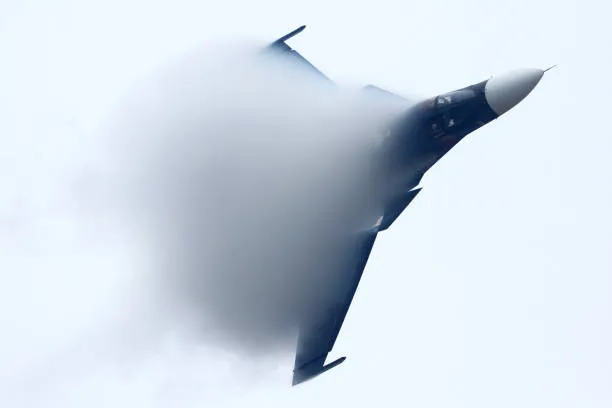
A neural network under development in Russia aims to speed up the design of aircraft geometry by rapidly modeling airflow around new airframe concepts.
Scientists at the Moscow Aviation Institute (MAI) are working on a neural-network algorithm that could radically accelerate airflow simulation. Today, that stage of aircraft and aerospace design is the most resource-intensive part of the process. Instead of week-long runs on a supercomputer, future engineers could get results in just a few hours on a standard personal computer, significantly speeding up development and lowering costs.
More Data, Faster Calculations
Traditional aerodynamic modeling requires solving complex equations that describe how air moves around an object, which demands enormous computing power. The new neural network trains on a large body of completed simulation data, learns how the underlying physical processes connect, and then begins predicting the outcomes of those heavy calculations on its own, without rebuilding each case from scratch. It is similar to how an experienced engineer, after studying many examples, can quickly estimate how an airflow will behave without running every scenario through a heavyweight program.
At the core of the project is a graph-based neural-network approximator that represents data as a web of interconnected nodes, a format that is especially effective for analyzing complex three-dimensional geometries of future vehicles. It produces simplified, but sufficiently accurate, airflow models, enabling preliminary analysis with fewer broad assumptions and less distortion.
Aerodynamics for Everyone
MAI has already built a prototype and plans to complete the work within three to four years. The project is being carried out at the institute’s Laboratory of Artificial Intelligence and Mathematical Modeling, and its results could make aerodynamic calculations accessible even to small development teams.
The technology could open new paths for Russia’s aviation and aerospace engineering by lowering barriers to experimentation and speeding up the route from an idea to a working design.