MTS Begins Deploying Russian-Made Base Stations in North Ossetia
By the end of the year, the operator plans to replace equipment in nearly all districts of the republic.
Two Districts Already Upgraded
Russian telecom operators are rapidly increasing the share of domestically produced equipment in their networks. This is not limited to secondary sites. The shift targets critical infrastructure responsible for ensuring network stability and service continuity.
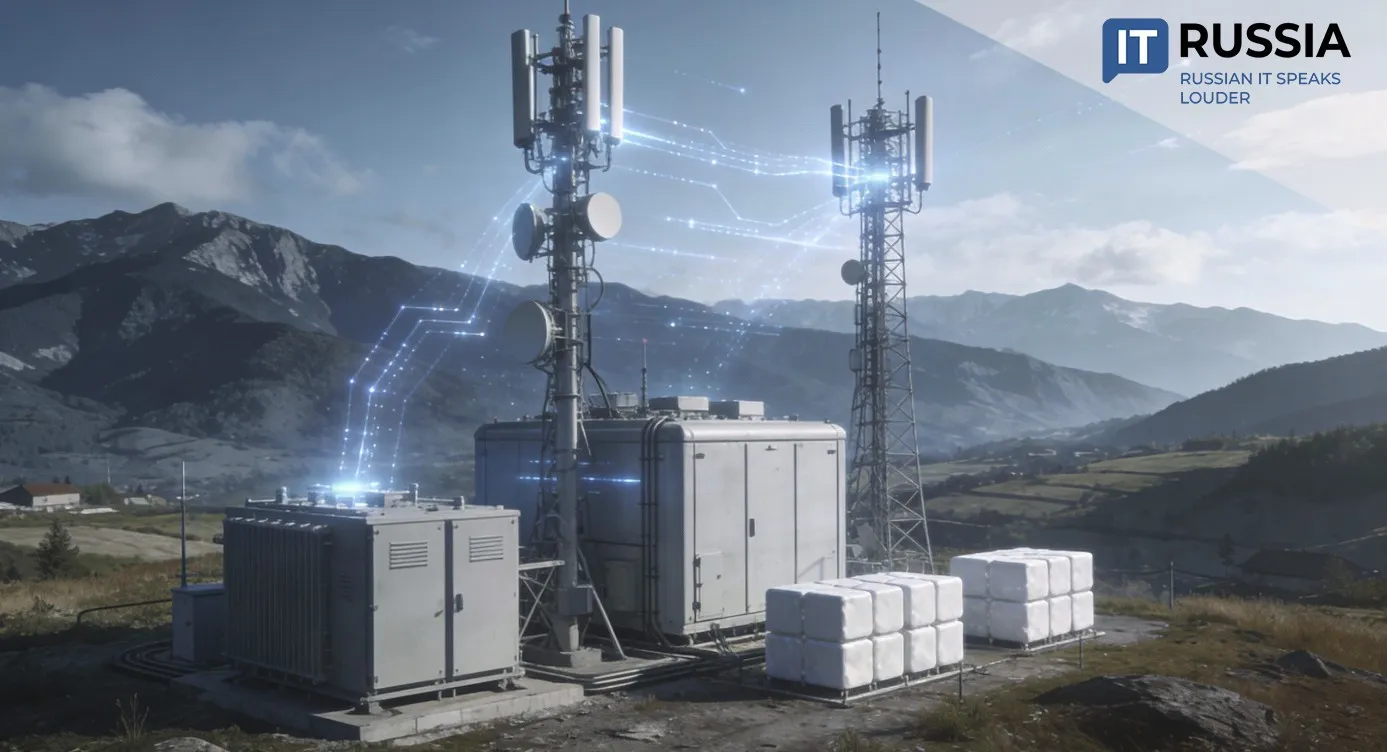
Late last year, MTS began installing new base stations in North Ossetia. The rollout uses equipment supplied by IRTEYA, a manufacturer in which the operator holds a controlling stake. Base stations have already been deployed in the Alagirsky and Kirovsky districts, including the town of Alagir and the village of Stavd-Durt. Priority has been given to rural areas. The standard used for the new sites has proven effective in locations where wide coverage must be delivered with a limited number of installations.
By the end of the current year, new equipment is expected to be deployed in nearly all districts of the republic. Planned work includes the Ardonsky, Irafsky, and Digorsky districts.
A Task of National Importance
MTS is upgrading its base stations as part of the federal programme Domestic Technologies, which forms part of the national project Data Economy and Digital Transformation of the State. The programme calls for full localisation of cellular network equipment production in Russia by 2030, including LTE/4G and 5G technologies.


MTS is also the first Russian mobile operator to begin a full-scale replacement of imported base stations with domestically produced equipment. By 2030, the company plans to integrate 20,000 IRTEYA base stations into its network.
The launch of large-scale deployment of Russian-made base stations in North Ossetia is significant for the country as a whole. It provides direct evidence that domestic telecom equipment designed to replace foreign alternatives is not only developed but already being mass-produced and operated under real-world conditions. In effect, this marks a critical step toward strengthening Russia’s digital sovereignty, reducing the telecom sector’s vulnerability to external disruption.
Production Volumes Increase
IRTEYA is now one of Russia’s leading base station manufacturers. In 2024, MTS launched a pilot programme, deploying 200 units of IRTEYA equipment across 37 regions. Following successful real-world operation, the company has moved to expand production. In the medium term, annual output could reach up to 20,000 base stations.
The equipment currently being installed is designed for LTE networks. At the same time, the company is preparing for next-generation deployments. In mid-summer, IRTEYA unveiled Russia’s first 5G base station built on open Open RAN architecture at the CIPR-2025 conference. According to the developers, the solution targets not only the domestic market but also exports to the CIS, Southeast Asia, and the Middle East. The station follows a modular design, with separate units handling signal processing, network control, and backhaul connectivity. This approach allows operators to scale infrastructure flexibly and avoid dependence on a single vendor.
Not the Only Manufacturer
IRTEYA is not the only domestic supplier entering serial production. In December last year, mass production of base stations also began at a manufacturing facility operated by Yadro in Dubna, near Moscow. By 2030, the plant aims to produce 55,000 base stations, covering up to 75% of domestic market demand. The Yadro facility is described as the largest in Eastern Europe with a full production cycle. It localises all stages of base station manufacturing, including printed circuit board production and assembly, as well as fabrication and installation of electronic modules.

In effect, Russia is joining the small group of countries capable of producing base stations independently. Globally, only around a dozen major manufacturers operate in this segment. Over time, Russia is expected not only to meet domestic demand but also to begin large-scale exports of its telecom infrastructure equipment.