Neural Network Replaces the Operational Amplifier as Russian Scientists Develop an Smart Voltage Stabiliser
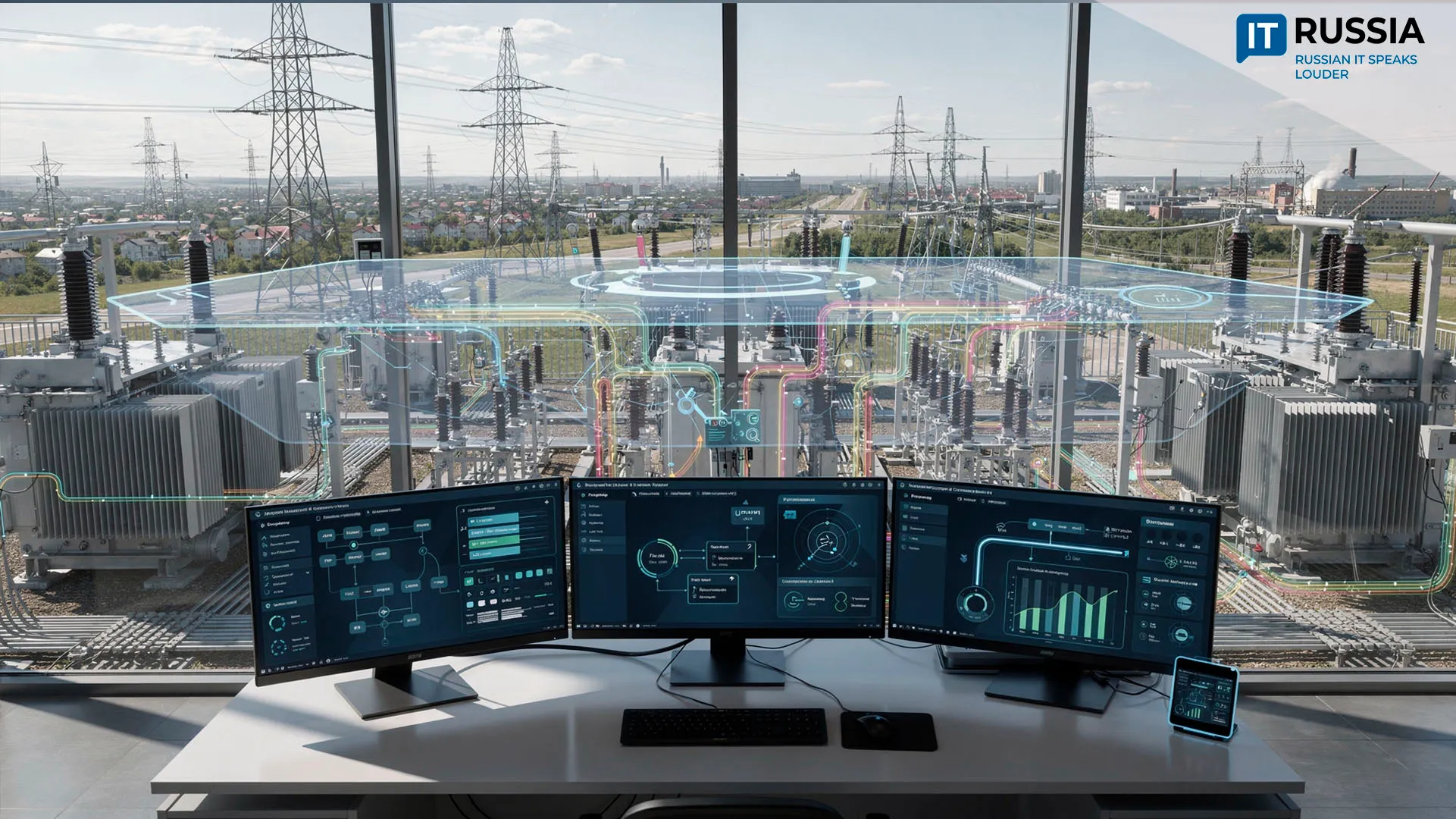
Precise voltage stabilisation remains one of the core challenges in power engineering and electronics. Scientists at Perm National Research Polytechnic University have proposed a breakthrough approach by developing an intelligent control system based on an adaptive neural network.

Key Advantages – Speed, Accuracy, Efficiency
Modern electronics, from smartphones to industrial robots, critically depend on power supply quality. Voltage fluctuations, which are inevitable when operating from solar panels, batteries, or unstable grids, can lead to malfunctions or outright equipment failure.
At the heart of any modern voltage stabilisation system is a DC-DC converter, a device that steps voltage up or down. Its operation is controlled by a microcontroller, but traditional analogue control circuits based on operational amplifiers suffer from a fundamental limitation. They follow rigid logic and cannot adapt to the nonlinear behaviour of real-world components, which results in inaccuracies, slower response times, and reduced reliability.
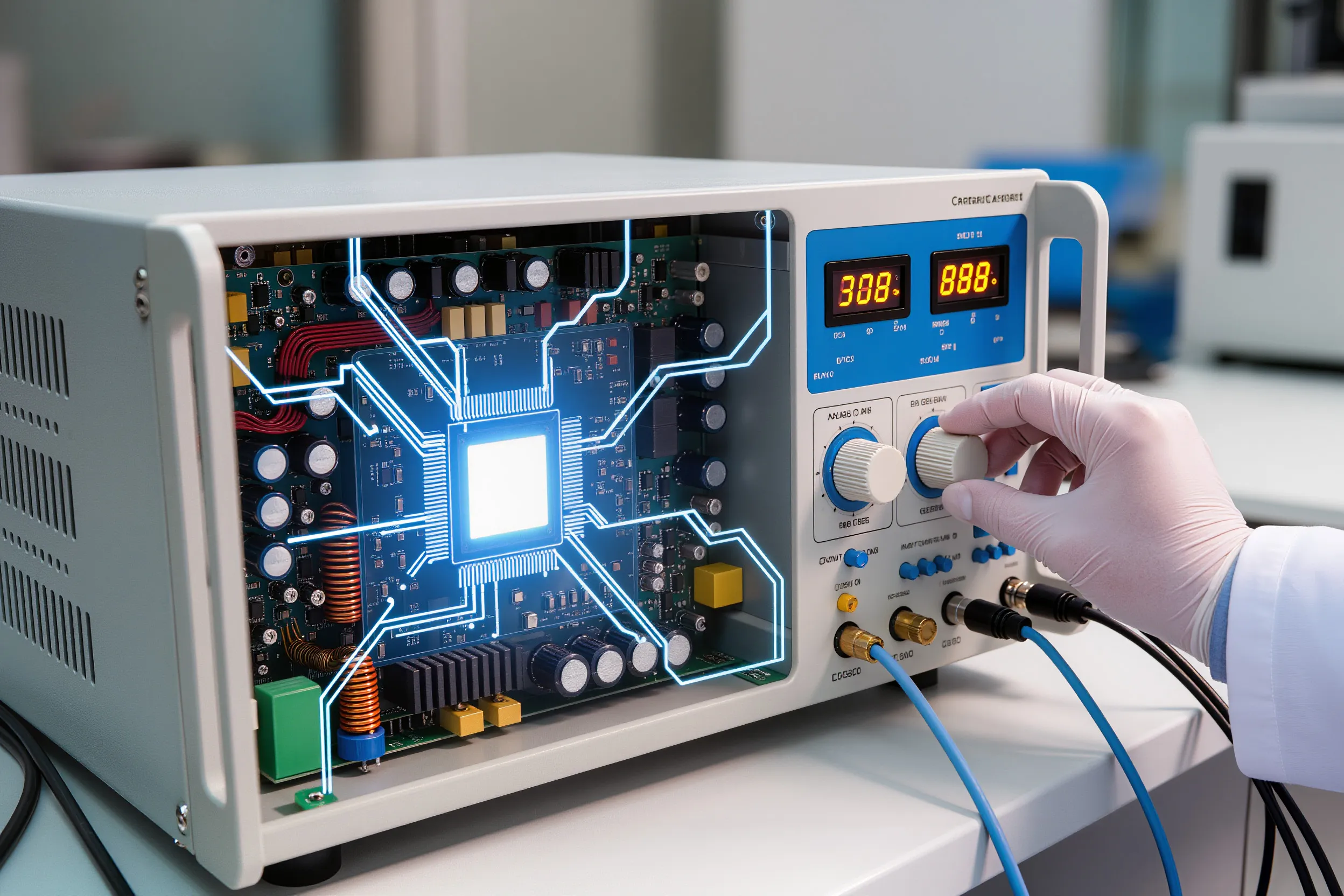
Researchers at Perm Polytechnic replaced the conventional analogue circuit with an adaptive neural network embedded directly into the controller. Built around a perceptron architecture, the network analyses output voltage in real time and continuously adjusts the converter’s operation. In doing so, it learns to compensate not only for component nonlinearities, but also for deviations caused by heating and long-term ageing.
A comparison with a classical control algorithm produced striking results. Response speed improved by 58 percent, while voltage stabilisation time was reduced from 125 microseconds to 79 microseconds, enabling the system to react almost instantaneously to grid disturbances. Stabilisation error approaches zero, delivering exceptionally stable output voltage.
Computational load was also reduced. The intelligent algorithm required just 24 iterations to achieve the target result, compared with 57 iterations for the classical approach. This more than halves computational resource consumption, a critical factor for embedded and power-constrained systems.


Strong Demand in Renewable Energy Sector
The development opens new opportunities for applying artificial intelligence in power electronics. More reliable, adaptive, and energy-efficient power supplies are in demand across portable electronics, IoT devices, autonomous energy systems, and robotics. Given the rapid expansion of renewable energy, including wind and solar power plants, where voltage instability is a persistent challenge, demand for such stabilisers is expected to be particularly high. For Russia, the technology represents a step toward strengthening technological sovereignty in microelectronics and power management.
Part of a Global Trend
Internationally, the work of the Perm researchers aligns with a broader global trend toward deploying neural network algorithms for energy system control. In recent years, similar solutions have been under development in multiple countries. In 2025, for example, Chinese researchers presented a reinforcement learning-based deep learning method for adaptive voltage control in renewable energy grids. Earlier, the same Perm Polytechnic team successfully applied neural networks to reduce energy consumption at oil wells.
What Comes Next for the Technology
In the short term, prototypes can be expected to appear in specialised industrial projects. Over the medium term, commercial solutions may reach the market for autonomous systems and smart electronics. In the long term, adaptive neural network controllers could become a standard building block for complex intelligent power systems, ensuring stability and efficiency both at the level of individual devices and across entire networks.

The Perm Polytechnic development clearly demonstrates how artificial intelligence is moving beyond abstraction and becoming a practical engineering tool, solving applied problems that underpin the functioning of the digital world.