Russian “Legioner” Drones Draw Interest From Middle Eastern Countries
The versatile UAVs are designed to perform a wide range of tasks.
Unmanned aerial vehicles developed by Russia’s Kalashnikov Concern have attracted interest from countries in the Middle East. Representatives of the company held talks with officials from several states during the international exhibition Neftegaz-2026 (Equipment and Technologies for the Oil and Gas Industry).
Potential customers focused on the Legioner (Legionary) vertical takeoff and landing unmanned aircraft, according to the Kalashnikov press service, which shared details with IT-Russia.
Photographs Terrain, Detects Fires and Searches for People
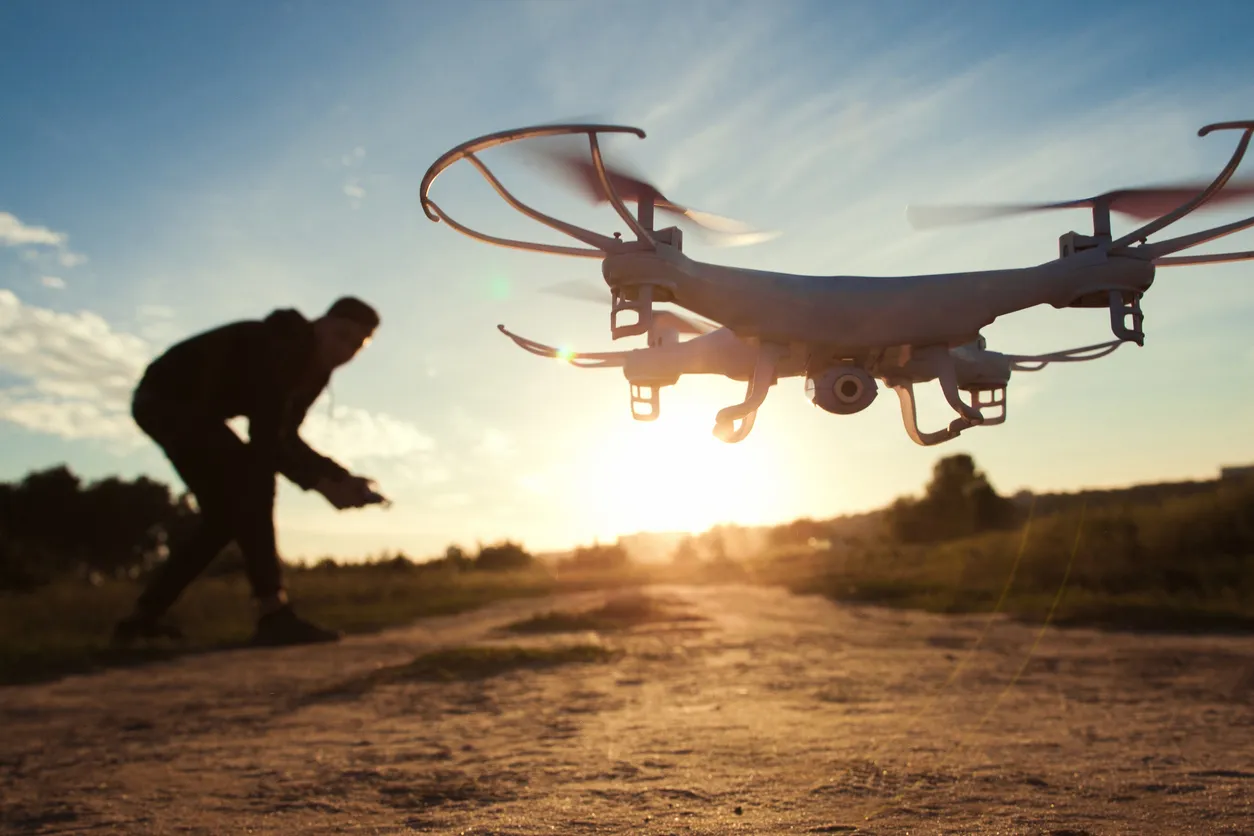
The production drone is designed for aerial photography, airborne laser scanning and video monitoring. It can also transport cargo, detect wildfires and search for missing people. The Legioner is available with either an electric or gasoline engine and can be delivered in a base configuration or equipped with additional mission payloads. The drone has a maximum flight range of 550 kilometers and can remain airborne for more than five hours. It operates in temperatures from −25°C to +30°C and can fly in winds of up to 15 meters per second. The maximum payload capacity is four kilograms.
A Helicopter That Fits in a Car
At the Neftegaz-2026 exhibition, held in Moscow from March 2 to 5, Kalashnikov also showcased ready-to-deploy UAV solutions designed for Russia’s fuel and energy sector. In addition to the Legioner, the company presented the Alfa-E unmanned helicopter. The aircraft can take off from any solid surface, including moving platforms. It can be transported in a passenger car and assembled by a single person in about 15 minutes. The helicopter can reach altitudes of up to 3,000 meters and operates in temperatures ranging from −30°C to +45°C.
A “Sea Creature” in the Sky
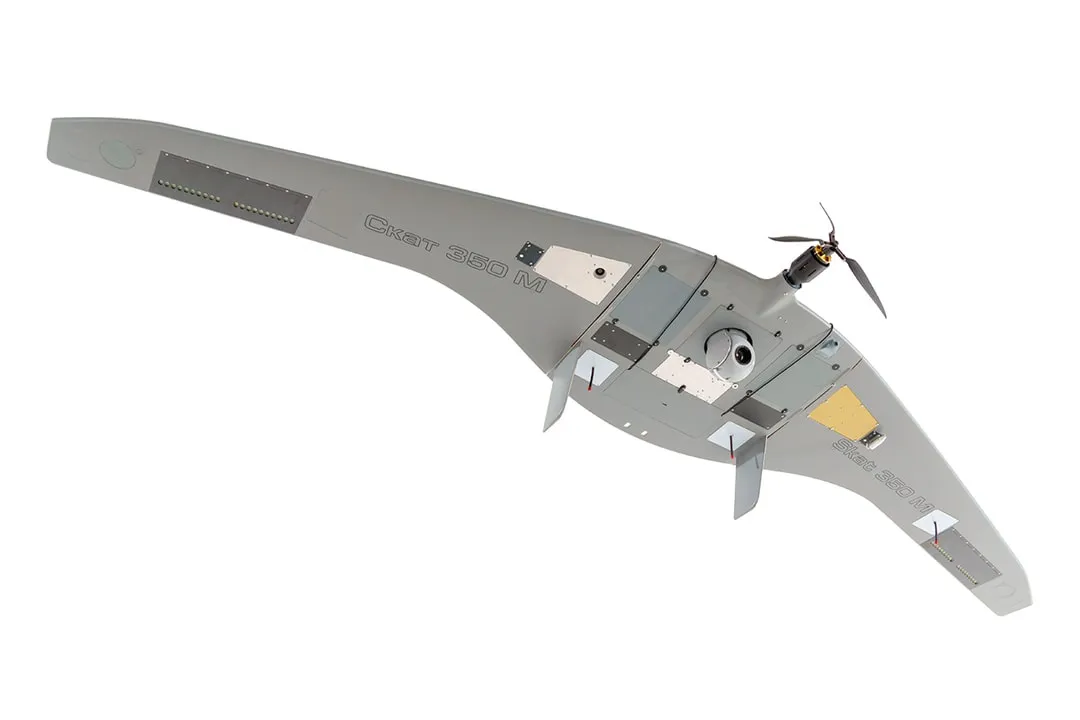
The company also highlighted its multifunctional SKAT 350 M system. The drone, whose shape resembles a marine creature, is used to monitor terrain and support ground rescue teams in harsh weather conditions across a wide range of temperatures. It can stay airborne for up to four hours and is designed for reliability and durability. The aircraft has a wingspan of 3.2 meters, allowing it to operate at different altitudes. During each operational flight, the SKAT 350 M can cover at least 240 kilometers. The drone can also be equipped with a multispectral camera that captures a broader spectrum of information about the Earth’s surface, including data invisible to the human eye.
All of the company’s drones can operate together as part of a coordinated system, meaning they can interact with one another while performing the same mission.
At the exhibition, company representatives discussed potential cooperation with customers interested in aerial cargo delivery services, monitoring gas compressor stations and supporting civilian maritime fleets.
Earlier we reported that Russian engineers developed a navigation system for light drones that works without GPS or GLONASS.