Russian scientists develop a “digital microscope” for studying the Earth's subsurface
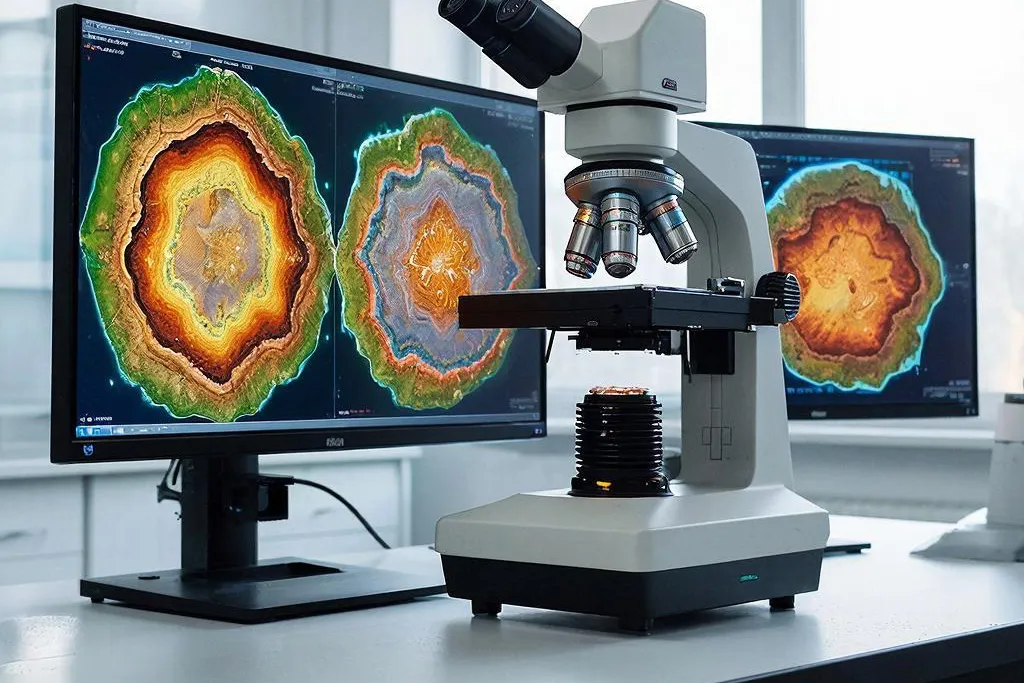
Russian researchers have developed an advanced computational technology—a kind of “digital microscope”—that dramatically accelerates the modeling of Earth’s subsurface and complex materials. By enabling faster and more precise simulation of elastic wave propagation, the method represents a breakthrough for seismic exploration, Arctic geology, and high‑reliability infrastructure diagnostics.
A Patchwork Approach Instead of a Heavy Mesh
The innovation is based on so‑called chimera (overlapping) grids. Instead of attempting to represent a complex geological or material structure using a single, extremely dense, computation‑heavy mesh, the researchers applied a hybrid strategy. The primary modeling area is built on a simple grid, while critical zones—such as interfaces between geological layers or micro‑cracks in metal—are described using precise local inserts.
These local “patches” exchange data with the main grid, providing high‑resolution detail only where necessary and avoiding enormous computational cost. While chimera‑grid methods have been more common in aerodynamics, the team adapted and compared these strategies specifically for seismic and elasticity‑theory applications—an approach that had not been fully explored before.
Seismic Modeling and Ultrasonic Diagnostics
The technology has already proven effective in two major areas: modeling seismic waves in geologically complex environments, and performing ultrasonic diagnostics of railway rails. The results matched classical methods exactly while requiring far less time and computational power.
The impact for both Russia and the global scientific community is substantial. The approach unlocks new possibilities for mineral exploration—including in the challenging Arctic environment—and supports the development of more advanced non‑destructive testing systems for critical infrastructure such as bridges, pipelines, and railways.
A Contribution to the Digital Transformation of Science
This Russian development contributes meaningfully to the digital transformation of science and industry. By offering a faster and highly accurate tool for solving some of the most demanding computational problems, the method strengthens global capabilities in geophysics, materials science, and infrastructure safety.